
Maternal health initiatives, revitalization along Rosedale Street, community immunizations, boosting the film industry — these are just some of how local colleges and universities collaborate with Fort Worth, Mayor Mattie Parker said.
“Each of these universities have said yes to both the city and to me personally on a variety of different occasions,” Parker said. “These are just small examples of what innovation partnership looks like.”
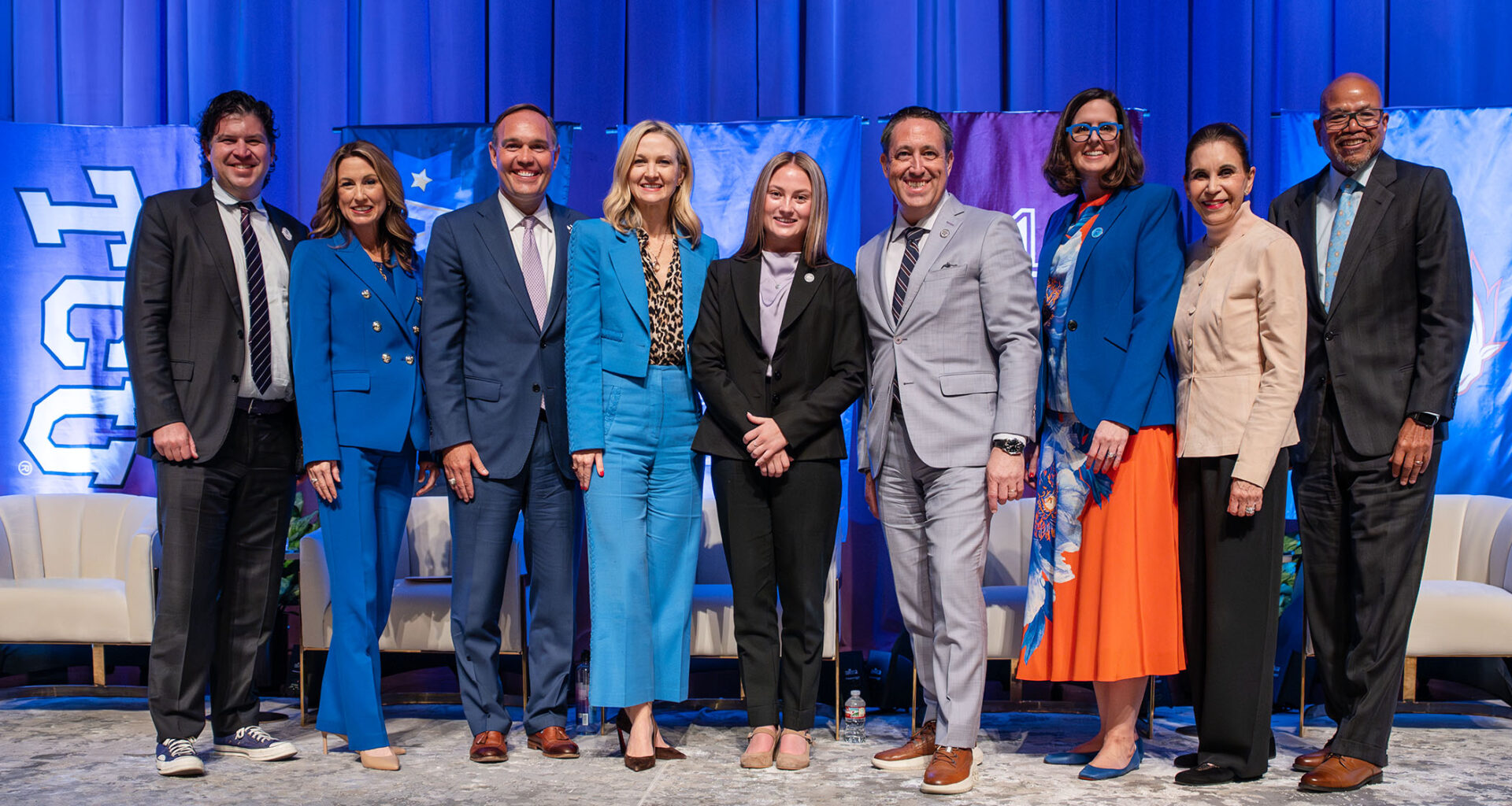
Parker joined college and university leaders at Bass Performance Hall on Monday to discuss the role higher education plays in spurring innovation and supporting the city’s economy.
The panel was organized by Texas Christian University officials as part of the school’s Values in Action Week that leads up to the Nov. 6 inauguration of TCU’s new chancellor, Daniel Pullin.
Fort Worth has a sense of urgency because of rapid growth, Parker said.
With more than 1 million residents, Fort Worth became the 11th largest city in the United States earlier this year. Projections show the city adding another 400,000 by 2050.
“With all that growth comes a tremendous amount of responsibility and, quite frankly, one of the things that I think has been most catalytic for our community in the last five to 10 years is really our higher education,” Parker said.
Along with Parker and Pullin, other panelists included Texas Wesleyan University President Emily Messer, Tarleton State University President James Hurley, Texas A&M System Chancellor Glenn Hegar, University of Texas at Arlington President Jennifer Cowley, Tarrant County College Chancellor Elva LeBlanc and UNT Health Fort Worth President Kirk Calhoun.
Keeping talent in Tarrant
Colleges outside of Texas will be more aggressive in recruiting the state’s top students as their own states face decreasing high school class sizes, Hurley said.
“They’re not coming after the 25 through 50 percentile,” he said. “They’re coming after our top 10% students, our eagles.”
The Tarleton leader said it will take collaboration to make sure high-performing students stay. If Tarrant County students attend college here, they will also ultimately remain in the area after graduation, he said.
Pullin said the “town and gown” relationship between higher education and the local community is especially important because graduates who are emotionally and intellectually integrated into the area are more likely to remain.
“If you’re connected to community, then you’re more likely to stay and build those careers and get those good jobs, or create them, start them if they need to exist and don’t yet, and then build strong families and flourishing communities,” Pullin said. “It all works together.”
Connecting students with jobs
To get students the jobs that will ultimately keep them in the area, colleges must collaborate with the business community, Texas Wesleyan’s Messer said.
Many of those who do internships ultimately get a job offer, but not enough students participate in such opportunities, she said.
Preparing students for the workforce drives Texas Wesleyan’s efforts to integrate career skills into teaching well before graduation, she said.
“Historically in colleges, they focus on juniors and seniors with career development, focusing on internships and preparing resumes, practicing interviews, etc.,” Messer said. “We want to start that from the first day of class freshman year, so they’re getting those experiences to start thinking about career opportunities.”
As jobs attract students, talented graduates also spur business, UTA’s Cowley said. That is why each college plays a part in ensuring it is producing graduates with a range of skills.
“It really takes working across all institutions to decide, what are the industries that we want to go after together to make Fort Worth even stronger for the future, and then what role do each of us play in building that talent pipeline?” she said.
Making college affordable and accessible
Affordability is top of mind for the leaders as they work to make sure students can access higher education in the first place, they said.
For Calhoun, that means looking for ways to shorten programs at UNT Health without compromising the quality of education so students ultimately pay less.
“Making sure that we can manage the cost of that education is something we talk about every day,” he said.
Beyond having one of the lowest tuition rates in Texas, TCC tries to make college accessible by offering courses at different times and formats so students can pick what works best for them, LeBlanc said.
About 70% of the community college’s students work, she added.
“They are not what you would consider traditional students that could go during the daytime,” she said.
Higher education offers different pathways to students beyond a traditional bachelor’s degree at a four-year school, Hegar said. Many schools, for example, offer industry-based certifications or training that are career specific.
“Even though I am in four-year universities, I talk about my community college experience, I talk about the trades, because I think all of those are critical,” he said.
McKinnon Rice is the higher education reporter for the Fort Worth Report. Contact her at mckinnon.rice@fortworthreport.org.
The Fort Worth Report partners with Open Campus on higher education coverage.
At the Fort Worth Report, news decisions are made independently of our board members and financial supporters. Read more about our editorial independence policy here.
Related
Fort Worth Report is certified by the Journalism Trust Initiative for adhering to standards for ethical journalism.
Republish This Story

Republishing is free for noncommercial entities. Commercial entities are prohibited without a licensing agreement. Contact us for details.