

From packed hotels and busy airports to heavier traffic around Arlington on match days, the FIFA World Cup has added another layer of traffic.
ARLINGTON, Texas — For the past month, North Texas drivers have been sharing the roads with thousands of visitors from around the world. From packed hotels and busy airports to heavier traffic around Arlington on match days, the FIFA World Cup has added another layer of travel to an already busy summer across DFW. Now, that chapter is coming to a close.

This story continues below.
Tuesday, July 14, marks the final World Cup match in Arlington. While that doesn’t mean traffic will suddenly disappear, drivers may begin noticing a shift in the weeks ahead.
The end of match-day traffic
Since mid-June, Arlington has hosted nine World Cup matches, more than any other host venue in the United States. Regional transportation agencies spent years preparing for the tournament, warning residents to expect heavier traffic on match days, particularly near Interstate 30, State Highway 360 and the Entertainment District. Those event-day surges have become familiar. But the traffic wasn’t limited to Arlington.
Many World Cup visitors booked hotel rooms across North Texas, including Downtown Dallas, Downtown Fort Worth, Las Colinas, Frisco and areas near DFW Airport. That meant fans were traveling to and from Dallas Stadium in Arlington from multiple directions, adding traffic to major highways across the Metroplex, not just the roads surrounding the stadium.
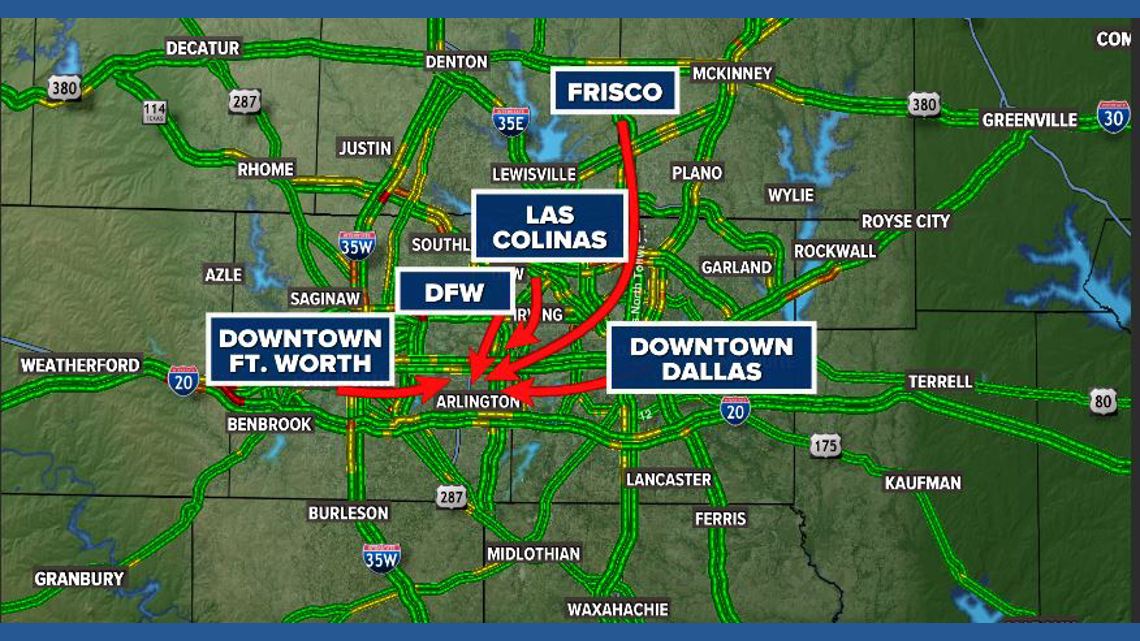
Road closures around the stadium, increased rideshare activity, charter buses, additional transit service and thousands of fans traveling between hotels and Dallas Stadium in Arlington all combined to create a different traffic pattern than many North Texans are used to seeing. Once Tuesday’s semifinal wraps up, those recurring World Cup traffic impacts should begin fading.
That doesn’t mean the roads will suddenly be empty
It’s important to remember that visitors won’t all leave at once. Some fans will spend additional time exploring North Texas before heading home. Others may continue traveling to later matches or remain in the area for business or vacation. Airports, hotels and popular attractions could continue seeing elevated activity for a short time, even after Arlington hosts its final match.
In other words, don’t expect Wednesday morning to feel dramatically different simply because the tournament is over.
A return to a more typical summer pattern
Instead, drivers are more likely to notice a gradual return to the traffic pattern that normally develops during summer. Without daily school traffic, morning rush hour is often a little lighter than it is during the school year. At the same time, vacations, flexible work schedules and daytime errands tend to spread traffic throughout the day instead of concentrating it during traditional commute hours.
That’s the pattern many North Texans are used to seeing each summer. The World Cup didn’t replace that pattern. It simply added another layer to it. As tournament-related travel begins to taper off, many drivers may notice North Texas roads gradually settling back into that more familiar summer rhythm.
Construction isn’t going anywhere
One thing that won’t change is construction.
Major highway projects continue across North Texas, including the I-30 Canyon Project in Dallas, improvements in western Tarrant County and other long-term projects throughout the Metroplex. While many lane closures happen overnight, work zones, lane shifts and reduced shoulders will continue affecting traffic long after the World Cup leaves Arlington.
So even though the tournament is ending, construction-related slowdowns will remain part of many drivers’ daily routines.
For weeks, North Texas welcomed visitors from around the world while hosting one of the biggest sporting events on the planet. Regional transportation agencies encouraged commuters to plan ahead, adjust travel times when possible and expect heavier traffic on match days. In many cases, that’s exactly what happened. Now, as Arlington’s role in the tournament comes to an end, North Texans may begin seeing traffic settle back into a more familiar summer rhythm.
It probably won’t happen overnight.
But without recurring match-day crowds traveling across the Metroplex, one of the biggest contributors to this summer’s unusual traffic pattern will soon be in the rearview mirror.