
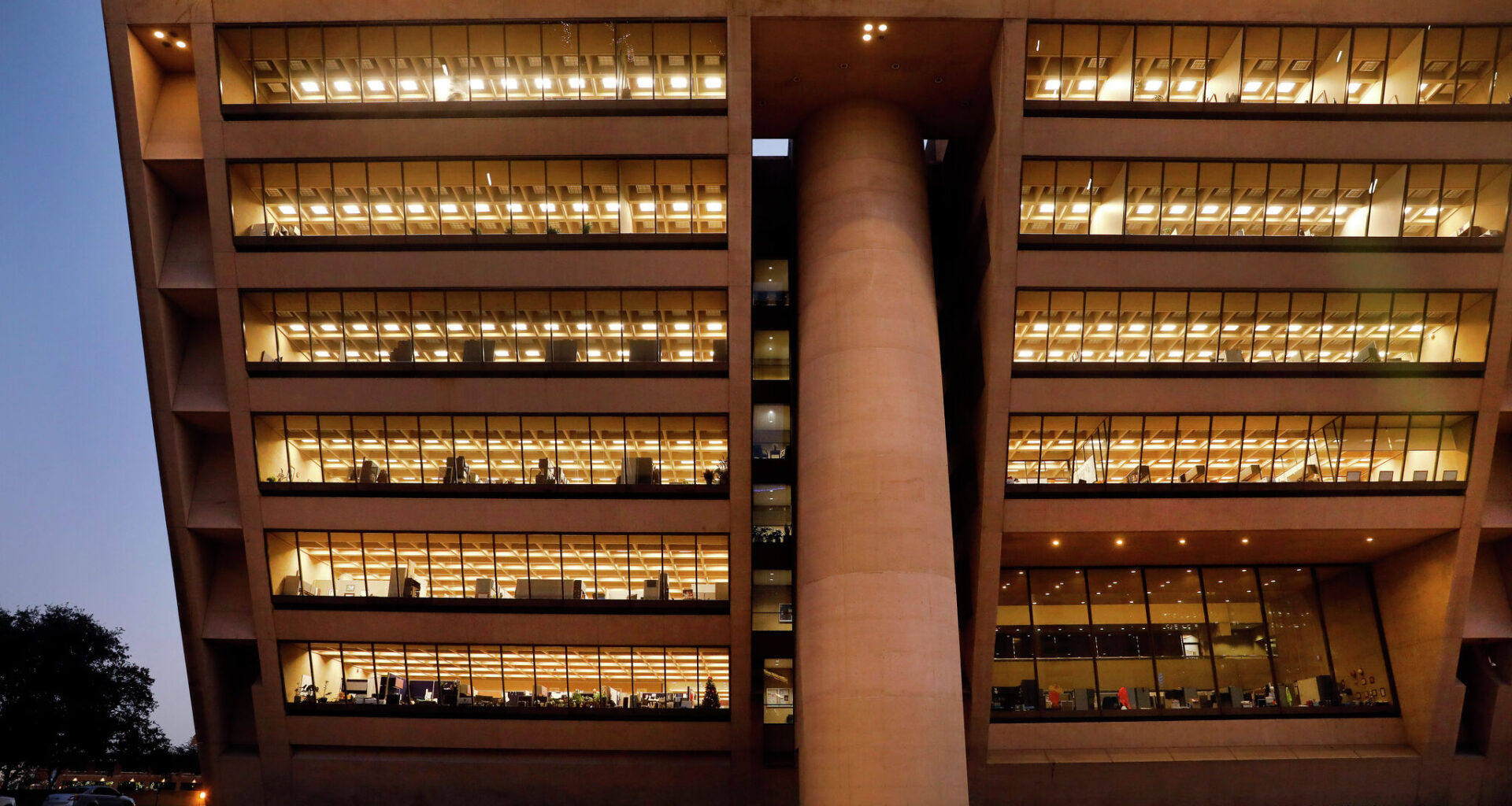
City leaders must develop thick skin and a desire to hear all perspectives while looking for the best parts of each. In any urban core, engagement will always be loud and emotional, writes Maggie Parker.
Tom Fox/Dallas Morning News
If there is one thing we learned over the last few weeks, it’s that local governments, and in this case the City of Dallas, make terrible real estate developers. It’s not that there isn’t access to land or even a balance sheet that can attract capital. It’s that a developer’s role is to set a vision that capital can get behind, giving investors assuredness of execution and minimization of risk.
In Dallas’ case, access to capital comes from taxpayers; setting the vision ideally comes from the mayor and City Council, assuredness of execution comes from selection of quality development partners and minimization of risk comes from detailed due diligence that everyone can agree on.
Currently, the taxpayers, or capital, are not aligned because the vision is muddied from leadership. And the due diligence process has been inconsistent. The most recent battle, at the June 10 special session, was so misaligned that even The New York Times covered it.
Article continues below this ad
Here’s how a developer would think about the future of City Hall.
First, the quality of any deal’s due diligence and underwriting is what will make or break future success. In this case, that means all options and financial assessments must be on the table for consideration — the financial implications for keeping City Hall as the hub of operations, or selling it, or moving some operations to a different location while the physical building remains for another civic use. Each option deserves its own assessment. Without due diligence on every possible scenario, any final decision at this stage is flawed from the beginning.
Second, city leaders must develop thick skin and a desire to hear all perspectives while looking for the best parts of each. In any urban core, engagement will always be loud and emotional. Being offended by opposing views is not worth the energy, in my opinion. Rather, expecting varying viewpoints should not only be anticipated, but should be embraced.
Where is the community engagement on these issues? Whatever happened to the release of the city’s design competition for City Hall and downtown? Can we leverage that and Downtown Dallas Inc.’s current visioning process to see true garnering of support of various options?
Article continues below this ad
Recently, I saw a great example of this as I scrolled through Instagram. I saw the headline “These are the six finalists for Chicago’s next big idea” from the account of Crain’s Chicago, a regional business newspaper. As I scrolled through the photos, the submissions provided creative and catalytic vision going from the capped-highway craze (thank you, Dallas) to revamping dilapidated alleys. Turns out this was a city-wide competition by World Business Chicago — the city’s premier public-private economic development agency.
While some comments were skeptical, others were hopeful. However, what really mattered was the opportunity to have the conversation, via public forum. One commenter wrote, “I’m a Bears fan, but I’d much rather taxpayer funds go into something like these initiatives.” I’m not sure about you, but any positive association with taxpayers’ dollars on the internet is a win, in my book.
Third, I’d look at how we are setting our vision for Dallas City Hall and all of downtown. A lot of energy has been put toward trying to keep the Dallas Stars and the Dallas Mavericks downtown. Now it appears that we’ve lost both those battles, with the Mavs going to the north side and the Stars leaving Dallas altogether.
While no deal is 100% final and circumstances could still change to make downtown viable, especially for the Mavs, it’s important that we learn from this experience.
Thanks to The Dallas Morning News coverage on these topics, we have some insight into the business decisions, specifically that the current financial model for these teams does not work at the American Airlines Center. Teams across the country no longer make their revenue from ticket sales and sponsorships. Their future sustainability is based on ownership of the surrounding real estate. It’s not like Victory Park is not an urban entertainment district, filled with apartments, hotels, office space, restaurants, transit, etc. Rather it’s that the teams don’t see future opportunity for revenue growth, as they would with owning surrounding development at the old Willow Bend and Valley View mall sites.
Article continues below this ad
So, unless Victory Park property owners want to offer ownership equity in current and future development, or downtown Dallas can offer a site that quickly gives a clear path to surrounding development, then there’s no path to keeping those teams in the urban core.
As an alternative, we truly have an opportunity to create a new vision for all of downtown. Can we lean into the Dallas Wings being at AAC? Can we redefine our downtown anchor institutions to be an education hub for administration, classrooms and student housing for DISD, Dallas College, Paul Quinn College or various other local universities? Aren’t we still set up to be the center of Y’all Street?
Right now, City Hall and a swarm of power players are so busy disagreeing about the process that they aren’t fully engaging with capital sources (taxpayers), which puts an aligned vision at risk. At this point, most development partners would say: You all, Dallas City Hall, figure yourself out and I’ll just wait it out. Or go to the mall.
Maggie Parker is founder and managing partner of Innovan Neighborhoods.
Article continues below this ad
Have thoughts about this? Send a letter to the editor using our letters form or email letters@dallasnews.com. Letters should be no more than 200 words and include the first and last name of the writer and city of residence.