
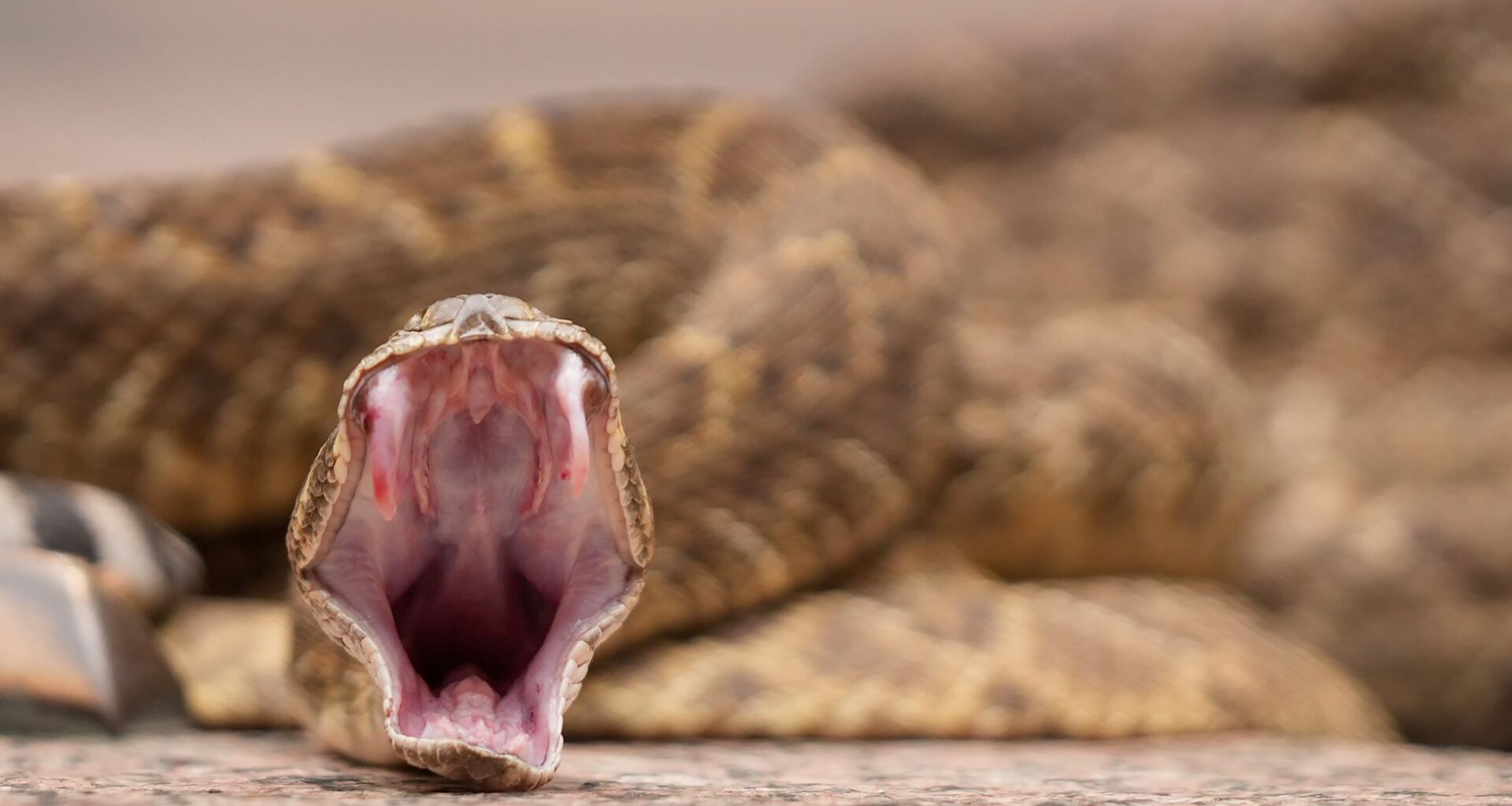
A western diamondback rattlesnake is seen on the outdoor rotunda at the Capitol on Tuesday, Feb. 10, 2026. Members of the Sweetwater Jaycees brought 22 live rattlesnakes to promote the 68th annual World’s Largest Rattlesnake Round-Up, scheduled for March 13–15 in Sweetwater. The event began in 1958 when area farmers and ranchers organized an effort to reduce rattlesnake populations affecting livestock and has since grown into a major local festival featuring a parade, a Miss Snake Charmer Queen contest, snake handling and milking demonstrations, and fried rattlesnake meat.
Jay Janner/Austin American-Statesman
An Austin-area gardener recently faced a frightening situation: A venomous coral snake had become stuck to a glue trap inside a garage, and freeing it would have required getting dangerously close.

Snake encounters are rising around Central Texas homes as the reptiles emerge from winter dormancy, according to Texas A&M AgriLife. The Centers for Disease Control and Prevention says snakes tend to be most active during warm weather and around dawn and dusk. Texas Parks and Wildlife says continued population growth and development into previously undisturbed land will bring people into contact with venomous snakes more often. An one Austin-area snake relocator called this year a “booming snake season.”
Article continues below this ad
The person who discovered the trapped coral snake turned to Reddit for help after worrying Austin Wildlife Rescue might close before they could reach its intake center. Austin Wildlife Rescue told the Statesman they didn’t receive that snake, but they have had to remove venomous snakes from glue traps before.
Jules Maron, the rescue’s director, said removing a snake from a glue trap involves carefully working warm vegetable oil beneath its body to loosen the adhesive. When freeing a rattlesnake, she started at the tail and slowly worked toward the head, guiding the animal into a protective tube as it became free.
“It’s definitely something that is extremely dangerous for both the snake and for us,” Maron said.
The rescue does not recommend that the public attempt to free venomous snakes from glue traps. Instead, an experienced snake handler or animal protection officer can transport an injured venomous snake to Austin Wildlife Rescue for treatment.
Article continues below this ad
Unlike a rattlesnake, which has front fangs, a coral snake, above, chews on its prey to deliver its venom, and ‘most people don’t tolerate that very well, and they rip the snake off,’ said Dr. Pat Crocker, chief of emergency medicine at Dell Children’s Medical Center. Consequently, most people don’t get enough venom to die of the bite, or need the antivenin. People and pets who are bitten still need to get emergency treatment right away and might need to be hospitalized, Crocker said. They could need a breathing device called a ventilator if their respiratory system is paralyzed by the venom. It can take days for the poison to work its way through the body and for the person or pet to come off the ventilator, doctors and veterinarians said.
Austin American-Statesman
Texas is home to more than 105 species and subspecies of snakes, but only 15 are considered potentially dangerous to people. Those include rattlesnakes, copperheads, cottonmouths and coral snakes. Most snakes commonly found around homes are harmless and help control rodents and other pests.
But knowing that does not make an unexpected snake in the garage less alarming.
What should you do if you find a snake in your yard?
A snake crossing a yard, driveway or trail usually does not need to be captured.
Article continues below this ad
Texas Parks and Wildlife recommends:
Keep children and pets away.
Give the snake space to leave on its own.
Do not try to kill, pin or handle it.
Do not lean in to identify it by head shape.
Take a photo from a safe distance if identification is needed.
The agency says snakes generally avoid people, and most bites happen when someone tries to catch, kill or handle one.
Snakes are most active during warm weather and around dawn and dusk. Carry a flashlight at night, wear closed-toe shoes outdoors and never reach into brush, wood piles or places where you cannot see.
Article continues below this ad
Western diamondback rattlesnakes slither on the outdoor rotunda at the Capitol on Tuesday, Feb. 10, 2026. Members of the Sweetwater Jaycees brought 22 live rattlesnakes to promote the 68th annual World’s Largest Rattlesnake Round-Up, scheduled for March 13–15 in Sweetwater. The event began in 1958 when area farmers and ranchers organized an effort to reduce rattlesnake populations affecting livestock and has since grown into a major local festival featuring a parade, a Miss Snake Charmer Queen contest, snake handling and milking demonstrations, and fried rattlesnake meat.
Jay Janner/Austin American-Statesman
What should you do if a snake gets inside your house?
If a snake enters a home or garage:
Move people and pets away.
Close interior doors to limit where the snake can go, if you can do so safely.
Watch where the snake goes from a safe distance.
Do not try to trap it under a bucket or carry it outside.
Article continues below this ad
The Free Snake Relocation Directory allows residents to search for independent volunteers who may be willing to remove a snake without charge.
The directory recommends texting volunteers with your location, a description or photo of the snake and where it is hiding. However, it is not an emergency dispatch service and does not guarantee a volunteer will respond. Anyone needing guaranteed assistance should contact animal control, a wildlife authority or a licensed pest-control company.
Austin Wildlife Rescue also accepts injured native reptiles at its Austin and Elgin intake centers from 9 a.m. to 4 p.m. daily. The organization does not transport wildlife. Staff ask residents to call the intake line at 512-472-9453 before attempting to move an injured animal, particularly one that may be venomous.
How to reduce snake encounters around your home
Frequent snake sightings often indicate a rodent problem. Snakes follow food sources, and rodents are attracted to spilled bird seed, pet food, clutter and wood piles.
Article continues below this ad
Texas Parks and Wildlife recommends:
Keep grass trimmed.
Move brush, rocks, lumber and debris away from the home.
Wear shoes outdoors.
Use caution around creek banks, fallen logs and dense vegetation.
Wildlife experts note that most snakes are harmless and play an important role in controlling rodents around homes.
Article continues below this ad