
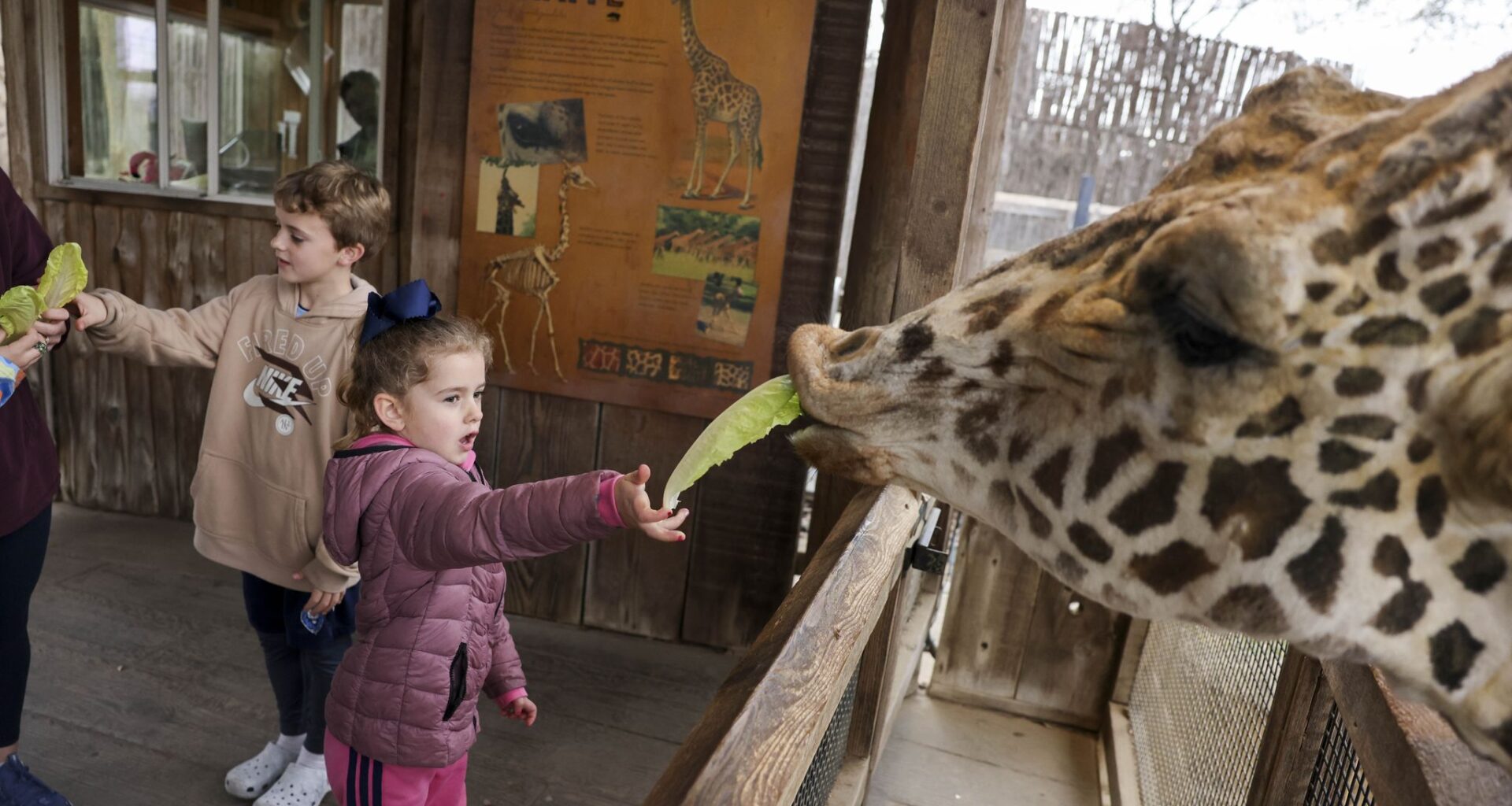
Grace Horgan, 5, fed a giraffe at the Dallas Zoo on Jan. 21. The zoo is preparing to host its first-ever Dog Days event.
Shafkat Anowar/Staff Photographer
The Dallas Zoo generates about $18 in economic activity for every dollar the city invests, a new finding the nonprofit operator hopes will bolster its case against proposed budget cuts.

The zoo is expected to generate $3.2 billion in economic activity over the next 12 years, support roughly 1,800 jobs annually and produce nearly $150 million in state and local tax revenue, according to an economic impact study released Wednesday.
The study, which was commissioned by the zoo, also estimates that 77% of visitors will come from outside Dallas, bringing new spending into the city’s economy.
Article continues below this ad
City Manager Kimberly Bizor Tolbert is calling for a 3% reduction in stipends paid to partners, including the Dallas Zoo. The city is facing a multimillion-dollar budget shortfall that has already led to employee furloughs and proposed reductions to libraries, recreation centers and other public services.
Related: Dallas park board pushes back on proposed rec center closures, service reductions
“The zoo’s funding is not just a budget line. It’s really the city of Dallas investing in a city-owned asset, and we deliver known and measurable returns for Dallas,” said Stephanie Allard, the Dallas Zoo chief mission officer.
The zoo is expected to break ground this fall on a Safari Trail expansion that will modernize animal habitats, enhance the visitor experience and attract more guests over the next decade.
Allard said the multi-phase Safari Trail project will “bring back to life” about 10 acres of the zoo and add marquee species, such as African penguins, cheetahs and rhinos.
Article continues below this ad
The economic study forecasts that the zoo will attract 14.5 million visitors, averaging 1.2 million annual visitors, through 2036. The projections assume the zoo will continue operating, increase attendance and complete planned capital projects.
Budget crunch
A nonprofit manages the Dallas Zoo’s daily operations on the city-owned property. The zoo has received $14.9 million from the Park and Recreation Department’s annual budget, although its contract calls for a management fee of about $15.3 million.
Admissions, memberships, donations and other private revenue also fund the zoo’s work.
The city manager has requested that city departments identify a 15% budget reduction to help close a projected $51 million deficit in the next budget. For the Park and Recreation Department, that means cutting $14 million.
Article continues below this ad
The zoo is facing a cut of about $500,000 in city funding in the 2026-2027 budget.
Related: Dallas furloughs: Closed buildings, confused residents and worker uncertainty
Some park board members say the zoo should share in the sacrifices facing other city-funded services. Others defend the zoo’s city funding because it attracts visitors, supports jobs and generates tax revenue.
The Dallas Zoo commissioned the economic impact study for current and future discussions about the zoo’s role in growing Dallas’s tax base and economy, said Sean Greene, Dallas Zoo chief operating officer and executive vice president of park operations.
Tourism Economics, a division of Oxford Economics, conducted the study in partnership with Canopy Strategic Partners.
Article continues below this ad
The zoo offers $1 admission days and discounted school visits to ensure the attraction remains affordable for local families. Beyond offering discounted admissions, Greene said about 35% of the zoo’s staff live in Oak Cliff and southern Dallas.
Its more than 1 million annual visitors are also likely to spend money at nearby restaurants and businesses, proving the zoo is “a great return on investment,” Greene said.
The organization has also invested millions into the city-owned property and its facilities. And its expenses continue to increase every year without additional investment from Dallas.
“We value tremendously the partnership we’ve had with the city,” Greene said. “But there are also limits to what we can do with additional reductions.”
Past cuts
Dallas Zoo President Lisa New told the park board in June that it can’t handle the proposed budget cuts.
Article continues below this ad
“We are already lean and efficient,” New said.
The zoo was privatized in 2009 during a city budget crisis. The arrangement has produced long-term savings for Dallas, the zoo’s president said.
The organization has already collaborated on previous city budget reductions.
New told the board that in 2021, as Dallas recovered from the pandemic, the nonprofit voluntarily agreed to keep the city’s contribution flat. She said that as the stipend has not been increased since then, inflation has driven up the cost of utilities, maintenance, animal care and other day-to-day operations.
Related: Dallas hasn’t grown much, but City Hall’s spending has ballooned
Article continues below this ad
In 2023, the zoo accepted an additional 3% reduction.
“An additional 3% cut would greatly jeopardize our efforts from animal care and welfare to routine maintenance and infrastructure of city facilities and even accreditation,” New told the board.
‘Need to lose together’
The zoo’s financial strength is why it can face cuts, said park board member Rudy Karimi.
Karimi acknowledged the zoo’s importance to the community but said other recreation programs are facing reductions of 50%, 70% and even 100%.
He said the zoo should face a larger cut than the 3% currently proposed.
“When we win, we should win together, and adversely to that, when we lose, we all need to lose together too,” Karimi said. “It’s not fair to say, ‘Let’s reduce operations in the aquatic centers, stop picking up as much litter,’ but then turn around to our partners and say everything we’ve given you is going to stay together.”
The city manager is expected to present a recommended budget to the City Council in August.