
Updated 5:30 p.m. July 15
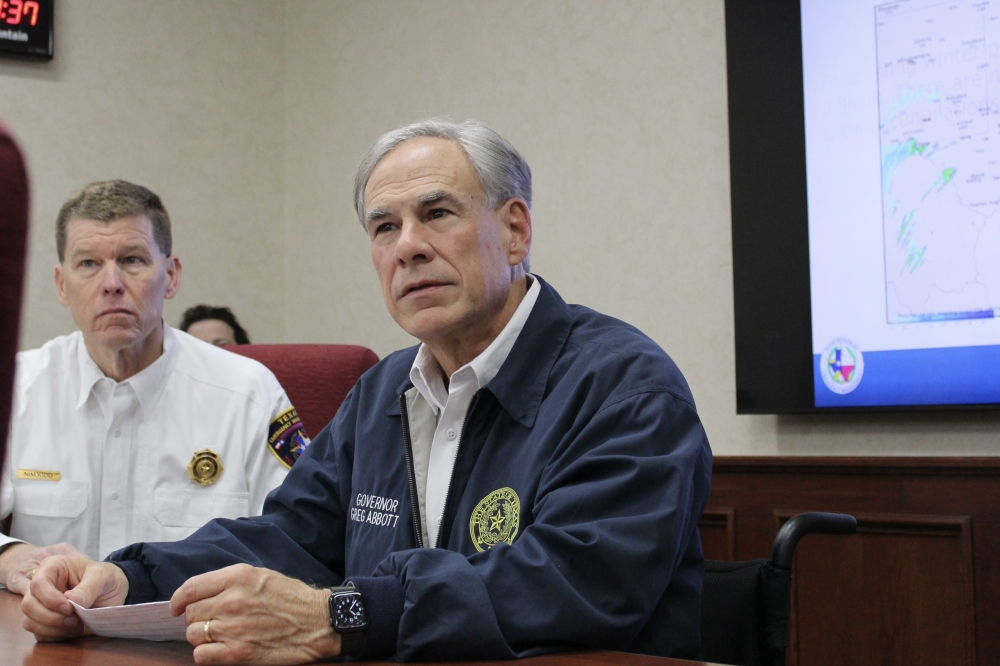
This week’s flooding “is likely going to break records in Texas,” Gov. Greg Abbott told reporters July 15 at the State Operations Center in Austin.
“I want to give you a comparison: The Fourth of July floods last year had rainfall of 20.29 inches,” Abbott said. “The… rainfall during this rainstorm is expected to be more than 30 inches.”
As of 5 p.m., no deaths had been reported due to the floods, Abbott said, adding that “we’ve got to keep it that way.”
Nim Kidd, chief of the Texas Division of Emergency Management, said it is important to pay attention to “the rate of rainfall,” with meteorologists reporting three inches of rain per hour in some parts of South Texas.
“It doesn’t matter where you live—three inches of rain an hour will cause flooding,” Kidd said. “The far majority of the rescues that have taken place [today] are stranded motorists. Do not drive on the road where you cannot see the road, and if there is water on the road, turn around; do not drown.”
In the past 24 hours, some areas along the Llano River in the Texas Hill Country had received over 5 inches of rain, according to Lower Colorado River Authority records. Communities in the Greater Houston area had largely received about one inch of rain or less in the same 24-hour period, per the Harris County Flood Warning System.
Published 4 p.m. July 15
As heavy rain and flash flooding threatens large swaths of South and Central Texas, Gov. Greg Abbott is scheduled to speak to reporters about the state’s preparation for and response to the severe weather around 5 p.m. July 15.
The big picture
The heaviest rainfall is occurring in southwest Texas, according to the National Weather Service, with 10-15 inches of rain expected through June 16 along the U.S. 90 corridor west of San Antonio. As of 2:40 p.m. July 15, all or parts of 14 counties were under a flash flood warning, including Comal, Hays and Bexar counties.
The city of New Braunfels announced several road closures July 15, and the city also closed recreational access to the Comal River due to continued rainfall and rising water levels, Community Impact reported.
More details
Dozens of other counties were under flood watches, advisories and warnings. Per the NWS, a flood watch means that “conditions are favorable” for flooding and flooding is possible, but is not guaranteed to occur. A flood advisory is issued when forecasted flooding is expected to “cause significant inconvenience” and may threaten life or property, while a flood warning means that flooding is imminent or already occurring.
Fifty-nine counties were also under a state disaster declaration as of July 14, before the bulk of the rainfall began. Abbott activated state emergency response resources to respond to the flooding—including boat squads, rescue swimmers and Blackhawk helicopters—days earlier.
Stay tuned for updates from the governor’s news conference.