
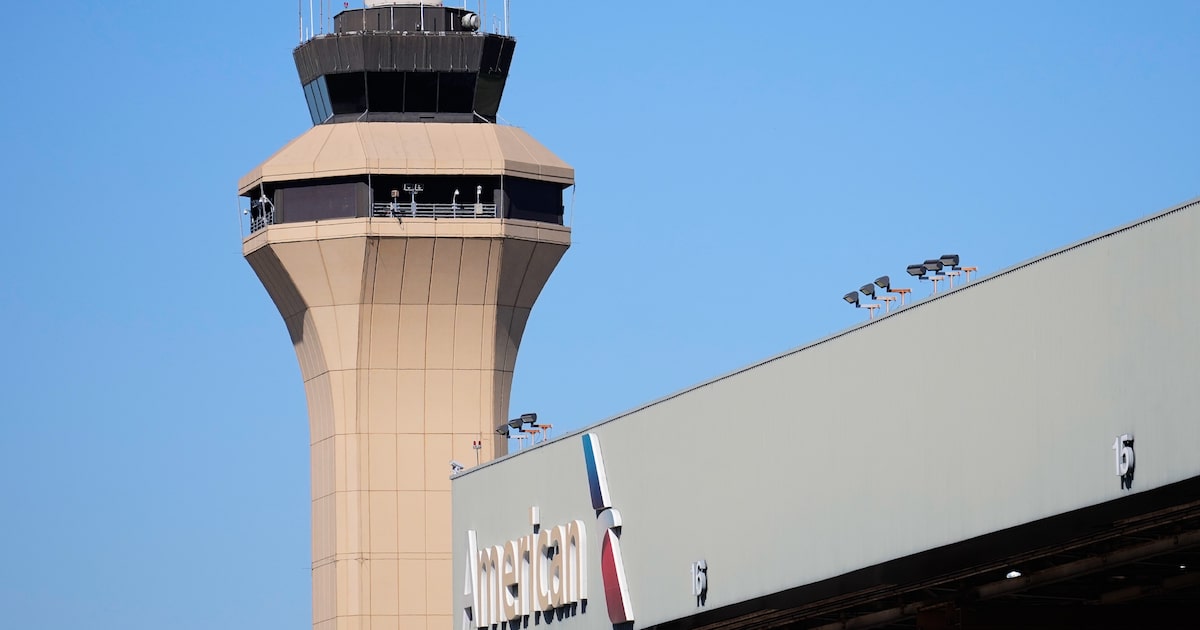
Fallout from the ongoing government shutdown could be “catastrophic” if federal workers continue to be denied paychecks as the holidays approach, according to a local representative for Dallas-area Federal Aviation Administration employees.
“I think it’s going to be catastrophic, and I say catastrophic, not meaning people are going to be injured or it’s not going to be safe to fly,” said Tim Lindsey, an airway transportation system specialist and local representative for the Professional Aviation Safety Specialists union. ”It’s going to be safe. The people we represent, they are the best in the world at their job. But what’s going to end up happening is there’s going to be more delays.”
North Texas’s two biggest airports, DFW International and Dallas Love Field, have fared better than some other major U.S. airports during the shutdown, but have started to see the effect in recent days. The FAA issued ground delays at DFW Airport on three separate days last week. On Monday, the FAA again issued a ground delay for both DFW and Love Field, slowing flights bound for North Texas at their departure airports.
The warnings come as the FAA announced Wednesday that it would reduce airline traffic by 10% at 40 “high-volume” markets beginning Friday if no deal is reached to reopen the government. The 40 markets were not identified and more information is expected Thursday.
Aviation News
DFW Airport is the central hub of Fort Worth-based American Airlines and Love Field is the headquarters of Southwest Airlines.
North Texas airspace seemed to be under normal operations Wednesday afternoon, according to the FAA’s website. TSA operations at both DFW and Love Field also appeared to be normal. As of 3 p.m., DFW had 103 delays and just two cancellations and Love Field had 30 delays, in addition to one cancellation, according to flight tracking site FlightAware.
DFW’s top executive, Chris McLaughlin, said last week that if the shutdown drags on, it would negatively impact airport operations.
“You could just imagine that as time wears on, as you get into a second and third paycheck, you can just imagine that people are going to have to make individual life choices which will ultimately impact the operation,” said McLaughlin. “And as that happens, I think you’ll ultimately see a net negative impact on the federal government’s ability to maintain the level of operations we need to continue to be successful. In particular, going into the holiday season, nobody can work for free forever.”
Chris Sununu, the leader of Airlines for America, which represents major carriers like American, United, Southwest Delta and more, said more than 3.4 million passengers have been impacted by delays and cancellations related to staffing shortages.
“We are expecting to see a record-high number of travelers fly over the Thanksgiving holiday — 31 million,“ Sununu said in a statement Wednesday. ”U.S. airlines are adding 45,000 more seats each day to meet that historic demand, and we will continue to work with the FAA to identify solutions, implement workarounds and prevent massive gridlock, while ensuring that safety is not compromised.”
Pressure is mounting on Washington politicians to come to a resolution ahead of the Thanksgiving travel period, historically one of the busiest stretches of the year, especially in North Texas. Katy Nastro, a travel expert for Going.com, said in an email that if the U.S. is forced to close airspace, as Transportation Secretary Sean Duffy alluded to this week, certain flights may not be able to operate.
“Cancellations are far harder to deal with than delays for travelers,” said Nastro. “If cancellations mount, there is not an endless supply of seats to get rebooked on, which can be extremely disruptive.”
“We are likely to see 3+ million people travel across multiple days, not just the record-setting Sunday after,” said Nastro. “October alone saw 4% more travelers than last year, despite the shutdown raging on. With people not looking to compromise on spending time with loved ones, we may see them compromise in time lost due to travel disruptions.”
During the shutdown, 13,000 air traffic controllers and 50,000 Transportation Security Administration officers are required to work without pay, according to a Reuters report.
“We have seen marginal, isolated, sporadic impacts from an FAA staffing perspective, and we’ve seen one or two marginal impacts from TSA,” said McLaughlin. “Where they will always err is on the side of safety. So if it means slowing things down versus being unsafe, they’ll always slow things down.”
Last week, the president of the American Federation of Government Employees, the union that represents more than 800,000 federal workers, decried the ongoing shutdown.
“Both political parties have made their point, and still there is no clear end in sight,” said Everett Kelley, the union’s president. “Today I’m making mine: it’s time to pass a clean continuing resolution and end this shutdown today. No half measures, and no gamesmanship. Put every single federal worker back on the job with full back pay — today.”
DFW and Love Field will be sure to see the major effects if the shutdown continues, causing FAA employees to miss more paychecks, Lindsey said, adding that some employees are poised to miss a second paycheck as soon as Thursday.
“We’ve had people that have had to call out sick for, you know, numerous reasons, even dealing with some of the mental strain of being able to pay mortgage, or even trying to be able to get money coming in,“ said Lindsey.
“So that is, we are starting to see that, kind of take a toll on that those people, and what, what ends up happening is, if our people aren’t in, aren’t able to come in and be able to maintain the equipment, or if something goes out and we’re not able to get it, can cause air traffic, or the flying public, to have to change how they’re flying.”
Continued FAA staffing disruptions or lack of proper equipment in the Dallas-area could force a situation known as “ATC Zero”, meaning there would be no employees working air traffic control towers.
“At a place like DFW or Dallas, it’s going to shut down,” said Lindsey. It would shut down the airport. And so that, and so I mean, how long that would be would be dependent on, you know, what he when they get the equipment back.”
“If they do decide to make that decision, it’s for good reason and we’ll still be coming into work… to make sure everything is still running. We don’t support the shutdown. We want the employees to be at work, getting paid, want the public to be safe and we don’t want to inject any potential hazards into the system.”
 FAA reducing air traffic by 10% across 40 ‘high-volume’ markets during government shutdown
Federal shutdown starting to affect air travelers as busy holiday travel season nears.
 Airlines say bookings falling as shutdown drags into record territory
‘There’s no political party that will win if Thanksgiving gets completely screwed up because of their politics — everybody loses.’