
State lawmakers mandated outdoor sirens and warning systems in flood-prone areas and mandated new safety standards at summer camps after last summer’s flooding.
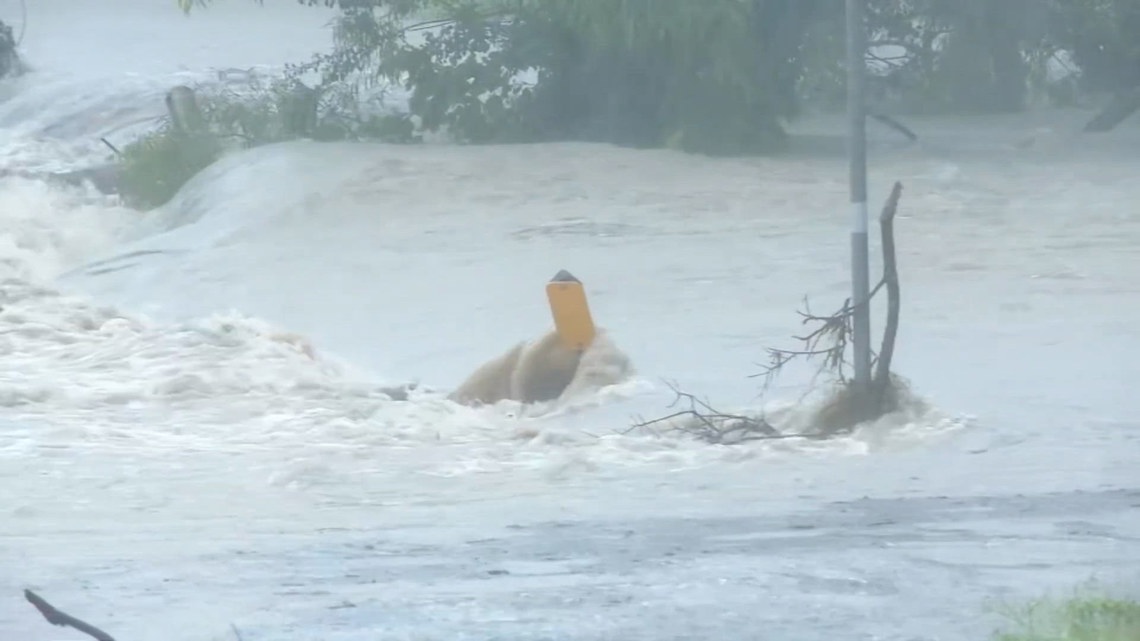
AUSTIN, Texas — Heavy rain continued to fall on Wednesday, triggering dangerous flooding across parts of South and Central Texas. Some areas could see half a year’s rain by the end of the week.
Texas Gov. Greg Abbott issued a disaster declaration for 59 counties experiencing flooding or at risk of flooding. Abbott said on Wednesday the flood is “likely going to break records in Texas history.”

This story continues below.
More in State
Texas activates emergency response amid flash flooding
Texas Gov. Greg Abbott activates emergency resources ahead of rain chances this week
The state has pre-positioned resources such as swift water rescue teams, Texas National Guard personnel, helicopters and high-water vehicles.
Right now, the state has 24-hour emergency operations underway so officials can monitor the flooding and deploy resources where needed.
Some areas west of San Antonio are enduring back-to-back days of dangerous flood threats, prompting dozens of rescues.
Officials report that at least 75 people had to be pulled from the floodwater, and the rain isn’t over yet. So far, there have been no reported deaths.
Some of the hardest-hit areas, like Kinney, Uvalde and Medina counties, which were already inundated by high water on Tuesday, are expected to see more flooding in the coming days. Flood Watches have been issued to more than 6 million people in Central and southwest Texas.
The area of greatest concern right now is the Nueces River basin and its tributaries.
“Don’t think, ‘Well, I’m not near the Nueces; I’m near some other basin.’ Don’t think you’re safe there,” Abbott said.
There is a Flash Flood Emergency in Kendall County until 8 p.m. There is a high risk of excessive rainfall from Sonora to Del Rio, including Eagle Pass over to Bulverde. Those areas, Abbott said, already have 10 to 15 inches of rain and could get another 10 to 15 inches of rain through Thursday morning.
Flooding is the state’s most common natural disaster. Just last year, destructive and deadly flooding in the Hill Country caused water levels along the Guadalupe River to rise rapidly, killing 139 people, the majority of whom were in Kerr County. Many of those who died were at summer camps, RV parks or vacation homes, enjoying the Fourth of July weekend. Nine others died in Travis County, while three died in Williamson County, and five died in Burnet County. During those floods, in the span of a few hours, the equivalent of four months’ worth of rain fell across the Hill Country.
The Hill Country region is particularly prone to flooding because of steep slopes, soil and bedrock that repel heavy rain rather than allow it to soak into the ground.
Keri Stephens, a University of Texas at Austin professor who studies crisis communication and flood risk, said this summer, there is a noticeable difference.
“I’m really impressed with what I’m seeing with the emergency management community in this state. They’re getting together and looking at the stream flow gauges that are telling us how the rivers are running,” Stephens said. “They’re really talking and thinking through these issues, and then they’re pushing information out to try to alert their communities in I think very positive ways.”
The Fourth of July floods last year had rainfall of 20.29 inches, but Abbott said the expected rainfall during this rainstorm is predicted to be more than 30 inches, more than what occurred during the flood last year.
“There is a lot of anxiety when a community goes through a very tragic flooding event,” Stephens said. “We’ve seen this in Texas with Hurricane Harvey back in 2017. We’re seeing it with the tragic Hill Country floods this past year.”
It is hard for forecasters to precisely predict where the heavy rain will fall, which underscores the importance of residents receiving weather warnings and knowing how to act when they do.
“Communication is essential, and a lot of people don’t think about it in as complex a way as we probably should,” Stephens said. “It’s got to be multilayered, and it needs to come from a lot of different directions to be sure that it reaches the people that need it in a timely way.”
While a lot of people get alerts on their mobile phones, people can silence weather alerts on their phones or even not receive them if they’re in remote areas.
“We have started to realize that it’s not as easy a problem to solve as what on the surface it might appear,” Stephens said. “A lot of people think you just get in touch with people and tell them, and then they automatically are going to do what the message tells them to do. There are lots of reasons that people don’t respond that way.”
Some worry that alerts for banking, security, Amber Alerts, Silver Alerts and similar notifications that people get on their phones are too distracting and overwhelming, leading to alert fatigue.
“I would much rather people be slightly over alerted than under alerted, because it’s a life-and-death situation,” Stephens said. “However, we’re seeing people turn the alerts off on their phone because they feel like they’re getting too many. That’s a dangerous decision.”
A 2023 FEMA study found that nearly 50% of people silenced alerts or didn’t notice them in time.
“We see that happen a lot of times after a major disaster is we do want to be overly cautious,” Stephens said. “We want to be sure we get that information in the hands of people, but people react negatively to too much information.”
In the aftermath of the flooding, state lawmakers required local governments to install outdoor sirens and warning systems in areas prone to flash flooding and mandated new safety standards at summer camps.
Other efforts, such as requiring the credentialing and training of emergency managers at the local level, fell short. Currently, there are no minimum qualifications to become an emergency management coordinator in Texas.
Floodwaters continued to make travel dangerous across Uvalde County on Wednesday, with numerous highways, farm roads and city streets closed.
“Our low-water areas in our city that are prone to flooding are being barricaded at this time,” Uvalde Mayor Hector Luevano said.
If you find a road covered in water, turn around and go another way. On Wednesday morning, our KVUE crew saw one driver come to a crossing, back up and turn around, which is the right thing to do.
“We need to constantly remind people that water is just unpredictable, and we might think we’re in control of water, but we are not,” Stephens said. “Water is going to do what water’s going to do.”
That is different from what our KVUE crew observed someone else do, which is the wrong thing to do. Earlier Wednesday morning, someone ripped down the caution tape that closed off a low-water crossing at Brushy Creek.
“I think we see a lot of these positive safety behaviors, but we also need to constantly remind people that it could happen to anyone, especially if you’re traveling somewhere and you’re not really familiar with the area where you’re going,” Stephens said. “Be careful. You could get caught off guard. You could be on the road in a dangerous area.”
Stephens grew up along the Clear Fork of the Brazos River in North Texas and survived the 1978 flood, recalling that her family had 5 feet of water in their house for three weeks afterward.
“We need to tell everybody it doesn’t matter where you live, whether you’re in a flood-prone area or not; have a plan about what you would do in case of a flood,” Stephens said.
Stephens said preparation should start well before you get a weather watch or warning.
“A lot of times they’re telling you don’t get on the roads because you might not know the road system well enough to know where the water is coming over the road, but you may need to have your own emergency plan,” Stephens said. “Perhaps it is climbing to higher ground. Perhaps it is moving to a higher place on a piece of property, and then occasionally it is actually to evacuate to a safe route.”
Abbott said rivers are expected to rise rapidly in parts of the state over the next 24 to 48 hours, raising the possibility of life-threatening and catastrophic flooding.
Officials are urging Texans to monitor the weather, listen to their local leaders and remember that old saying: If there’s water on the road, turn around, don’t drown.
“Our local emergency responders are preparing ahead of time, the state has prepared ahead of time, and I hope that we will be able to continue these actions long term because it’s easier for us to do this after it’s happened recently,” Stephens said. “We need to keep these kinds of safety behaviors ongoing and enduring over a long period of time.”