
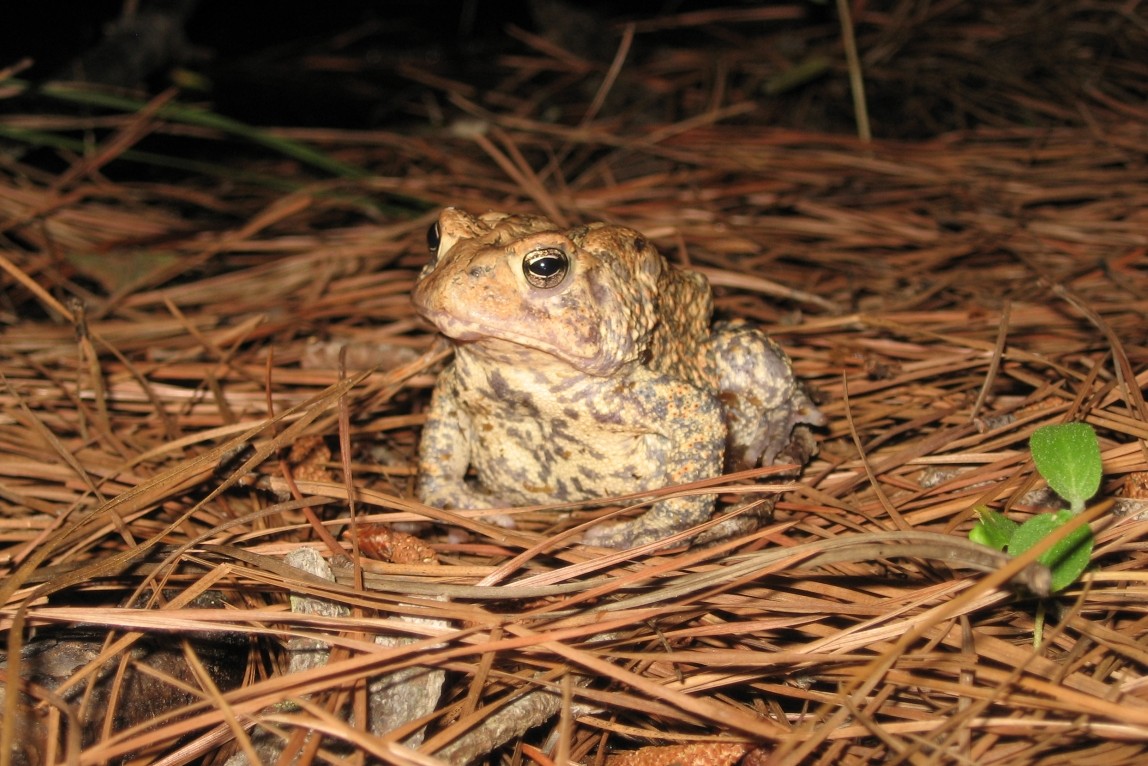
The property was one of three sites where USFWS biologists released 170,000 Houston toad eggs in April as part of a larger effort to reintroduce 3 million eggs and restore wild populations across Central Texas.
The Houston toad was among the first amphibians protected under the Endangered Species Act when it was listed in 1970. Once found across parts of Southeast Texas, the small brown amphibian disappeared from Harris County by 1975 as rapid development destroyed and fragmented its habitat.
The species depends on a rare combination of sandy soils, loblolly pine forests and temporary breeding ponds. After transforming from tadpoles, the toads can travel up to 3 miles through open forest before returning to ponds to breed. As development progressed, dense brush and invasive grasses fragmented that landscape, and populations became increasingly isolated.
To reverse the decline, conservation partners have spent more than two decades breeding Houston toads in captivity and releasing more than 1 million eggs each year. This year’s effort is among the program’s largest yet, with 3 million eggs released at sites chosen to reconnect isolated populations.
Much of that work happens on private land through the agency’s Partners for Fish and Wildlife Program, which provides technical and financial assistance to restore habitat. Landowners thin dense brush, plant native grasses and wildflowers, and improve seasonal wetlands that the toads rely on for breeding.
The recent sighting of a male Houston toad on one of those restored properties suggests those restoration efforts are beginning to pay off.