
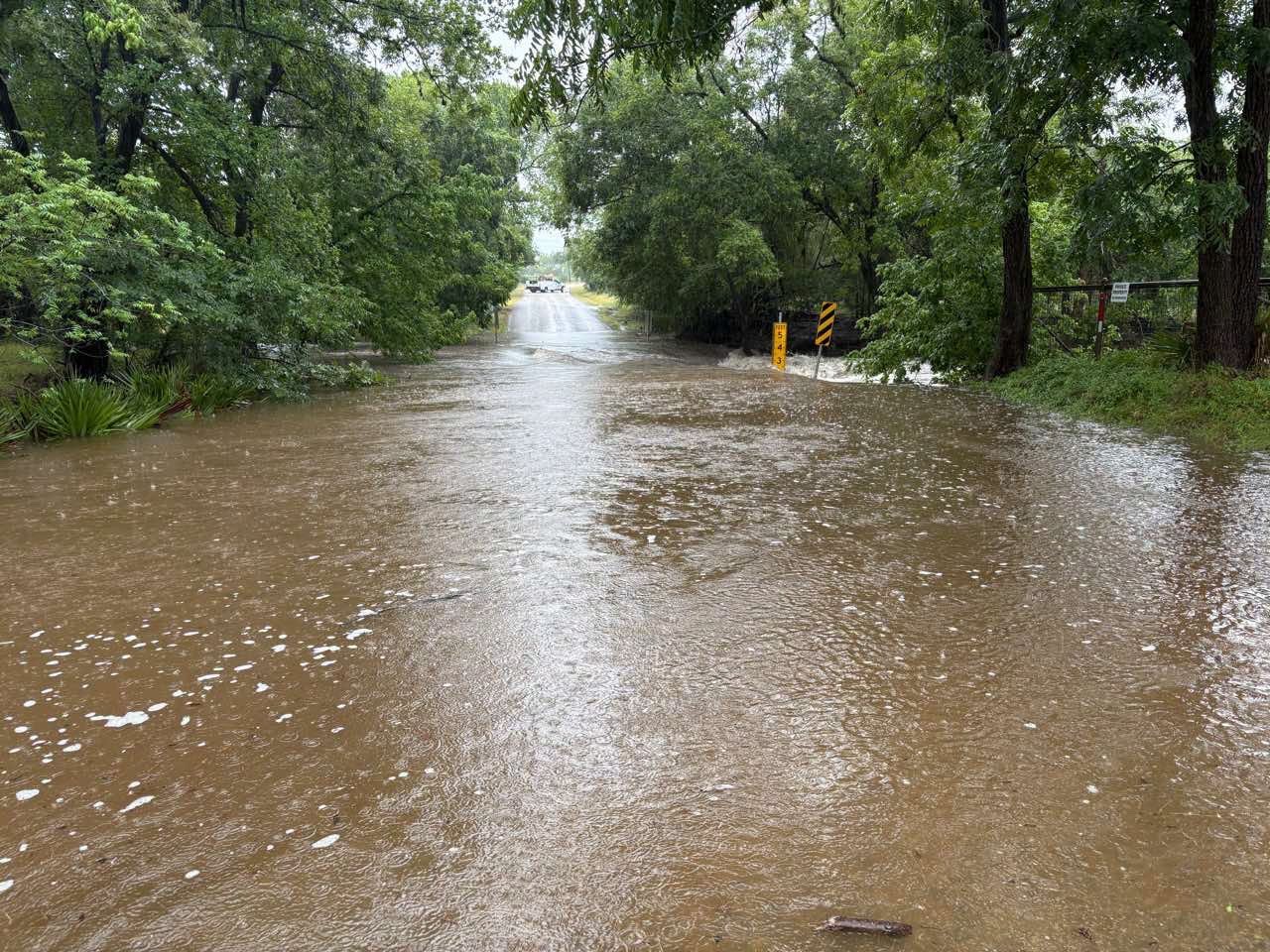
The Guadalupe River runs from Kerrville all the way to San Antonio Bay, but that stretch through the Texas Hill Country is notorious for its potential for flash floods. With the National Weather Service warning that the Guadalupe River has reached its 2025 flood levels in Kerrville, residents in a neighboring Hill Country town are being put on alert.
Spring Branch may be over an hour east of Kerrville but the Guadalupe River cuts right through the area. Spring Branch Road has already been closed due to flash flood risks and now Comal County is reminding folks to be cautious on the road.
“We want to keep our residents informed and prepared, not alarmed,” Comal County writes. “The National Weather Service has issued a Flood Warning for the Guadalupe River near Spring Branch, affecting Comal County. Moderate flooding is forecast from this evening through early Saturday morning. That means, as the river rises, conditions along the Guadalupe from Guadalupe River State Park up to Canyon Lake also become increasingly dangerous for swimming, tubing, kayaking and other recreation.
The Guadalupe River at Spring Branch normally has a gage height, feet of just over two feet. As a result of the heavy rains and flooding, the river peaked at 25.04 feet at 6:15 p.m. on Wednesday, July 15, according to the U.S. Geological Survey. The waters have been receding but are still sitting at 11.68 feet as of 8 a.m. Thursday, July 16.
For comparison, the Guadalupe River at New Braunfels rose to 3.42 feet at 2 p.m. Wednesday and has since dropped to 2.31 feet as of Thursday morning.
“If you live or spend time along the river, especially in low-lying areas near Spring Branch, Guadalupe River State Park, or Canyon Lake, please stay alert to changing conditions through tomorrow,” Comal County writes. “Keep in mind, this water is also carrying downed trees, branches and other debris picked up along the way. Combined with strong currents, that debris makes the river extremely dangerous to be in or near right now, even for strong swimmers. Please stay out of the water until conditions improve.”