
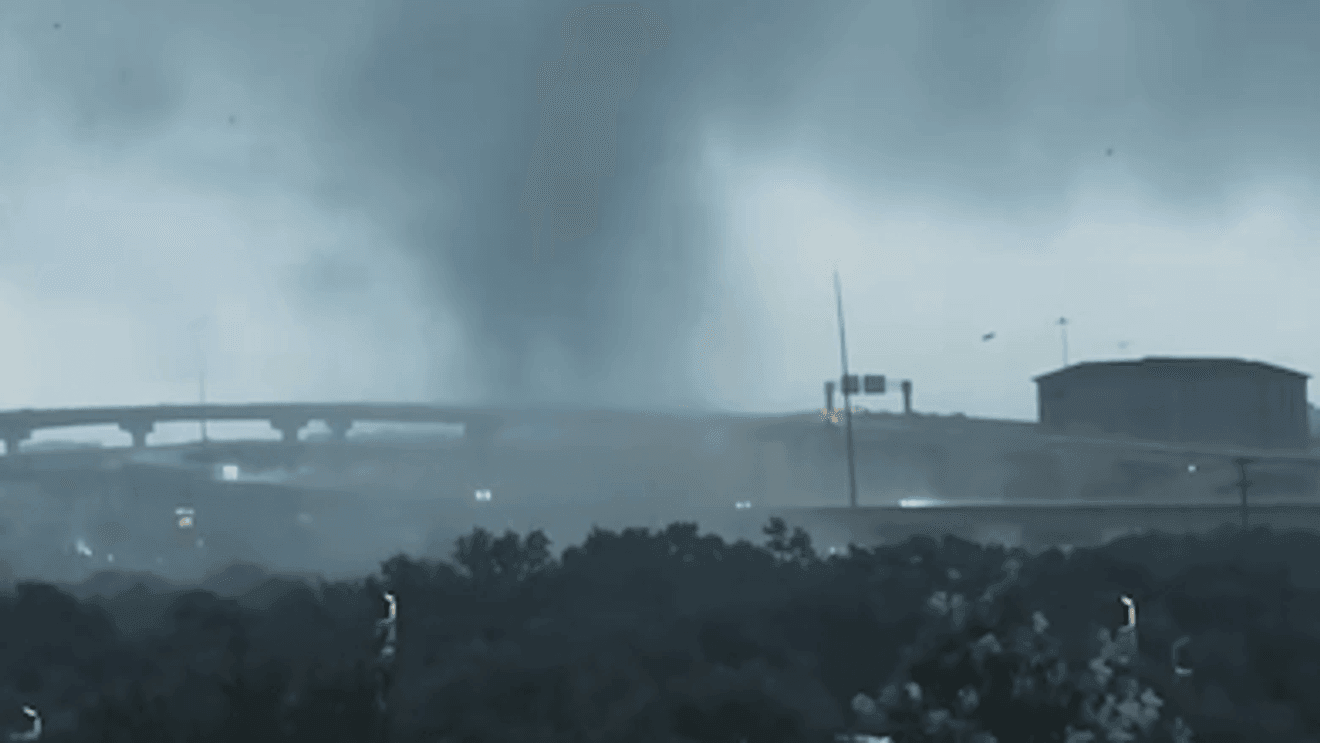
SAN ANTONIO — A confirmed EF-1 tornado that moved through northwest San Antonio Wednesday morning was already on the ground for several minutes before the National Weather Service issued a tornado warning, records show.
The tornado passed near Loop 1604 and The Rim, damaging the Palladium and several nearby businesses. It also ripped part of the roof off an apartment building near UTSA.
“It was chaos,” UTSA student Alek Chavez said.
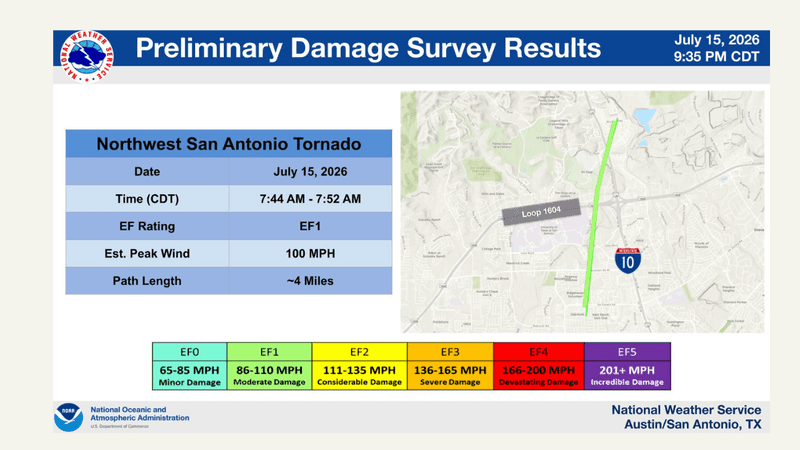
Timeline shows tornado warning came after EF-1 touched down near The Rim
Another UTSA student, Elizabeth Samuel, said she looked outside after the storm hit and saw the roof was gone.
Samuel said she did receive a tornado warning on her phone, but by then, the danger was already right outside.
“I got the tornado flood alarm, and then I just started hearing wind and more wind,” Samuel said.
RELATED | Confirmed EF-1 tornado leaves damage near The Rim in San Antonio
The National Weather Service confirmed Wednesday night that the tornado was on the ground from 7:44 a.m. to 7:52 a.m.
But records show the tornado warning was issued at 7:49 a.m. — five minutes after the tornado first touched down.
“Thanks for the warning, I guess, but you can send it back,” Samuel said. “We don’t really need that.”
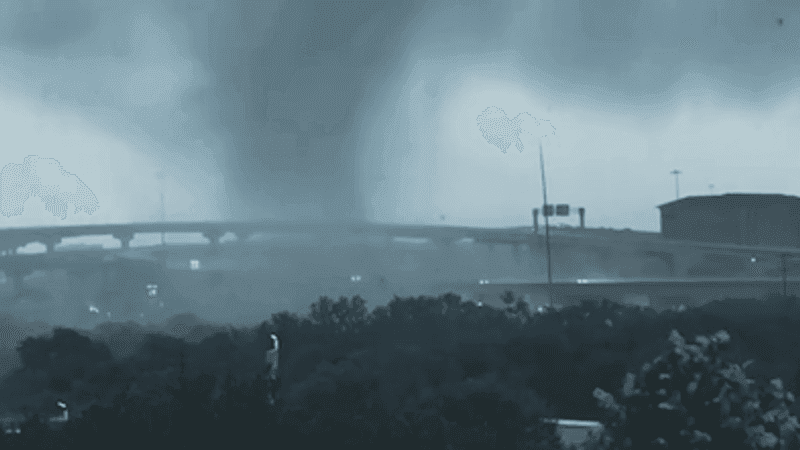
A tornado that touched down and crossed I-10 on the far north side of San Antonio Wednesday morning, leaving a path of destruction, has been classified as an EF-1, according to the National Weather Service. (Photo: Al Ortiz)
Brian LaMarre, who worked for the National Weather Service for more than 30 years, including more than a decade in Texas, said this type of tornado can be difficult to warn for because it can spin up quickly.
He now owns a weather consulting company called Inspire Weather.
He says the NWS issued several tornado warnings leading up to this one as the storm rolled through nearby areas because the conditions were right for one to form.
It ended up happening over San Antonio.
“The tornado did touch ground, and then five minutes later, at 7:49, the National Weather Service issued that warning, and it was good that they did because that rotation intensified as it moved northward,” LaMarre said.
LaMarre said the warning may not have reached people before the tornado first touched down, but it mattered for people farther along the tornado’s path.
“Sometimes they can happen within minutes, and so when you get a tornado warning out, the thunderstorm or the tornado may actually start to weaken,” LaMarre said. “In this case, the tornado warning came right after the tornado started touching the ground, but actually came out before the tornado intensified and did more damage as it moved northward.”
The News 4 I-Team reviewed NOAA and National Weather Service performance data, which shows the agency’s long-term goal is to give people at least 13 minutes of lead time before a tornado. Nationwide, the average tornado warning lead time has hovered around 10 minutes in recent years.