
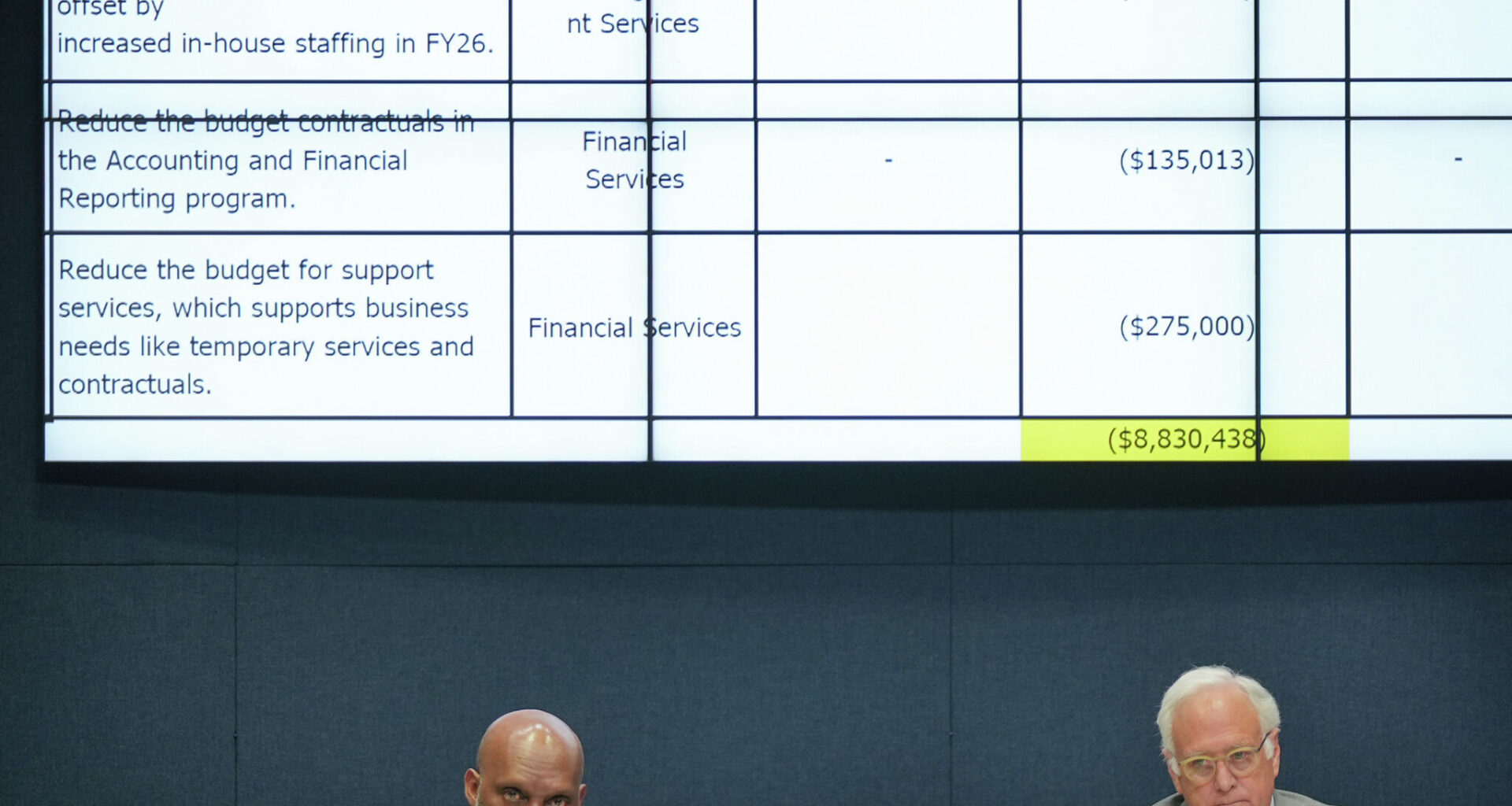
Austin City Manager T.C. Broadnax, left, and Mayor Kirk Watson discuss a new city budget at City Hall on Thursday, Nov. 20, 2025.
Jay Janner/Austin American-Statesman
A proposed 3.5% property tax increase emerged Thursday as one of the first major tension points in Austin’s budget debate, reviving tensions from last year’s fight over a much larger tax hike that voters rejected.

The divide surfaced as city council members got their first opportunity to publicly question City Manager T.C. Broadnax’s proposed $6.6 billion budget.
Article continues below this ad
Released late Friday, the budget relies on higher taxes and fees – in addition to millions in cuts and reallocations – to balance a projected $26 million budget deficit. The manager’s budget also increased funding to priorities like homeless programs, public safety and employee pay and healthcare raises.
The 3.5% increase in property tax collections is the maximum the city can adopt under state law without seeking voter approval. The increase has become politically charged less than a year after Austinites rejected Proposition Q, which would have raised city property taxes by more than 20%.
Debates over social service cuts, police funding and higher tax rates have already emerged as potential key fights as council starts debating the budget over the next several weeks.
As proposed, the budget would increase property taxes and service fees for electricity, water, trash and drainage rates. Together, the increases would cost the average Austin homeowner nearly $346 a year (or about $29 a month).
Article continues below this ad
Council Member Marc Duchen, the only council member to vote against the budget that led to last year’s property tax election, told the council he was surprised by the proposed budget and thought that it would have been more “reflective of some fiscal discipline after the tax rate election last year and instead it looks like we started off with the max.”
“It’s not really what I was expecting,” he added. “I thought after starting the conversation a couple months ago about zero based budgeting,
“When I look back for the last four years at the 3.5% that we approved, it sure looks like the state gave us a ceiling, but we treat it as a floor,” he said.
Austin City Council member Marc Duchen speaks at a city council meeting onThursday, Sept. 25, 2025.
Jay Janner/Austin American-Statesman
Mayor Kirk Watson highlighted his request to analyze a no new revenue version of the budget because he did not want council to jump to the conclusion that they would raise taxes by 3.5%.
Article continues below this ad
“It would help us identify and I think, it would help the public identify, what happens if we do go to the full 3.5%,” he said.
But other council members – many of whom advocated for an even higher tax rate increase than what council put on the ballot this time last year – pushed back on the idea of going under a 3.5% raise.
Council Member Ryan Alter said that over the last year, the city’s inflation has been 3.5%.
“Keeping up with the cost of what we’ve been doing just over the past 12 months – not growing in the city, not doing anything new – costs 3.5% more,” he said.
Article continues below this ad
Austin City Council Member Ryan Alter listens during discussion of a new city budget at City Hall on Thursday, Nov. 20, 2025. The Austin City Council is set to vote on a budget that includes millions of dollars in spending cuts after voters rejected Proposition Q in November, a ballot measure that would have raised property taxes and generated $110 million in new revenue.
Jay Janner/Austin American-Statesman
At a press conference after the meeting, Budget Director Kerri Lang said that without the 3.5% increase, the city would anticipate $26 million more in cuts they would need to balance.
“If we do not go to the full 3.5% in each year we forever lose that revenue and so the growth is lower which makes it harder for us to balance out our ongoing needs in not just the current fiscal year but in future years,” she said.
Some council members also raised questions about cuts to social services and housing.
Article continues below this ad
Council Member Mike Siegel echoed the concerns of the recently formed community budget coalition, which has advocated for cutting police funding and moving the money to social services.
“A lot of advocates, since the budget dropped, have been asking the question, how is it that we are raising the police budget by $25 million while we’re cutting social services? And that doesn’t feel good in terms of how we address the root causes of crime and finance,” he said.
District 7 council member Mike Siegel, along with other city council members and activists, spoke out against automated license plate readers during a press conference at City Hall on Wednesday, June 4, 2025.
Ricardo B. Brazziell/Austin American-Statesman
Lang said after the meeting that most of the police budget was from contractual agreements with the union and the other half came from internal services costs to departments. The only brand new investment police received was one civilian position for recruiting, she added.
Article continues below this ad
Council will continue debating the budget over the next several weeks until they vote to adopt it on Aug. 12. The public will have a chance to weigh in during public comment at council meetings and through district-based town halls. Next Tuesday, budget staff will present more details on the controversial social services cuts.