
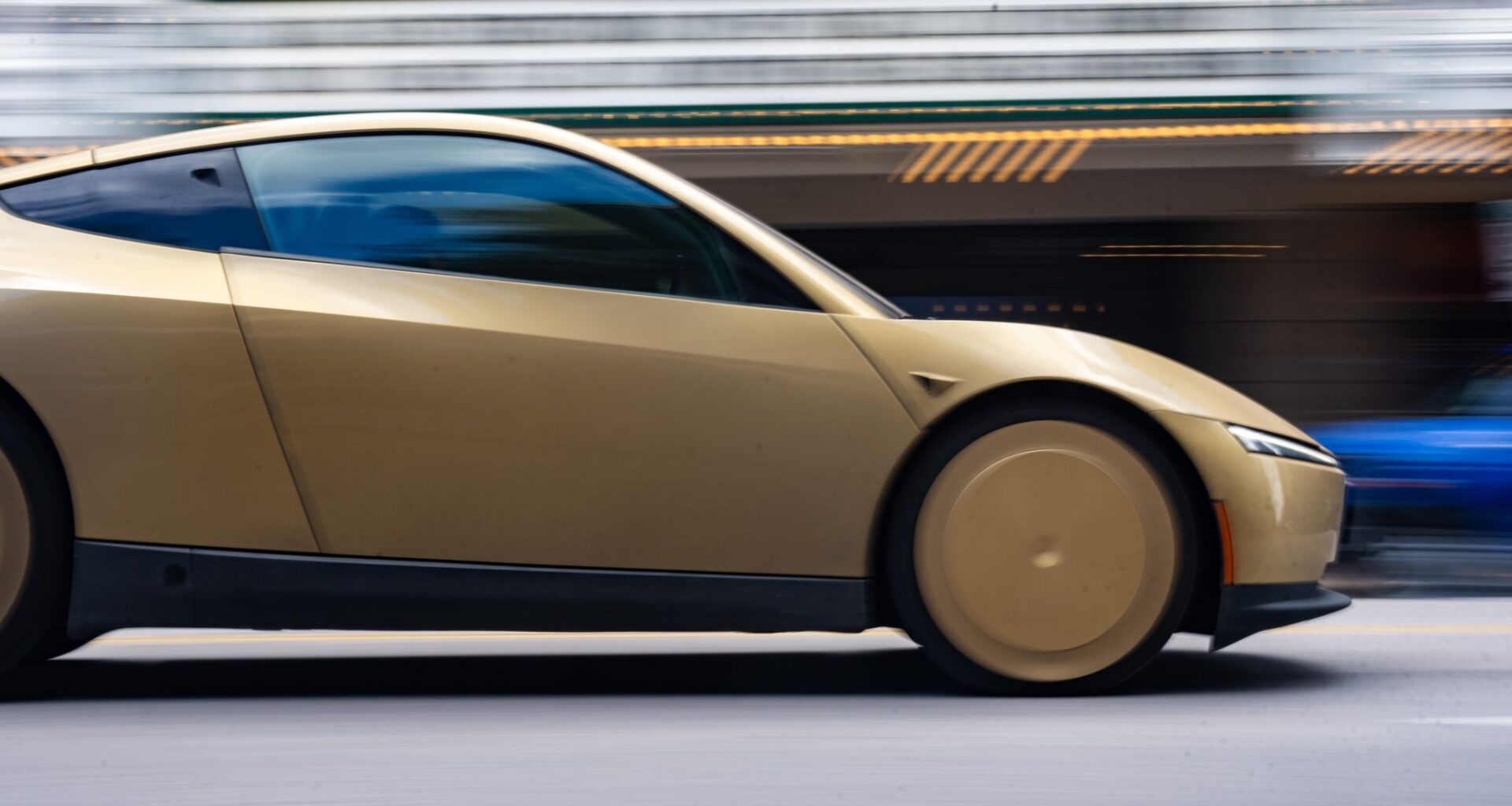
A Tesla Robotaxi travels down Congress Avenue in downtown Austin on June 16. Tesla reported four new robotaxi crashes statewide in the latest data released by federal regulators, including two in Austin.
Mikala Compton/Austin American-Statesman
Robotaxi fleets operating in Texas reported 21 new crashes to federal regulators in the latest monthly update, as autonomous vehicle companies continue expanding operations across the state and face growing scrutiny over safety.

Waymo, which operates the largest robotaxi fleet in Texas with 642 vehicles, reported the most statewide crashes since last month’s update with nine. Avride, with a fleet of 317 vehicles, reported five crashes. Tesla Inc., with 175 vehicles, reported four crashes, while May Mobility reported two crashes with a fleet of 18 vehicles and Zoox reported one crash with a fleet of 44 vehicles.
Article continues below this ad
Two of Tesla’s newly reported crashes occurred in Austin, bringing the company’s total reported crashes in the city to 20 since last June. Its competitors also tallied more Austin crashes in the data released by the National Highway Traffic Safety Administration.
Waymo reported eight additional crashes in Austin, bringing its total to 113. Zoox, which had not reported a crash since March, now has two total crashes in the city. Avride reported no new Austin crashes, leaving its tally at 24.
A Waymo robotaxi drives across Congress Avenue on 8th Street in front of the Capitol Building as rain arrives in the Austin area on Jan. 23. Waymo operates the largest robotaxi fleet in Texas and reported the most crashes statewide in the latest federal data.
Sara Diggins/Austin American-Statesman
In one crash summary provided by Tesla, the company said its robotaxi, with a passenger onboard, was traveling through a parking lot behind an SUV when the SUV stopped and reversed, making contact with the front of Tesla’s vehicle.
Article continues below this ad
Zoox said a vehicle operator in one of its Toyota Highlander vehicles disengaged autonomous mode to make a left turn after receiving a signal from an oncoming driver. A pickup truck then struck the rear of the Zoox vehicle, causing moderate damage to both vehicles.
Waymo’s Austin crashes involved SUVs, passenger cars, a van, a pickup truck and a bus. In the bus collision, Waymo said its autonomous vehicle was stopped at the exit of a parking lot when a bus passing in front of it was struck as the Waymo vehicle initiated a right turn. The front right side of the Waymo vehicle struck the rear right side of the bus.
Waymo spokesperson Ethan Teicher noted Waymo has more than 300 vehicles in Austin, and pointed to Waymo’s latest safety data release indicating its vehicles are involved in 79% fewer injury-causing crashes in Austin compared to human drivers in the city.
Sgt. Patrick Chasse of the Hays County Constable’s Office, Precinct 2, directs a Zoox robotaxi to stop on East 4th Street as he manages traffic exiting the Frost Bank Tower parking garage in Austin on March 25.,
Jay Janner/Austin American-Statesman
The data arrives as Tesla prepares to expand its robotaxi operations with Cybercab, a new vehicle the company plans to add to its fleet. The vehicle drew attention at the Texas Innovation Invitational, where TxDOT Executive Director Marc Williams said Cybercab would “dramatically scale” Tesla’s robotaxi operations in the coming months.
Article continues below this ad
The Austin-based automaker also showcased Cybercab at the National Federation of the Blind’s annual convention in Austin, highlighting accessibility features for blind and visually impaired customers.
Concerns and regulatory action
Public polling has shown Texans remain skeptical about whether autonomous vehicles are ready to operate on most roads or perform as well as human drivers.
Last month, Sens. Ed Markey and Richard Blumenthal urged NHTSA to expand autonomous vehicle reporting requirements, including data on vehicle miles traveled, fleet size, crash severity, operating conditions and non-crash safety incidents such as interference with emergency vehicles and school buses.
Article continues below this ad
The pair also asked questions surrounding the agency’s evaluations of the Full Self-Driving system used in Tesla’s robotaxi operations, requesting responses by July 7. Responses have yet to be provided, and NHTSA said it remains in touch with Sen. Markey’s office and is working on a response to his letter.
An Avride autonomous vehicle, part of Uber’s robotaxi fleet, drives near Klyde Warren Park in downtown Dallas. Avride is among several companies expanding autonomous vehicle operations across Texas.
Rick Kern/Dallas Morning News
Meanwhile, NHTSA Administator Jonathan Morrison said the agency has documented multiple instances of autonomous vehicles driving directly into active emergency scenes, blocking the paths of ambulances and firefighters, or failing to recognize and respond to basic safety conditions like flashing lights, fire and traffic cones.
Article continues below this ad
“Let me be clear: the inability to detect and appropriately respond to such situations represents a functional insufficiency. Emergency scenes are not rare or extreme “edge cases,’” Morrison wrote, noting that the agency is issuing a call to operators to immediately focus their resources on fixing the issue.