
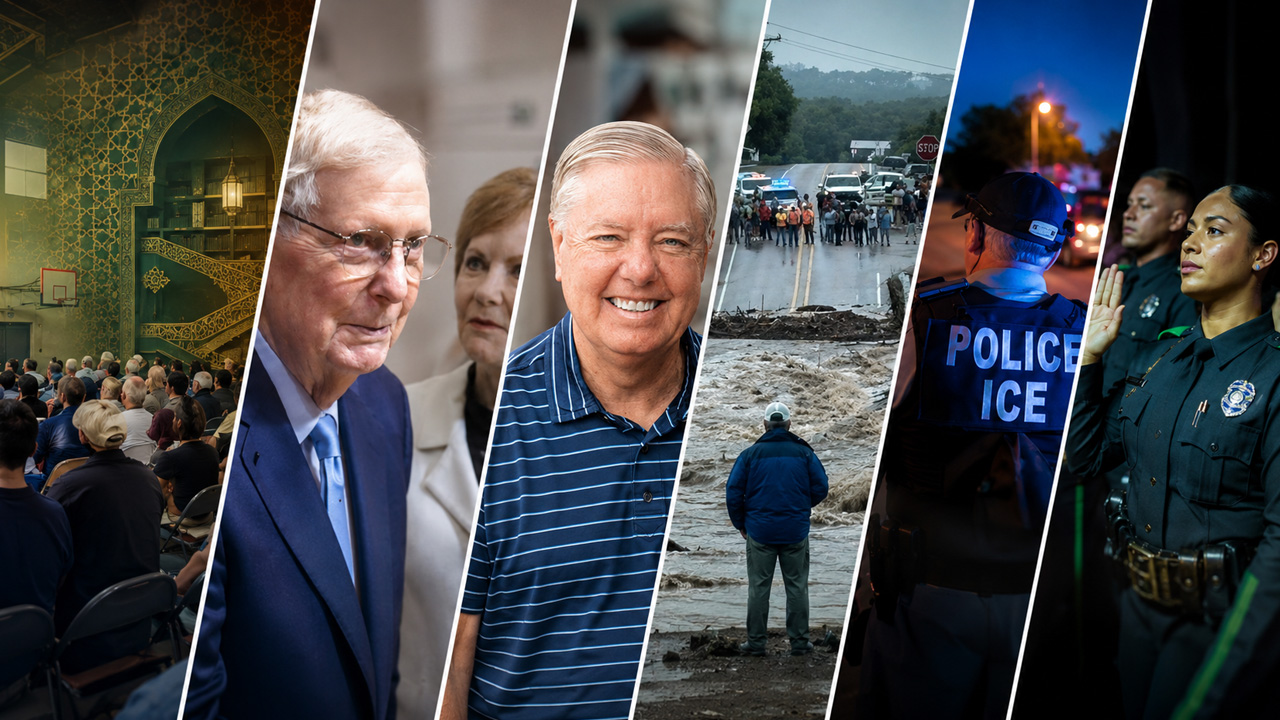
An illustration represents major stories from the week, including the Plano Sharia debate, questions about congressional representation, Lindsey Graham’s death, deadly Texas flooding, immigration enforcement and the graduation of new Dallas police officers. | Illustration created by DX.
From a Plano mosque open house that put competing definitions of Sharia in direct conflict to an examination of the Democratic Socialists of America’s official platform, the week brought questions about faith, law and political power into sharp focus.
North Texas also saw major developments in a Fort Worth First Amendment dispute, an arrest in a Grapevine killing that had remained unsolved for more than 45 years and new scrutiny of election safeguards. The sudden death of U.S. Sen. Lindsey Graham (R-South Carolina) became one of the week’s defining national stories, while the Road to Independence followed America’s break with Britain beyond the Declaration.
Here are the stories and updates that helped shape the week.
Faith, schools and competing visions
Why It Matters: Some of the week’s strongest stories examined the values competing for influence in American institutions. A Plano mosque open house placed two definitions of Sharia in direct conflict: personal religious practice and a political or legal system enforced by the state. The Dallas Express also examined the Democratic Socialists of America’s official platform, while education coverage tracked a deleted Pride flag post in El Paso and a U.S. Department of Education message emphasizing patriotism and national values.
Leadership, loss and the American story
Why It Matters: Preliminary findings provided the first specific medical explanation for U.S. Sen. Lindsey Graham’s (R-South Carolina) sudden death, though officials had not completed the final death certificate. U.S. Sen. Mitch McConnell’s (R-Kentucky) continued absence revived a broader question about representation when an elected official cannot vote. Deadly Texas flash floods killed two people and triggered hundreds of rescues one year after the Hill Country disaster, underscoring the state’s continued vulnerability to severe flooding. The Road to Independence followed the Declaration to Boston, where residents burned royal symbols on July 18, 1776, while Dallas business leaders challenged younger Americans to value work, skilled trades, faith and service.
Elections, immigration and public trust
Why It Matters: Robert S. Howden became Texas’ new chief election officer ahead of the midterms as federal officials raised new questions about voter-roll eligibility in four other states. The U.S. Department of Homeland Security said its reviews were preliminary and identified potential noncitizens, not verified cases of illegal voting. A separate federal partnership targeted fraud involving non-domiciled commercial driver’s licenses issued to illegal aliens. Each story underscored the need for government systems to verify eligibility and enforce existing law.
Civil liberties and local accountability
Why It Matters: Fort Worth’s Pride Fest speech dispute produced two major developments. Fort Worth Police Chief Eddie Garcia said officers were wrong in how they described lawful speech, and the U.S. Department of Justice requested records as it considered whether to open a formal civil rights investigation. In Dallas, more than 50 Dallas Fire-Rescue medics still had not received $27,504 for Fair Park shifts they worked in 2025. The stories asked whether public institutions acknowledge errors, protect constitutional rights and honor commitments to workers.
Crime, courts and public safety
Why It Matters: The Dallas case involving an unborn child’s death led police to add a first-degree felony injury-to-a-child charge after an alleged assault, though investigators did not announce a murder charge. Advances in DNA technology produced an arrest in a Grapevine killing more than 45 years later. In West Dallas, an autopsy prompted a murder investigation after responding officers first attributed a man’s death to a dog attack, and police sought two persons of interest. The cases showed why precise early reporting and persistent investigative work both matter.
That was the week. If you missed it, now you are caught up.