
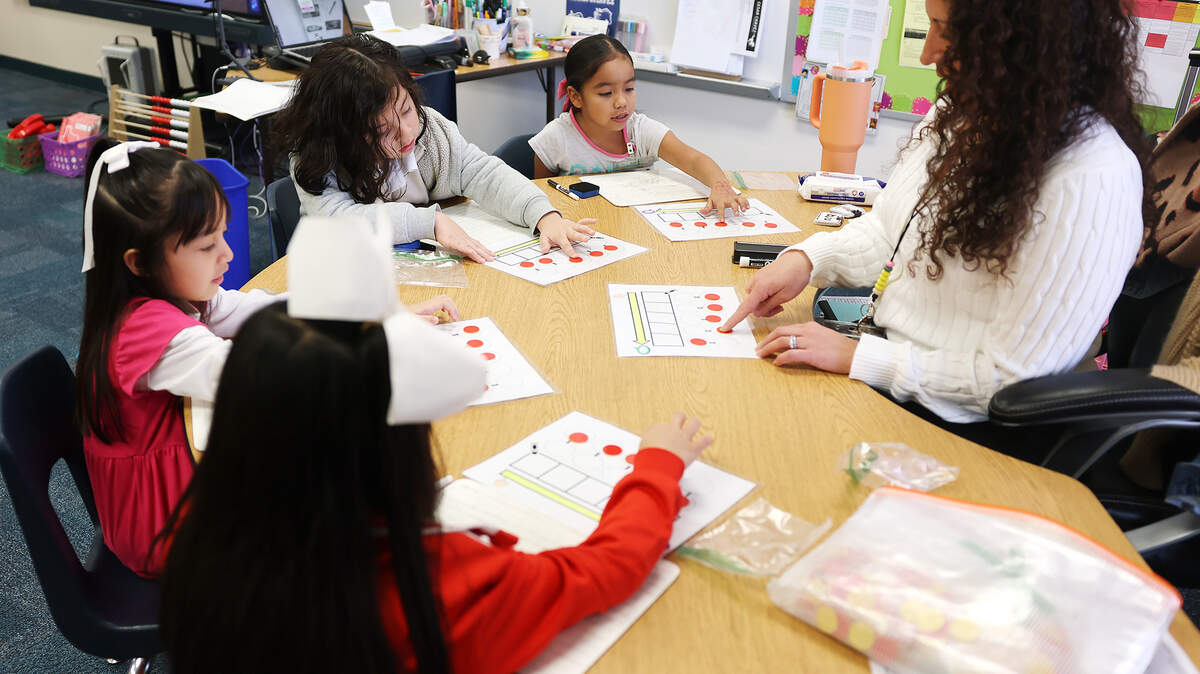
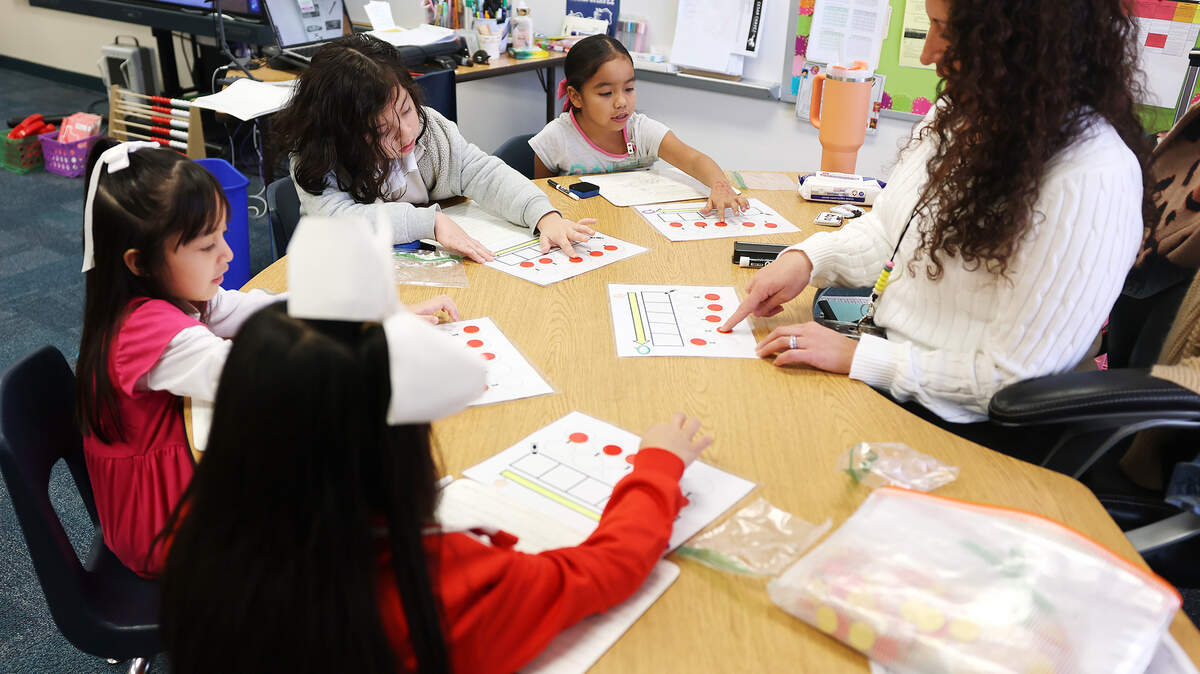
Kindergarten teacher Arselia Espinoza, right, works with students on identifying the words in a sentence during class at Cesar Chavez Elementary on Feb. 3, 2026, in Fort Worth.
Amanda McCoy
amccoy@star-telegram.com
Parent engagement plays a crucial role in kindergarten readiness, according to a nationwide study that includes Texas children.
New research shows parent engagement, education level and household income are among the strongest predictors of children’s readiness in reading and mathematics when they approach kindergarten. The parent engagement aspect is notable, as there’s still limited research on this that needs to be studied further, said Nina Smith, co-author of the study and associate dean of North Carolina Central University’s College of Health and Sciences.
As families prepare to return to school in the fall, Smith recommends parents reinforce what their children are learning in the classroom and establish consistent communication with their child’s teacher to keep track of how they’re doing.
“The good news is that parents don’t need specialized training or expensive educational materials to support their children’s early literacy and mathematics development,” Smith said. “In fact, they’re already doing it in the home and may not even realize it. The most effective learning opportunities often occur through everyday routines, conversations and play.”
Parents counting steps, toys, snacks or household items with their children during daily routines is one example of this, she said.
Kindergarten readiness, also known as school readiness, includes basic knowledge of language and math, in addition to physical, cognitive, social and emotional skills. Children develop at different paces, and their skills and development are strongly linked to their families and their social and environmental interactions, according to the National Association for the Education of Young Children.
In the 2024-25 school year, the kindergarten readiness rate in Tarrant County was 52%, merely surpassing Texas’ statewide rate of 51%, according to the Texas Education Agency. Education leaders say children who attend a pre-K program are twice as likely to be kindergarten ready.
The national study’s other findings showed:
Children whose parents had a master’s degree or higher demonstrated stronger academic readiness. They scored more than seven points higher in math and up to six points higher in reading than children whose parents had less than an eighth-grade education.Parental depression and marital status were insignificant predictors of kindergarten readiness when other family and socioeconomic factors were considered.African-American children’s reading scores were comparable to those of their white peers when family income, parental education and family engagement were accounted for.African-American and Hispanic children scored slightly lower than white children when looking at math readiness. Asian children scored higher than their white peers in reading and math.
This story was originally published July 20, 2026 at 5:00 AM.
Related Stories from Fort Worth Star-Telegram

Fort Worth Star-Telegram
Lina Ruiz covers early childhood education in Tarrant County and North Texas for the Fort Worth Star-Telegram. A University of Florida graduate, she previously wrote about local government in South Florida for TCPalm and Treasure Coast Newspapers.