
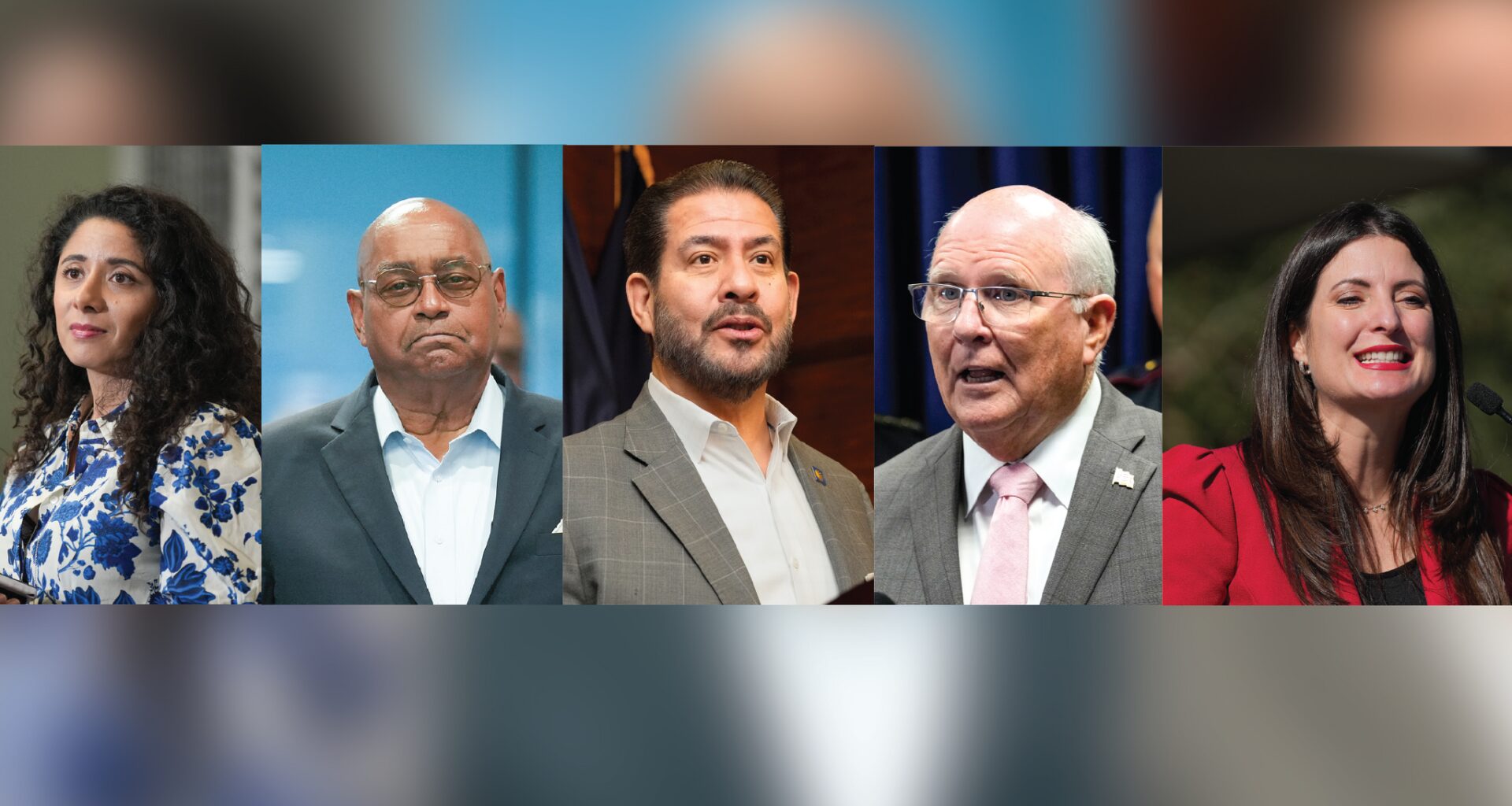
Companies that do business with Harris County, including their employees and the political action committees that represent them, continue to fuel commissioners’ political campaigns, according to a Houston Chronicle analysis of campaign finance reports.
County contractors have bankrolled commissioners’ campaigns for decades, fueling “pay to play” allegations in county government. While commissioners have long denied that campaign cash influences their contract decisions, recent audits have consistently identified oversight gaps in how large departments award multi-million dollar contracts.
While the exact amount varied from commissioner to commissioner, more than half of all their contributions during the second half of last year came from contractors. The reports showed that, of the combined $2.2 million the four commissioners collected during the period, at least 62 cents of every dollar came from companies that do business with the county.
Article continues below this ad
“There’s a clear pay-to-play perception here,” said University of Houston political scientist Brandon Rottinghaus. “Without any kind of restrictions on who can take what kind of money, there’s going to be a perception of quid-pro-quos corruption that’s unavoidable in these areas. This process has fueled ethics reform questions for decades.”
Harris County, unlike many other jurisdictions, has relatively lax campaign finance restrictions. There are no limits on the maximum amount a donor can give to a candidate, nor are there restrictions on contributions made by county contractors or designated campaign cycles that limit fundraising to a particular time period.
The city of Houston caps contributions from individuals at $5,000 and prohibits prospective contractors from giving to office holders while they are deliberating on awarding a potential contract, among other restrictions.
Rottinghaus said campaign finance reforms typically only happen after a “significant scandal,” but headline-grabbing scandals are rare in county government.
Article continues below this ad
Commissioners Court cannot pass ordinances and is primarily tasked with managing infrastructure projects and other public spending — responsibilities often overshadowed by bombastic disputes in Austin and at City Hall, he said.
Commissioners also tend to be difficult to unseat as their perceived control over county business draws contributions from contractors, Rottinghaus said. That doesn’t necessarily mean businesses donate with the immediate expectation that they will receive work, he said, but it gets their foot in the door.
“The way this money is raised is through these large checks that are written during fundraising events,” Rottinghaus said. “You’ll have the contractors paying for a table at a fundraiser, and the employees go to the fundraiser and chat with the politicians. You’re getting face time, you’re getting access. Those things are important.”
Contributions don’t decide contracts, commissioners say
That dynamic has helped commissioners dwarf many of their local and state-level counterparts in campaign fundraising.
Article continues below this ad
Precinct 1 Commissioner Rodney Ellis had the largest warchest of any of his colleagues: $7.7 million.
Ellis is the only commissioner in recent history to push for campaign finance reform from his seat on the court. In 2019, he floated studying the potential for enhanced regulation of campaign contributions, but the effort ultimately fell flat.
FISCAL WOES: Harris County braces for staff, service cuts to close $129M budget gap
“I will not unilaterally disarm while anti-democracy extremists are working to rig elections and silence our communities by gutting the Voting Rights Act, eliminating majority-Black districts across the former Confederacy, and attacking the very tools communities use to fight for good jobs, affordable housing, health care, flood protection, and climate resiliency,” Ellis said in a June 23 statement.
Article continues below this ad
Ellis — who is not up for reelection until 2028 — raised $129,150 during the second half of last year, at least 58% of which came from county contractors.
Commissioner Lesley Briones, who is running for reelection this year, accrued $1,303,507 during the same period, at least 60% of which came from contractors. The Precinct 4 commissioner, elected in 2022, is the newest member of the court. Briones finished 2025 with the second-highest campaign balance, at about $4 million.
Briones, who is seeking reelection this fall, said contributors hold no sway over contracting, and pointed to efforts her office has undertaken to enhance accountability, such as the creation of a new chief compliance officer position within her precinct.
“Campaign donations play no role in Precinct 4 contracting — period,” Briones said. “My campaign and county operations are separate.”
Commissioner Adrian Garcia, who is also on the ballot this year, raised just shy of $250,000 during the six-month period, at least 61% of which came from county contractors. Garcia finished the period with a $2.5 million campaign chest.
Article continues below this ad
While commissioners cannot pass ordinances to reform campaign finance rules themselves, they do compile an agenda ahead of each session of the Texas Legislature with requests for lawmakers.
Garcia said he supports reform, but stopped short of saying he would lean on lawmakers to make that happen.
“We are fighting much bigger battles at the state now, from local control to free and fair elections, to receiving our fair share of state and federal funds that pay for the services that keep our county’s residents and small businesses safe and thriving,” Garcia said. “Those are my priorities in Austin right now.”
Commissioner Tom Ramsey, the court’s lone Republican, raised $550,800 during the second half of last year, of which 68% came from county contractors. The Precinct 3 commissioner entered this year with just over $2 million on hand.
Ramsey, a civil engineer by trade, said existing safeguards were enough to ensure a strong divide between a firm’s political contributions and its engineering contracts. He pointed to the Texas Engineering Practice Act, which prohibits professional engineers from giving gifts or favors of any kind with the goal of receiving work in exchange.
“COMMISSIONERS DON’T SELECT CONTRACTORS,” Ramsey wrote in a social media post made in response to questions sent by the Houston Chronicle. “Once they go through the bidding process, those recommendations go to the Purchasing Department for further review. Then the final recommendation is brought to Commissioners Court for our vote to approve or vote down the recommendation.”
Most county contracts are competitively bid and awarded to the firm that submits the lowest total project cost or to what a review committee determines is the most qualified firm.
But for some engineering and other professional services contracts that go through departments such as engineering and the flood control district, the department asks commissioners to select from a short-list of qualified vendors.
Commissioners can choose from the list or return with a company they selected themselves.
FEDERAL MONEY: Millions of dollars for Harris County flood projects are in jeopardy as Harvey deadline looms
Audits find lack of oversight in large departments
Engineering, flood control and the Harris County Toll Road Authority are among the largest sources of professional services contracts in county government.
Multiple county audits over the past five years also have found these departments have consistently failed to adequately document the processes through which they award those types of contracts.
A 2025 audit of the toll road found discrepancies in its vendor scoring process and incomplete conflict-of-interest agreements. Another audit of engineering published in 2024 found the department had no process for documenting or scoring bids it received.
Both departments said in their responses that they planned to introduce new and improved processes that would address the gaps identified in the audits.
Two audits — one in 2023 and another in 2025 — both found the flood control district could not articulate why one company was selected over another for contracts it had awarded through its internal purchasing process.
Conversely, contracts routed through the county’s purchasing agent — an independent official appointed by the district court judges to oversee procurement — were properly documented, according to the audit.
The flood control district claims it has since introduced an enhanced procurement policy that addresses the audits’ findings.
The district has refused to respond to repeated questions regarding the number of contracts awarded under the new policy.