
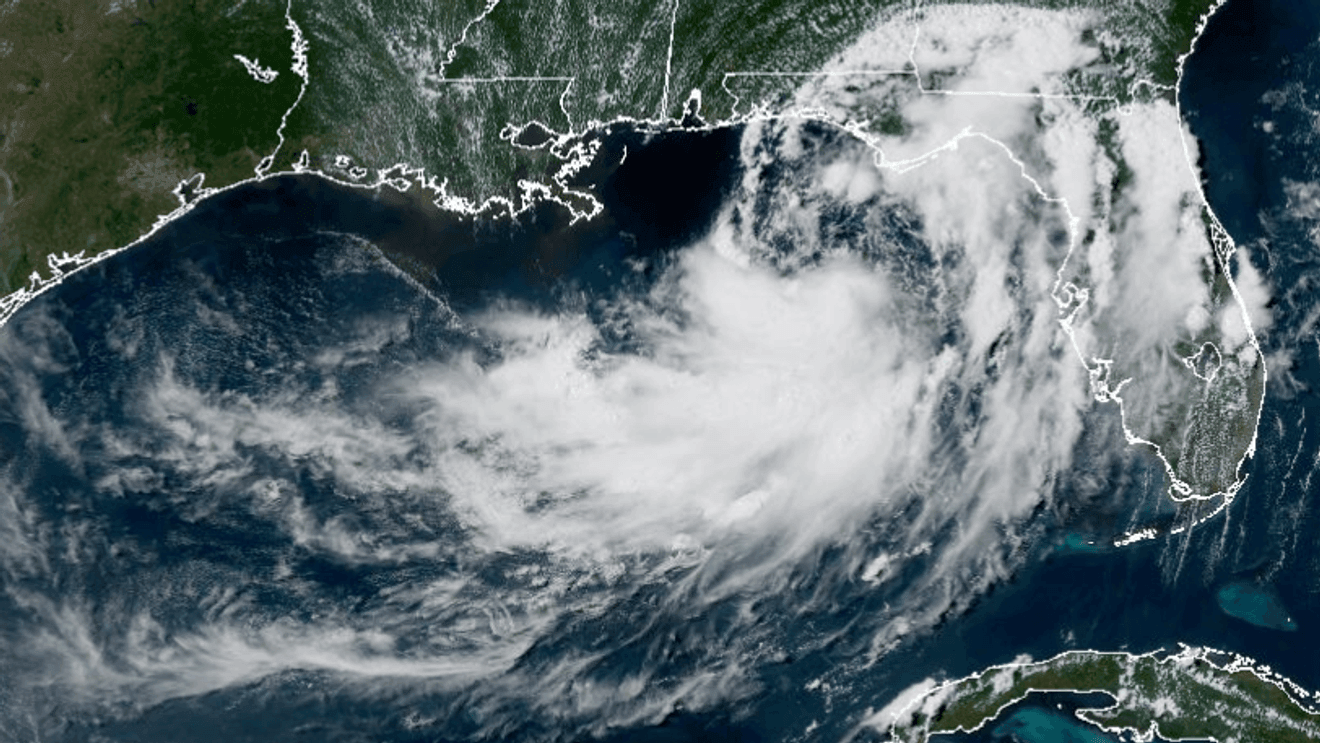
The 2026 Atlantic hurricane season has gotten off to a slow start, with just one named storm through the middle of July.
That could change Tuesday, however, as Tropical Depression Two continues to strengthen over the Gulf of Mexico.
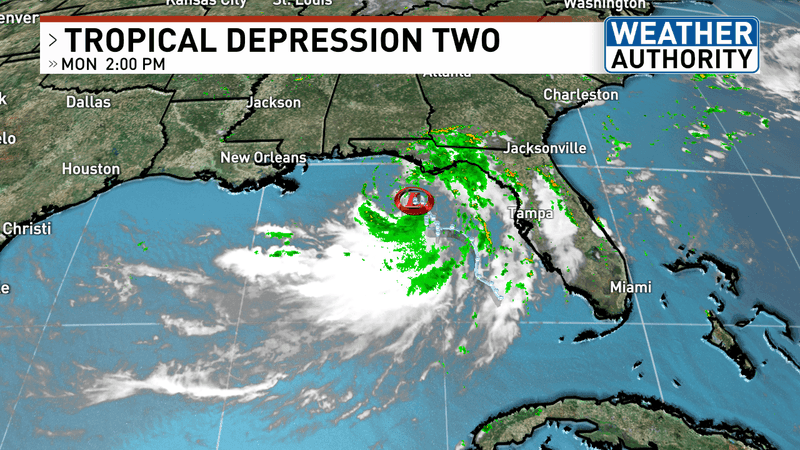
Tropical Depression Two (WGME).
Tropical Depression Two is expected to bring heavy rainfall to portions of the Gulf Coast, along with storm surge impacts along the coasts of Louisiana and Mississippi.
The system is expected to strengthen into Tropical Storm Bertha, but it is not forecast to intensify beyond tropical storm strength.
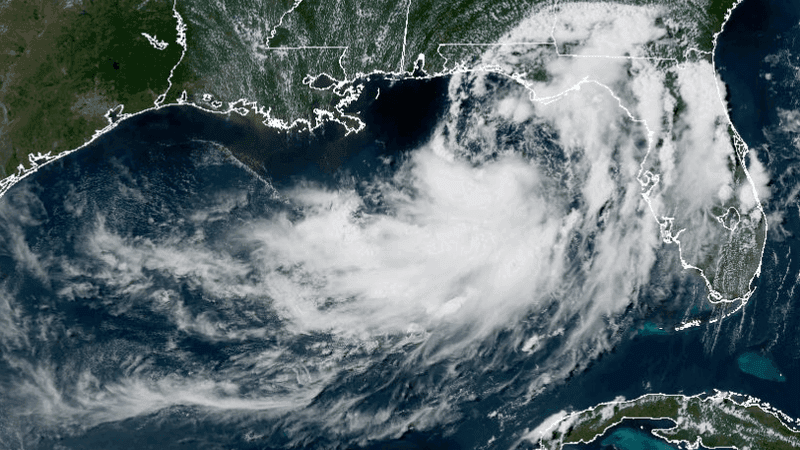
GOES Satellite image of the Gulf (NOAA – GOES Satellite).
One of the main reasons is strong upper-level winds out of the northeast. This wind shear is tilting the storm’s vertical structure, preventing thunderstorms from remaining organized around the center of circulation.
As a result, the hostile upper-level environment should keep the system from strengthening into a hurricane before it reaches the Gulf Coast.
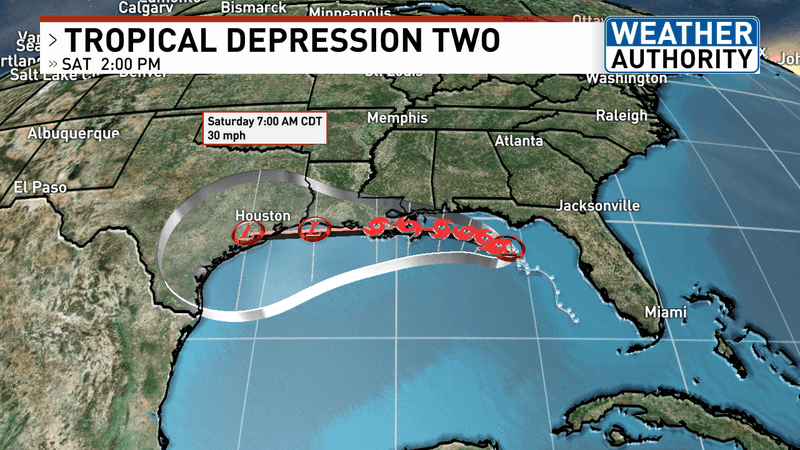
Tropical Depression Two forecast cone (WGME).
This tropical cyclone is expected to track westward across the Gulf of Mexico, strengthening only slightly into a tropical storm before making landfall along the Texas coast.
Once inland, it will quickly weaken to a remnant area of low pressure by Saturday.
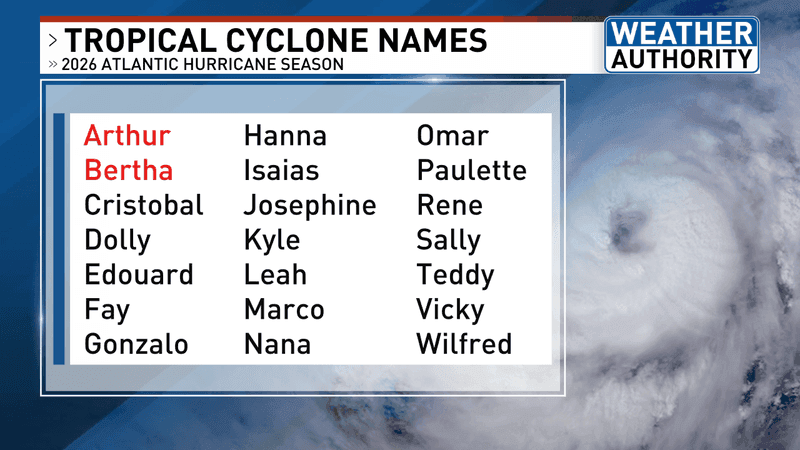
Atlantic hurricane season 2026 names (WGME).
If Tropical Depression Two strengthens into a tropical storm, it will be named Bertha, becoming the second named storm of the 2026 Atlantic hurricane season.
The Atlantic hurricane season officially began on June 1 and runs through November 30.
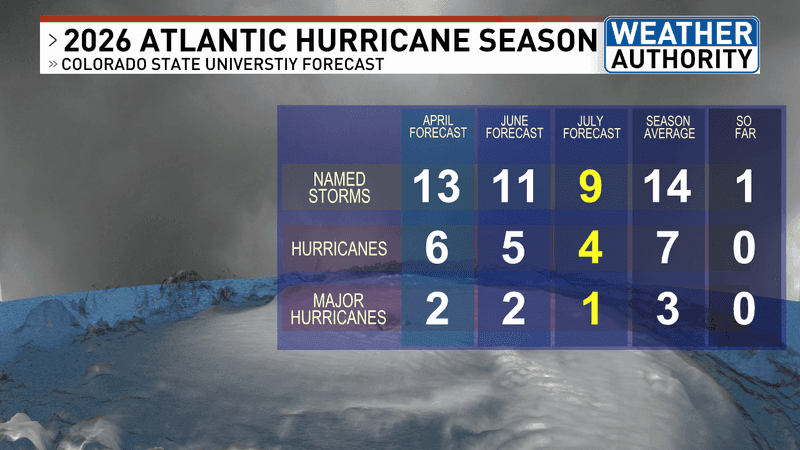
Colorado State University hurricane prediction changes (WGME).
Researchers at Colorado State University, one of the world’s leading hurricane forecasting groups, have continued to lower their outlook for the 2026 Atlantic hurricane season as the season progresses.
In their April forecast, they predicted 13 named storms. That number was reduced to 11 in June, and in their latest July outlook, they now expect 9 named storms this season.
If that forecast verifies, the 2026 Atlantic hurricane season would finish below the long-term average for named storms.
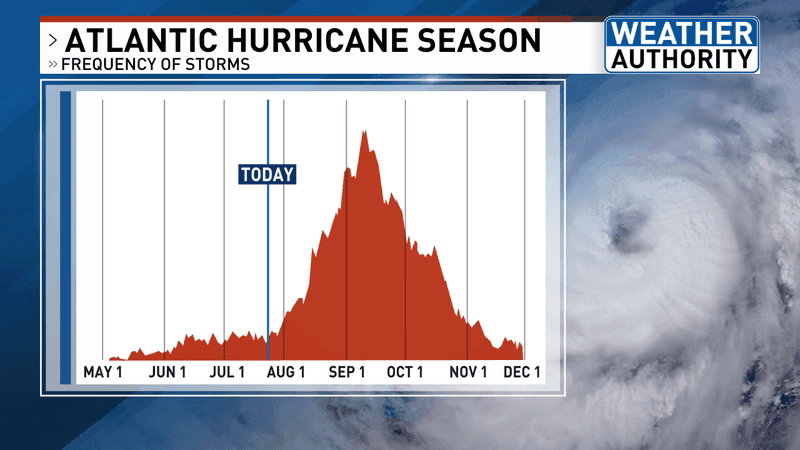
Frequency of Atlantic hurricanes (WGME).
Although the 2026 Atlantic hurricane season has gotten off to a slow start, the peak of hurricane activity is still ahead. Historically, the Atlantic reaches its peak in mid-September, with the climatological peak occurring around September 11.
Typically, tropical activity begins to increase through August as ocean temperatures warm and atmospheric conditions become more favorable. However, the developing El Niño in the Pacific is expected to create a less favorable environment for Atlantic hurricanes by increasing winds aloft, which can limit storm development.
The most active Atlantic hurricane season on record occurred in 2020, when 30 named storms formed. On the other end of the spectrum, the least active season was in 1914, when only one tropical storm developed – before the era of officially naming storms began.