
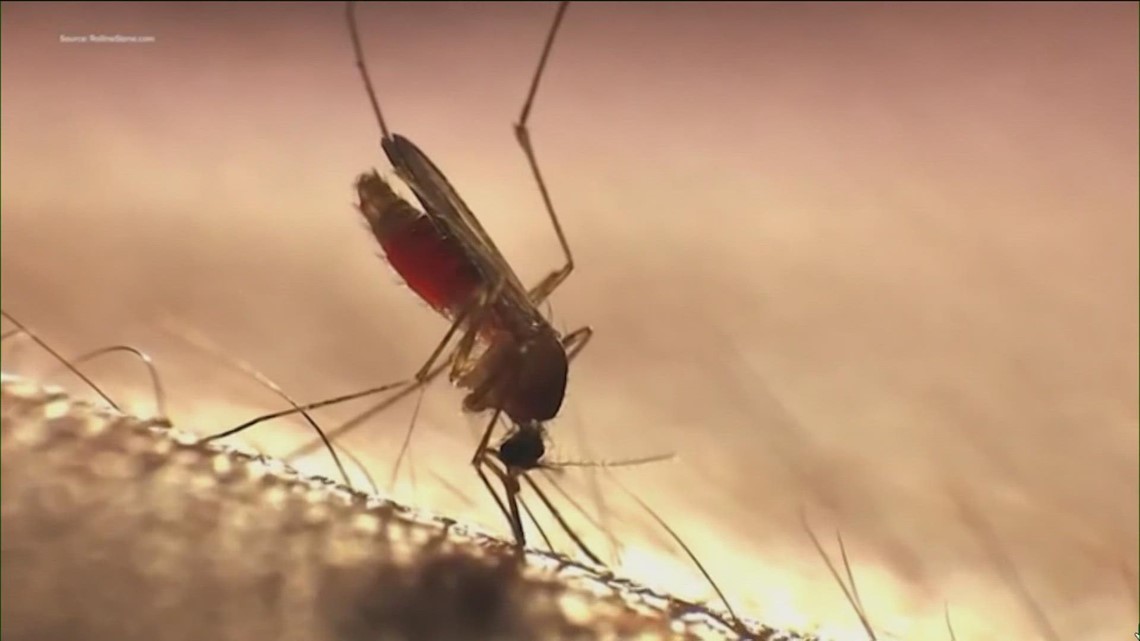
Recent rains in Central Texas have spiked mosquito activity, with one Austin trap testing positive for West Nile virus, according to Austin Public Health.
AUSTIN, Texas — Recent rounds of rain across Central Texas have created favorable conditions for mosquitoes to breed, leading Austin Public Health (APH) to see slightly higher mosquito numbers this season.
Each week, APH sets about 30 mosquito traps across Austin and Travis County to monitor mosquito activity and test for mosquito-borne diseases, including West Nile virus.

This story continues below.
More in Local
THC regulations will impact local hemp businesses starting July 31
Keeping kids safe in the Central Texas heat
The traps are designed to target Culex mosquitoes, the species known to carry West Nile virus. After remaining in place for about 24 hours, the mosquitoes are collected and sent to the Texas Department of State Health Services (DSHS) laboratory in Austin for testing.
So far this season, APH says one mosquito trap within its surveillance area has tested positive for West Nile virus. By comparison, neighboring Williamson County has reported 22 West Nile-positive mosquito traps this season.
Aaron Urbanek with the APH Environmental Vector Control Unit said recent weather has contributed to increased mosquito activity.
“We have been seeing a little bit higher numbers because of the weather conditions,” Urbanek said. “We have been getting rain on and off, so that leads to more stagnant locations for longer periods of time. The temperatures haven’t been real high, which has also led to more availability for the mosquitoes to breed, and the humidity in the air.”
Last week’s flooding across parts of Central Texas could also temporarily increase mosquito populations by leaving behind standing water.
Urbanek said mosquito numbers typically rise after major rain events, but prolonged stretches of extreme heat can naturally reduce those populations.
“Usually after a big rain event like that we will see an influx of mosquitoes for a little while,” he said said. “But we’re getting into the real hot part of the summer, so a lot of those are going to naturally die off once we start getting temperatures above 95 degrees sustained for many days in a row. The mosquitoes just naturally dry out and are not able to live.”
Health officials say mosquitoes don’t need large bodies of water to reproduce. Even small amounts of standing water around homes can become breeding sites, including:
Flower pot saucersClogged guttersOutdoor drainsBuckets or other containers that collect rainwater
APH encourages Austin residents to regularly drain standing water around their properties to help reduce mosquito breeding.
The agency also says you can protect yourself from mosquito bites by:
Using insect repellent containing DEET or another EPA-approved active ingredientWearing long sleeves and long pants when possibleTaking extra precautions around dawn and dusk, when mosquitoes are often most active
If a mosquito trap tests positive for West Nile virus, APH says it notifies residents in the surrounding area and posts warning signs to help raise community awareness.