

The Austin City Council is set to vote Thursday on a proposed Tax Increment Reinvestment Zone (TIRZ) in the Dog’s Head area southeast of U.S. Highway 183, advancing a contentious development in the fast-growing corridor near Tesla Gigafactory Texas.
At issue is whether the city should forgo hundreds of millions of dollars in tax revenue to incentivize a major industrial, commercial and residential hub anchored by Amazon. Critics warn the deal could accelerate displacement of people of color, deepen environmental risks along the Colorado River and sideline community input.
With a council vote looming, the decision will test how far Austin is willing to go to compete for large-scale development – and at what cost to its most vulnerable communities and natural resources.
 Eric Johnson
On Tuesday, Assistant City Manager Eric Johnson announced that the first prospective tenant for Dog’s Head, which had been kept under wraps, would be Amazon’s robotics division.
“This is a signal that is saying we are serious about economic development,” Johnson said after the announcement.
Under the current proposal, the TIRZ would send a portion of additional property and sales taxes from the site — 75% for 20 years and 66% for the following 15 years — back to the developer, Dog’s Head Land JV, Ltd., an entity of Endeavor Real Estate Group. Without such an incentive, all of the tax revenue would go to the city’s general fund to finance citywide services, such as public safety, parks and libraries, and social services.
Some residents and environmental advocates say the TIRZ arrangement, estimated to carve out nearly $1.2 billion in tax revenue from the city and about $520 million from Travis County, amounts to a huge corporate giveaway for Endeavor.
The 2,600-acre Dog’s Head region lies along the Colorado River, where some of the river basin’s most pristine water meets rich biodiversity, a floodplain and an endangered Blackland Prairie ecosystem. With Amazon and other potential manufacturing sites on the way, residents warn that hasty development and lack of environmental protections could permanently damage this unique ecology. Many of those living in Dog’s Head are lower-income people of color who were excluded from development decisions, raising additional concerns of environmental racism.
Per preliminary site plans, the majority of the development is designated as mixed use, with 10% set aside as open space. Around 12,000 homes are planned, along with a blend of retail, grocery, dining and industrial facilities such as Amazon. Virtually anything is allowed under the existing development agreement, including data centers and advanced manufacturing. The council passed an amendment to the agreement that bans military installations.
Environmental advocates and residents asked the council to put the TIRZ on hold until at least next year, and so has the city’s Environmental Commission. A working group of that commission identified several significant environmental risks to the region and urged additional review before committing tax revenue that could otherwise be spent on citywide improvements. The group also highlighted concerns regarding impervious cover, river setbacks and floodplain modifications.
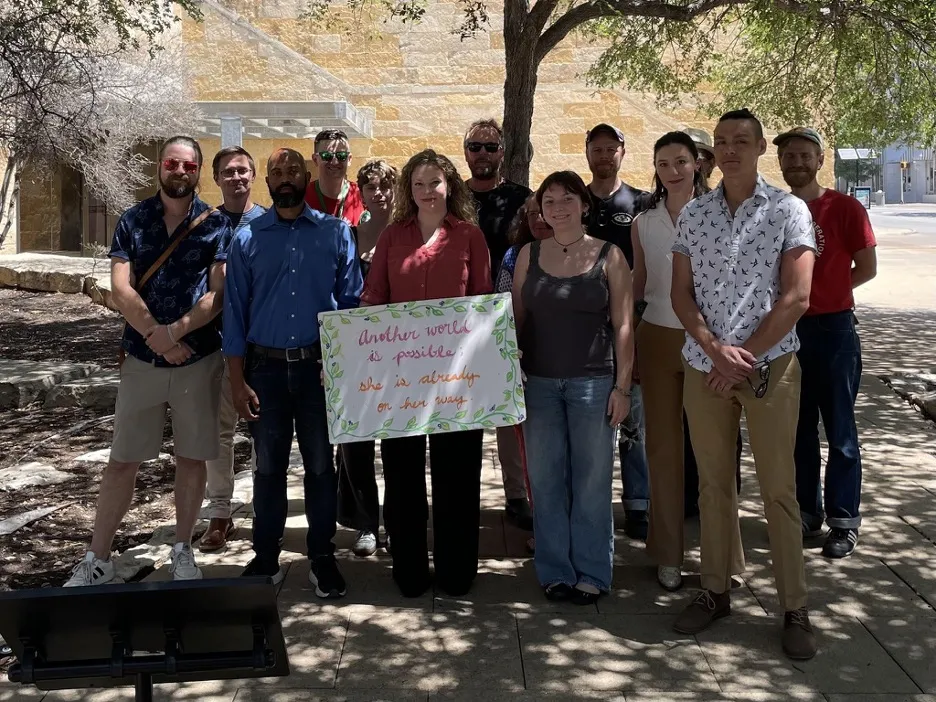 Environmental advocates and community members gather outside Austin City Hall before Tuesday’s Austin City Council work session to urge city leaders to delay action on the proposed Dog’s Head Tax Increment Reinvestment Zone pending additional environmental review.
Credit: Piper Guinn
During the city council’s Tuesday work session, many of those opposed to the TIRZ gathered for a press conference outside City Hall, including representatives from People Organized in Defense of Earth and Her Resources (PODER), Save Our Springs and the South East Colorado River Neighborhood Association.
“We need more time. We need a comprehensive environmental review. All of that has been bypassed and waived,” said Environmental Commission Chair Mariana Krueger, who spoke in a personal capacity during the press conference.
 Mariana Krueger
She asked city staff and Endeavor: “What are your plans for water quality? What are your plans for erosion? What are your plans for flooding?”
Speakers also questioned whether the development would raise property tax values and displace current residents, accelerating ongoing gentrification in East Austin. Endeavor has promised to conduct a community needs assessment, and the agreement proposes 20% affordable housing, though there is no actual commitment to build any housing units. Any affordable housing that might be built would be located near Amazon and across the river from Tesla’s gigafactory.
“Setting (residents) up next to polluting manufacturing facilities is an environmental racism issue. This is a climate justice issue,” said Susana Almanza, executive director of PODER. “How is it that billionaires are getting our tax fund money while social programs are getting cut?”
 Susana Almanza
The TIRZ proposal comes two months after the Austin City Council tentatively annexed the Dog’s Head development area into the city’s full-purpose jurisdiction and entered into a 45-year development agreement with Endeavor. If the TIRZ is delayed or rejected by the council, Endeavor is allowed under the agreement to apply for disannexation, at which point the city would forfeit input on the project and lucrative tax revenue from the development, including that from Amazon. City leaders said Austin needs such revenue to help finance future needs for a growing city.
Because infrastructure is also subject to county property taxes, the Travis County Commissioners Court considered its own TIRZ proposal on July 14. After voicing concerns regarding affordable housing, environmental impacts and the speed of development, the commissioners court decided to table the issue for now.
Members of the city council who have spoken publicly on the TIRZ remain cautiously optimistic that, although the development agreement poses environmental risks, the economic potential cannot be ignored amid a citywide budget crisis.
“We know we’re in a revenue crunch. We need to generate new revenue to pay for social programs. This deal is not perfect, and I want to make it a lot better, but I haven’t got to the point where I’m willing to say, ‘Oh, we should kill this deal,’” District 7 Council Member Mike Siegel told the Austin Free Press.
 Mike Siegel
Siegel and other members of council, including Mayor Kirk Watson, issued a funding allocation request for environmental protections and affordable housing as part of this process. The council will consider amending aspects of the development agreement pertaining to drainage and environmental protections and land development standards, according to the agenda backup. During Tuesday’s press conference, Krueger referred to the amendments as “too little, too late.”
As the TIRZ discussion came to a close during the work session, Watson reminded the body that Thursday’s agenda contains seven items pertaining to Dog’s Head. He stated that the items will be considered back-to-back and voted on separately.
Piper Guinn is the health equity reporter for the Austin Free Press, covering the disproportionate health burden carried by our city’s most vulnerable. Piper is a native Texan and recent graduate of Whittier College, where she received a B.A. in political science.
Disclosures: Save Our Springs Executive Director Bill Bunch is a member of the Austin Free Press advisory board.