
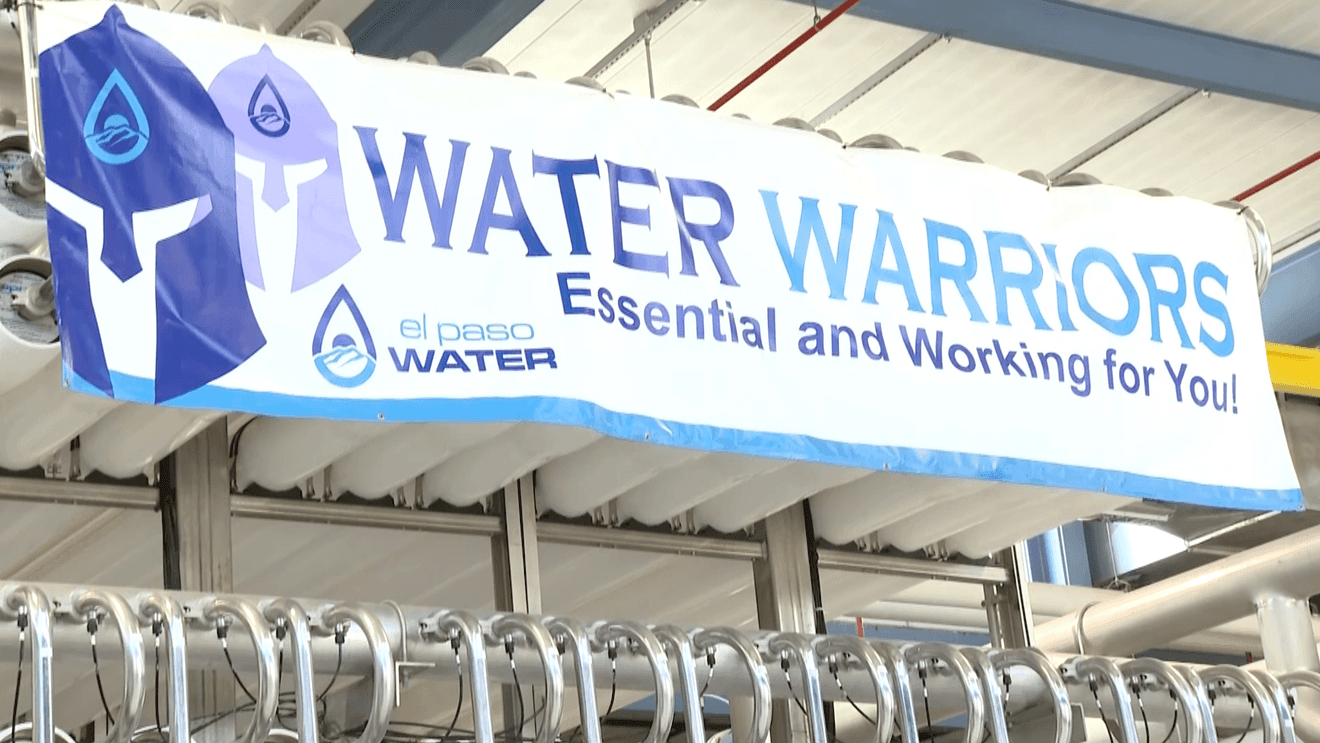
EL PASO, TEXAS (KFOX14/CBS4) — El Paso Water is moving forward with a project that could recover nearly 3 million gallons of drinking water each day from the salty waste produced at the Kay Bailey Hutchison Desalination Plant.
The utility is working with Upwell Critical Materials Corporation on a system that would process part of the plant’s concentrated brine, recover minerals that can be sold and return potable water to El Paso Water.
The proposed facility would operate next to the desalination plant.
El Paso Water Vice President of Engineering, Operations and Technical Services Gilbert Trejo said the project could recover about 2.8 million gallons of water per day, or roughly 1 billion gallons per year.
“In the most basic sense, we simply send the waste to them, and they will produce potable water and sell it back to us,” Trejo said.
The El Paso Public Service Board approved an updated agreement connected to the project earlier this month after discussing the item in executive session.
Trejo said the agreement requires El Paso Water to purchase all of the potable water produced from the brine it sends to Upwell.
A financial analysis presented to the board projected the cost to El Paso Water at about $5.2 million per year.
Trejo said that annual operating-cost estimate remains accurate and would cover the water purchased from the company.
When asked whether the project could raise customers’ water bills, Trejo said the project alone would not be enough to trigger a rate increase. However, he said its cost would be included with other construction, expansion and wastewater projects when the utility calculates future rates.
Jordan Salas reports on El Paso Water plans to recover drinking water from salty brine waste (Credit: KFOX14)
How the desalination process works
The Kay Bailey Hutchison Desalination Plant treats brackish groundwater, which contains more salt than fresh water but less than seawater.
The water is pumped through filters and reverse-osmosis membranes that separate it from salt, minerals and other material.
El Paso Water says the plant, which can produce up to 27.5 million gallons of drinking water per day, is the world’s largest inland desalination facility. It helps supply Northeast El Paso and parts of the East Side.
About 80% of the water entering the treatment process is recovered. The remaining 20% becomes a highly concentrated brine.
“The disposal of this very concentrated brine is a big issue when you do desalination,” Trejo said.
El Paso Water currently pumps the brine more than 20 miles east of the plant and injects it about 4,000 feet underground. The utility says the area’s geology keeps the waste separated from drinking-water aquifers.
Under the proposed recovery project, Upwell would process only part of the brine. The remaining waste would continue to be sent to the underground injection site.
Trejo described the technology as cutting edge and said the process could help address one of the largest challenges facing both inland and ocean-water desalination projects.
No firm start date
El Paso Water says its agreement and pricing structure with Upwell are in place, but the company has not provided a firm timeline for completing its facility or beginning operations.
Trejo said the additional water supply is not expected to be needed until around 2030, giving the company and El Paso Water time to complete the project.
RECOMMENDED: City of El Paso to intervene in EP electric data center rate case
RECOMMENDED: Water service restored at El Paso County Downtown Detention Facility
Sign up to receive the top interesting stories from in and around our community once daily in your inbox.