
Michael Adkison/Houston Public Media
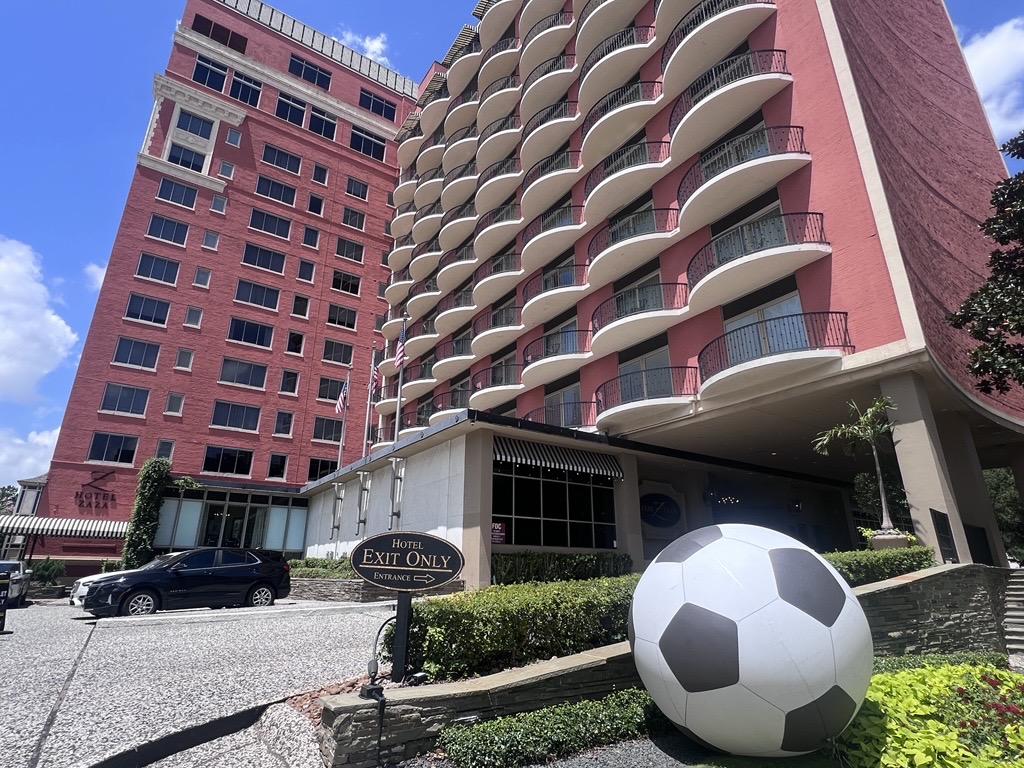
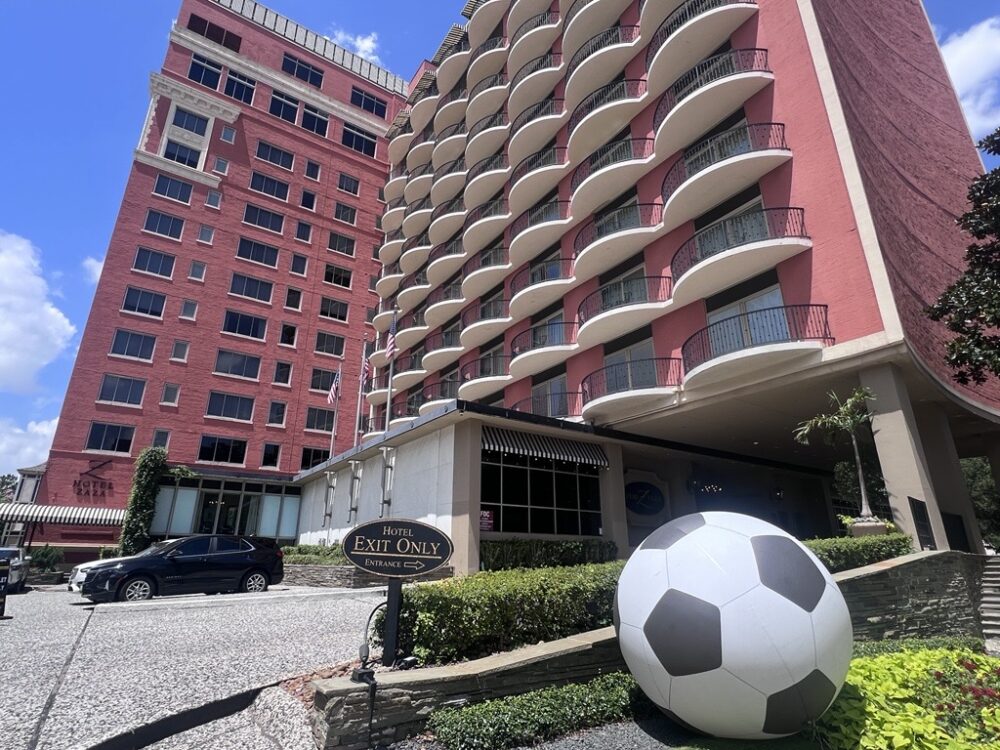
Hotel ZaZa, a historic hotel in Houston’s Museum District, decorated for the FIFA World Cup, as pictured on July 1, 2026.
In the heart of Houston’s Museum District, the boutique Hotel ZaZa is not exactly close to NRG Stadium, where the city hosted seven FIFA World Cup matches this summer. But the hotel did have a distinct advantage over some other hotels: it’s right next to the METRO Red Line, which carried thousands of passengers to the stadium over the last five weeks.
“If anything, it made it a lot easier for guests who stayed with us to get to the game,” Ian Bush, Hotel ZaZa’s vice president of operations, told Houston Public Media, “‘cause all they had to do was walk out the door and walk 20 steps to get to the rail, to get to the game.”
Months ahead of the World Cup, which ended on Sunday, Hotel ZaZa’s team made the decision to lean into the soccer theme. The hotel’s historic lobby featured soccer-themed art. A massive soccer ball was installed outside the hotel. Hotel ZaZa even created a “fan zone” at its Monarch restaurant terrace, with a massive livestream for World Cup matches.
Sign up for the Hello, Houston! daily newsletter to get local reports like this delivered directly to your inbox.
Many international tourists did come. Days before Bush spoke with Houston Public Media, Houston had just hosted its round-of-32 match between Brazil and Japan. Tourists and supporters of those countries – and other countries that had matches in Houston – stayed at Hotel ZaZa.
“I think overall, it’s the excitement that you see from the customers overall tells the tale,” Bush said. “Seeing that excitement and seeing people really soak in the experiences that we cultivated and make sure that we could provide for them, it’s the reason why you do this business.”
The business, though, did not necessarily meet the expectations set for the World Cup. In Houston, demand for hotels overall actually dropped for the month of June year over year, according to Houston First, the city’s tourism and marketing arm. But revenues did increase.
RELATED: Youth interest, access to soccer is increasing in Houston amid the World Cup
In June, hotel occupancy in Houston stood at 61%, down nearly 2 percent compared to the year before, according to Houston First, as a result of decreased demand and increased supply. Though the market declined, revenue did increase 15% year over year, with guests and tourists willing to pay higher rates.
At Hotel ZaZa, Bush said the hotel is certainly seeing a year-over-year increase in revenue, but the promises of a surge in tourists was not quite met.
“There definitely was some opportunity for more growth based off of what we all believed – strictly for hotels, as I mean, what we believed – to be what the market would bring to us with the World Cup,” he said.
Some hotels did see an economic increase coinciding with the World Cup. Post Oak Hotel in Uptown Houston, for example, saw a booking pace and demand running approximately 30-40% ahead of the same time period last year, according to Steven Chou, general manager of the hotel.
“The impact of hosting the FIFA World Cup is already being felt across Houston, and we believe the benefits to our city will endure long after the final match is played,” Chou said in a statement to Houston Public Media. “The feedback from guests has been overwhelmingly positive, not only about their experience at our hotel, but about Houston as a destination and the exceptional atmosphere surrounding the tournament.”
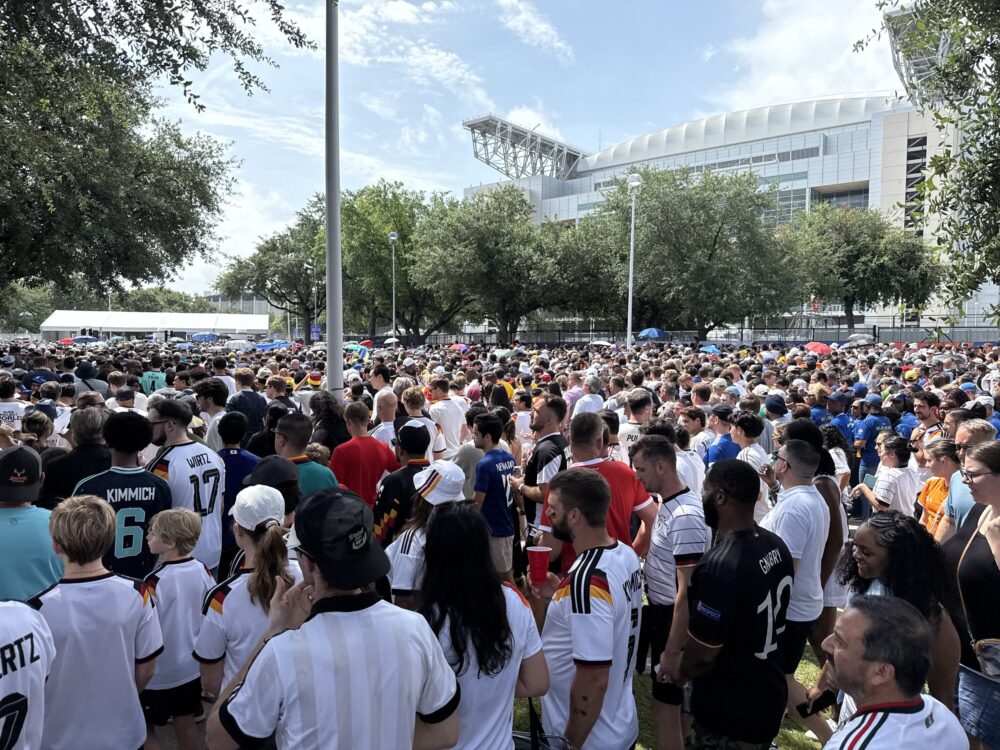 Thousands of fans walk up to NRG Stadium for a World Cup match on June 14, 2026.
Though the data from Houston First doesn’t capture the final match in Houston, which took place on July 4 between Canada and Morocco, it indicates many of the hotels in Houston may not have seen returns on their investments for hosting tourists throughout the World Cup.
Representatives from Airbnb and Vrbo, which list short-term rentals throughout the Houston area, were not immediately able to provide occupancy data during the World Cup.
RELATED: Houston restaurants in East Downtown say business has improved as World Cup continues
Nor is Houston alone in lower-than-expected hotel occupancy. Ahead of the tournament, the American Hotel and Lodging Association (AHLA) released an analysis that reported 80% of hotel booking were tracking below initial forecasts across the United States, one of three host countries this year along with Canada and Mexico. Many said visa barriers and geopolitical concerns were suppressing international demand as the administration of President Donald Trump has cracked down on immigration to the U.S. while ramping up arrests and deportations of people without legal status in the country.
The AHLA analysis reported 70% of hotels in Dallas and Houston, generally, were booking below their World Cup expectations, though still mostly in line with their typical summer demand.
Leading up to the tournament, the Houston World Cup host committee made the case that Houston’s seven World Cup matches would be like hosting seven Super Bowls in 21 days. Officials with the host committee projected an economic impact of $1.5 billion, with as many as 500,000 tourists visiting Houston.
That may have oversold the promise to hoteliers and short-term renters, who also saw a 2-percent decrease year over year for occupancy in June, according to Houston First.
“We thought it was going to be a complete blockbuster, our best month ever. But it wasn’t,” Sébastien Long, president of the Texas Short-Term Rental Association, told Houston Public Media. “March was a better month, I think we’ll see when the dust settles. I don’t think it particularly exceeded that.”
Long is also the CEO and founder of Lodgeur, a short-term rental service that operates in the Houston area, focusing on apartment communities with unused housing.
“I think it was a combination of the cost of accommodation, the cost of the tickets, a lot of geopolitical kind of uncertainty at the same time,” Long said. “It was kind of a perfect storm that I think probably the international visitor numbers, from what I’ve seen, were actually less than last year, or very close to it. So, yes, more people came for the World Cup, but there were less people who came not for the World Cup from overseas.”
Added Houston Mayor John Whitmire during a July 8 city council meeting: “I don’t think we saw the hotel occupancy as had been projected, but certainly any Houstonians filled any shortage of participants.”
Whitmire, alongside Ryan Walsh of the Harris County-Houston Sports Authority and Chris Canetti of the city’s World Cup host committee, were expected to speak at a Wednesday afternoon news conference about the tournament’s economic impact on the city, among other topics.
Houston First is also expected to release a comprehensive look at hotel occupancy data during the World Cup in the coming days. Though some data points could change, factoring in the seventh and final match on July 4, the overall hotel and renter experience will likely stay underwhelming.
At Hotel ZaZa in the Museum District, that doesn’t mean the hoteliers there would do anything different in hindsight.
“When it came to make sure that with our core, with our staffing, with activating our spaces, things of that nature, I feel like we really put our best foot forward on what we wanted to do and what we wanted to accomplish,” Bush said. “I think you could have made some maybe small adjustments, but in terms of changing or doing anything differently than what we’re doing, nah. Other than me wearing a USA soccer jersey every day, or something like that.”