
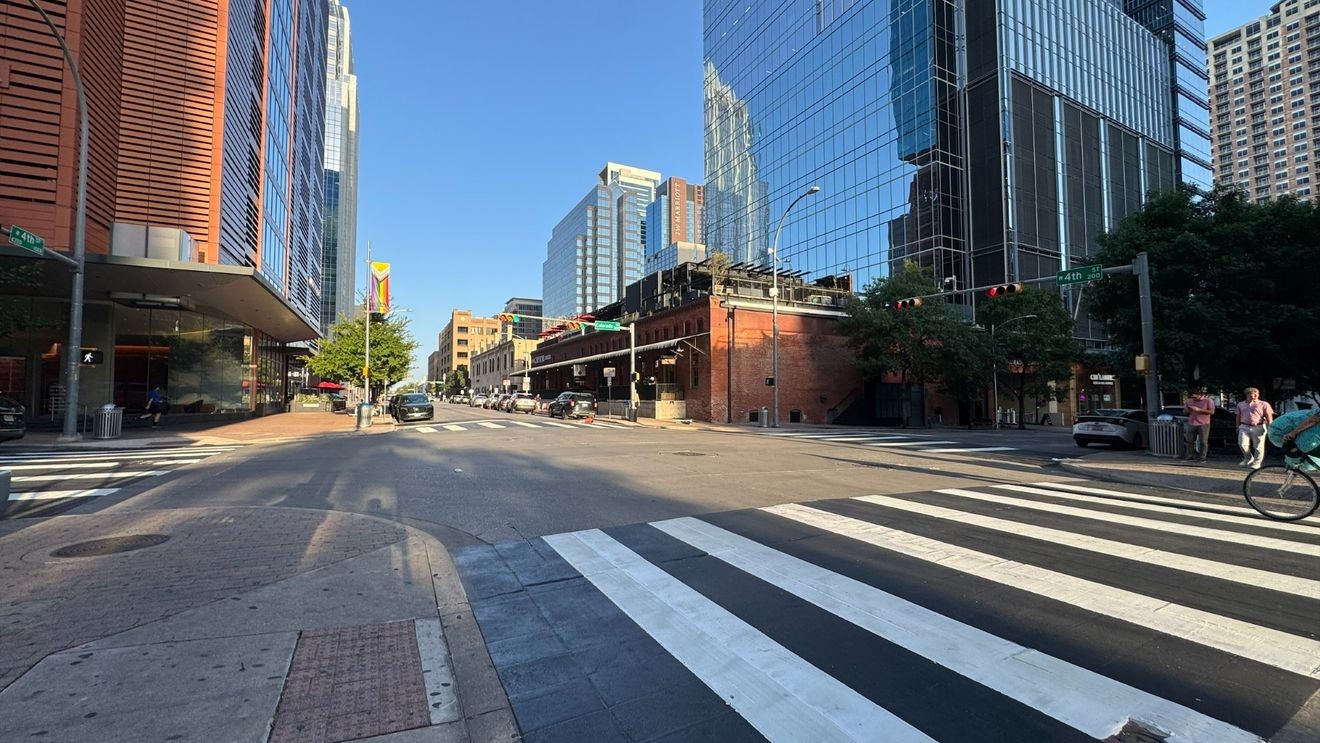
AUSTIN, Texas — Dozens of people gathered at W 4th St and Colorado St Tuesday night after Austin’s rainbow crosswalks were removed, saying the event was about more than painted pavement.
Community members, advocates, and supporters came together to show solidarity following the removal, while also looking ahead at what comes next for Austin’s historic LGBTQ district.
For Austin Pride member Jamal Crier, the removal was emotional, but not the end of the conversation.
“It was heartbreaking for sure, but I know that this will only make the community stronger at the end,” Crier said.
The gathering featured speakers, community members, and supporters who said the crosswalks represented visibility and belonging for Austin’s LGBTQ community.
“Tonight we mourn, tomorrow we advocate, we move, and we make changes to ensure that the inclusivity here in Austin still exists,” Crier said.
The City of Austin Transportation and Public Works Department said crews removed the rainbow crosswalks early Monday morning.
RELATED| Rainbow crosswalks installed in Downtown Austin to commemorate National Coming Out Day
KEYE
William Cass, who performs as Nadine Hughes and works in the area, said the crosswalks had become a familiar symbol.
“It just kind of symbolized a beacon of hope and home and safety for us,” Cass said. “I’m kind of sad that I didn’t realize that that was gonna be the last time walking across them.”
The removal follows Gov. Greg Abbott’s directive last year instructing the Texas Department of Transportation to ensure cities comply with state and federal roadway standards. In the directive, Abbott wrote, “Texans expect their taxpayer dollars to be used wisely, not advance political agendas on Texas roadways.” State officials have said official traffic markings should remain uniform for safety.
Organizers said while the removal prompted Tuesday night’s gathering, the focus was on unity and resilience.
“Just understand that we’re a community that wants to feel at home here,” Cass said.
CBS Austin asked Mayor Kirk Watson’s office whether the city is still pursuing other ways to recognize Austin’s LGBTQ community.
In response, the mayor’s office pointed to the Rainbow Heart mural installed during Austin Pride Month and said a new LGBTQ historical marker is scheduled to be unveiled next month at the intersection following a City Council resolution.
Crier said he welcomes those efforts but hopes they are only the beginning.
“It is a great beginning, but it’s only the beginning of our journey,” he said.
Cass agreed the city’s plans are a positive step while saying there is still more work to do.
“It’s never enough, right, but I think it is a step forward we keep forgetting we’re Austin, Texas. Keep Austin weird,” Cass said.
CBS Austin also asked the city how much it cost to remove the crosswalks. A city spokesperson said an accurate estimate is expected next week after crew work hours are finalized at the end of the current pay period.