
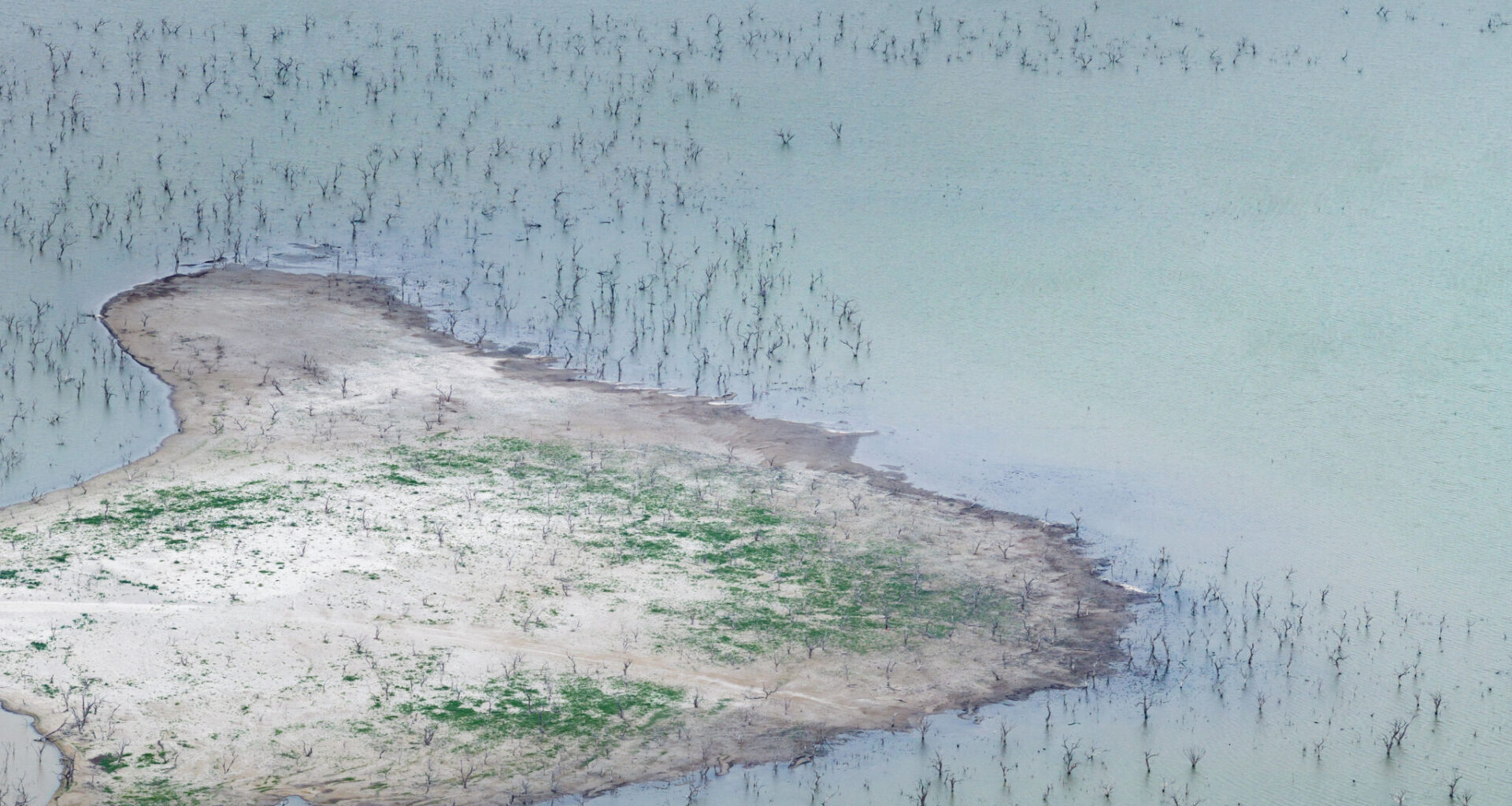
Corpus Christi has spent years grappling with dwindling water supply as persistent drought drained Choke Canyon Reservoir and Lake Corpus Christi—the city’s two primary water supply reservoirs.
Now, floodwaters moving downstream through the Frio and Nueces river basins could partially replenish those reservoirs. Chron was awaiting a response from the City of Corpus Christi by the time of publication.
After steadily draining over the last several years, the water level at Choke Canyon reservoir is finally on the rise.
As of Thursday morning, Choke Canyon was 9.6 percent full with a mean water level around 181 feet, according to Water Data for Texas. That number is up more than a percent and a half compared to just two days prior.
“The preliminary estimate for what we can expect at Choke Canyon Reservoir adds about 225,000 acre-feet, or 34%to Choke Canyon Reservoir alone,” Lauber wrote. “That could increase the combined capacity of Choke Canyon Reservoir and Lake Corpus Christi by 21%”
While estimates are preliminary and subject to change due to seepage, river losses and other factors, Lauber said that if the Frio River remains elevated, the outlook appears favorable for Corpus Christi.
“If that river rise continues for a prolonged period—at least like what we’re seeing in the forecast, maybe even longer—that would be substantially more water heading into Choke Canyon, making a huge impact and benefit to our water situation,” Lauber wrote.
The city remains under Stage 3 drought restrictions. A Level One Water Emergency—triggered when the city is projected to fall within 180 days of no longer meeting demand —is projected for September 2027, according to the city’s water supply dashboard.
“Due to recent substantial rainfall in the upper portion of the watershed, CCW continues to monitor river and stream flows that may improve the reservoir capacity of both Lake Corpus Christi and Choke Canyon Reservoir,” the city wrote in a July 17 memo.
At the time of the memo, the combined capacity of Lake Corpus Christi and Choke Canyon Reservoir was 15.1 percent.
While city officials say the recent rainfall has provided some relief, they have also stressed that long-term water supply challenges remain.