
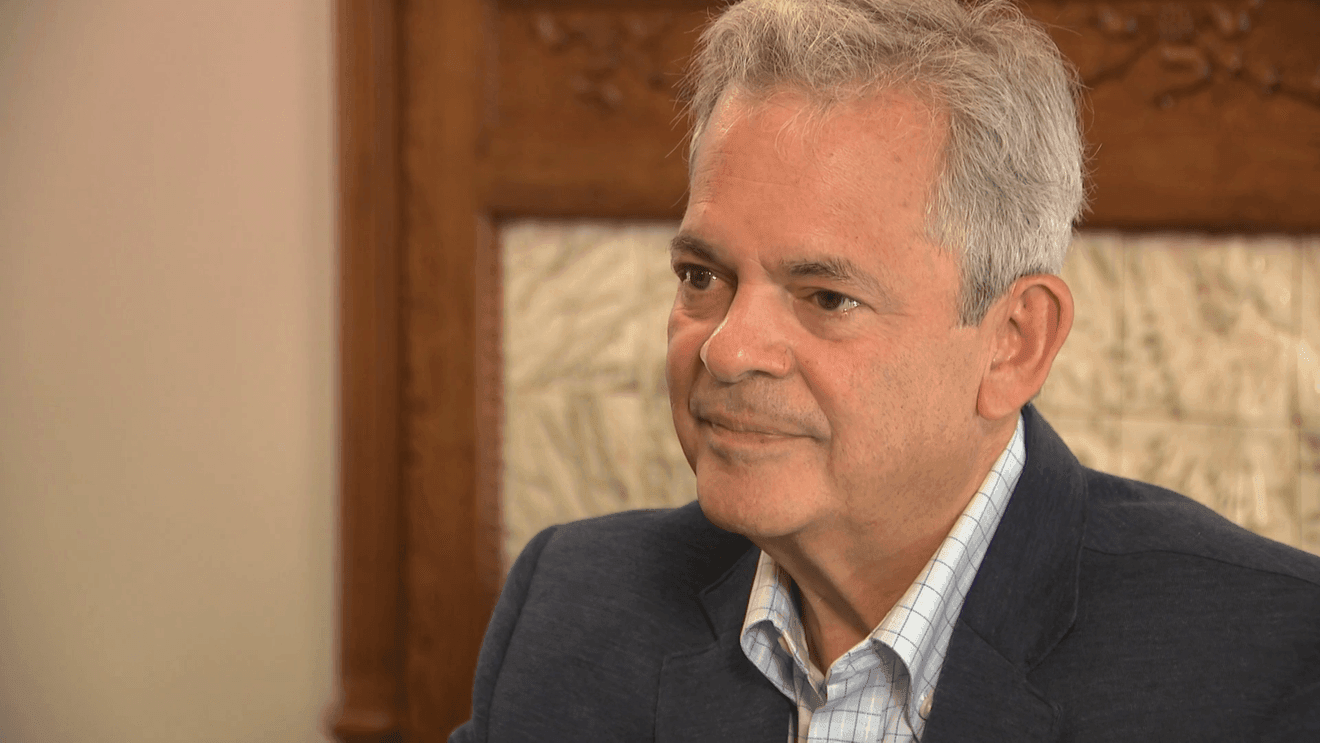
AUSTIN, Texas — Former Austin Mayor Steve Adler is looking back at his tenure and some of the most contentious decisions of his time in office, including the city’s 2019 move to lift restrictions on camping in public spaces.
In his upcoming book, “Hot Seat–Hot City: The Austin Mayor’s Story,” Adler reflects on the decision and its impact on the city. He said he recognizes the change was jarring to some residents.
“It was traumatic. People woke up one day, and suddenly there were tents all over the place,” Adler said Thursday in an interview with CBS Austin.
Adler, who served as mayor from 2015 to 2023, said the policy shift was intended to bring homelessness into public view, hoping to generate support for more permanent solutions.
“When you don’t see a challenge, a community really doesn’t prioritize it, and it really doesn’t do anything about it, and by having policies that ticketed or put people in jail that didn’t have homes, we weren’t seeing the challenge,” he said.
As tents spread into public spaces, Adler faced criticism from residents and state leaders. Looking back, he said he wishes the city had put more guardrails in place while pursuing long-term solutions.
“I do wish I had done it differently,” Adler said. “We lost the shared element of shared public spaces, and in retrospect, I would have spent a lot more time doing that so that we could have advanced the solution and dealt with homelessness, but in a way that didn’t create the same angst and disturbance in the community.”
ALSO| Higher education agency prepares to cut 3% of spending as ordered by Texas leaders
Austin residents voted to restore a ban on public camping in 2021.
Adler said the problem requires broad community effort, and would like to see the city invest more in long-term solutions like permanent supportive housing.
“You know, homelessness is a challenge, and it does really require a community to put their shoulder to it,” he said.
The issue of homelessness has persisted since Adler left office. Austin ECHO’s point-in-time (PIT) count has shown a roughly 44% increase in unhoused people in Travis County during its surveys between 2019 and 2025, although experts note that PIT results have limitations.
The federally required PIT count is a one-night snapshot, however, and researchers caution that it does not identify everyone who experiences homelessness during the year.
Anja Taylor, director of statewide data integration at the Texas Homeless Network, said separate statewide data shows a return to a homeless population size comparable to before the COVID-19 pandemic, and said its data collection methods are different from local PIT counts.
“We understand that the PIT count methodology itself has a variety of limitations, including, for example, it is primarily volunteer-based. It is also dependent upon weather, for example. Weather can affect the PIT, especially when it’s performed in January, reducing the visibility of folks experiencing homelessness,” Taylor said.
The debate is now moving into a new budget cycle. The proposal includes a $6 million increase for wraparound services connected to permanent supportive housing. City staff also anticipate reducing social-service contracts by approximately $6 million to $8 million in fiscal year 2027.
“We’re in a tough place, you know, and I don’t envy the present mayor and city council for having to wrestle through the things that they’re wrestling through,” Adler said.
Adler’s memoir includes reflections on a number of key policy debates that arose during his term. Many of them continue in city government today. Adler remembers heated meetings with residents as he worked to create zoning policies that would allow for more housing to be built across the city.
He describes the job of mayor as “lonely.”
“Ultimately, when you’re faced with decisions, like do you shut down SXSW as COVID was approaching, those are lonely moments because you know that there’s going to be, hopefully, good from whatever decision you make, but almost every decision you made is going to hurt somebody, too,” he said.
CBS Austin’s full interview with Adler is available here.