
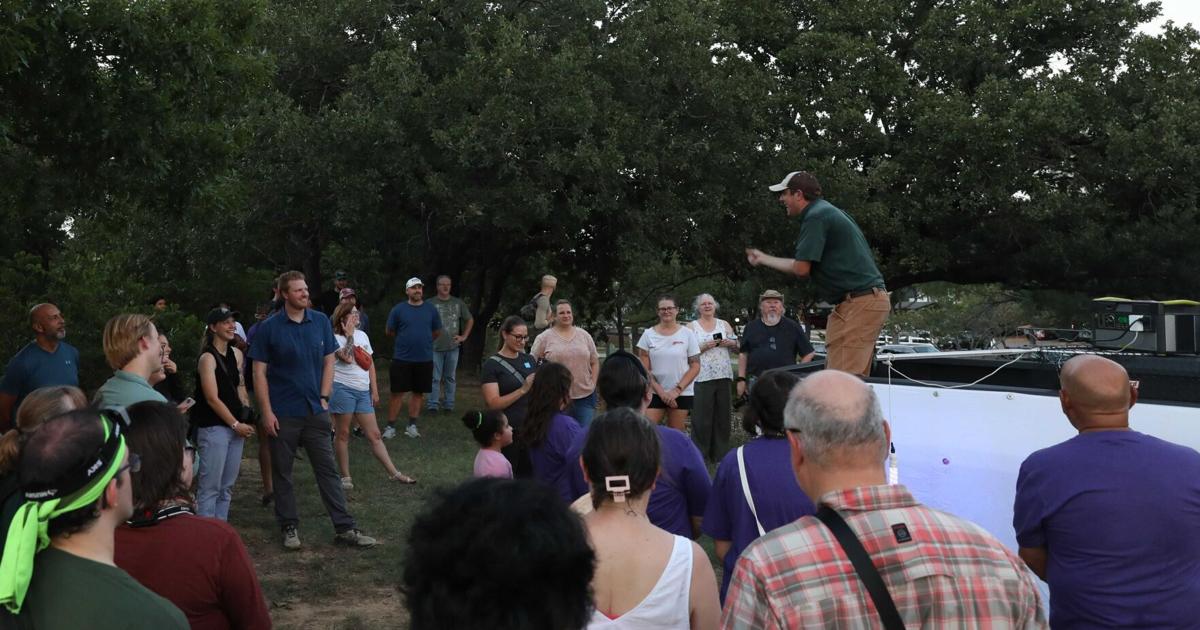

A crowd gathers around Sam Kieschnick, Texas Parks and Wildlife Urban biologist, on July 22 at Molly Hollar Wildscape. Attendees could roam the park and see moth stations with black lights that attracted moths and insects.
As the sun went down over Molly Hollar Wildscape, people began to gather. Hobbyist photographers stood with their flash units ready over white sheets, illuminated with a purple hue by black light.
Suddenly, a voice boomed over the rest.
“Happy, happy, happy Moth Week,” shouted Sam Kieschnick, Texas Parks and Wildlife Urban biologist, as he introduced himself to a crowd of smiling and eager faces.
In celebration of National Moth Week, the Arlington Citizen Science Program hosted its fifth annual Moth Night on Wednesday.
Moths, which are nighttime pollinators, are important to Texas ecosystems, drawn to native plants like yucca, morning glory and tobacco, according to the city event page.
Melissa Walker, City of Arlington stormwater education specialist and coordinator for the event, said while some of the other events get upward of 100 visitors, this year’s Moth Night was the largest she’s seen.
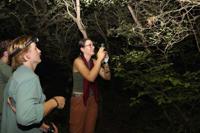
Lukas Sotelo and Alissa Sotelo, Texas Master Naturalist volunteers, photograph a dragonfly July 22 at Molly Hollar Wildscape. They used an app called iNaturalist to help identify the insects, bugs and moths they were photographing.
Stations along a trail of the natural area had ultraviolet lights, which were used to attract moths and other insects.
Moths are among the most diverse organisms on Earth, with more than 500,000 species estimated to exist.
Arlington resident Eli Turner, 32, said events like this are important not only for the environment, but for the community it creates.
“I’m way more eager to do nature volunteering or be active in nature work in the community because I see so many people who are interested in it,” Turner said.
Arlington resident Karen Farney, 40, agreed.
“It’s nice to be with people who appreciate the same things you do,” she said.
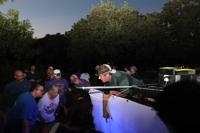
Sam Kieschnick, Texas Parks and Wildlife Urban biologist, points at a moth station July 22 at Molly Hollar Wildscape. The event marked the city’s fifth annual Moth Night.
Research was also being conducted at the event. Using the iNaturalist app, a photography app that helps users identify plants and animals while generating data for science and conservation, residents and attendees were able to help gather actual data.
Walker said the app was an important tool used at nights like Moth Night, whether it be for pollinator surveys or migration patterns.
“They’re getting better data of what type of species are living in areas that before we didn’t really have,” she said.
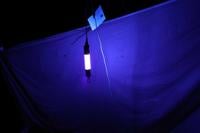
A black light illuminates a white sheet July 22 at Molly Hollar Wildscape. Black lights can attract different insects, bugs and moths.
Citizen science is the act of everyday people participating in research to help make a difference. But to Walker, sometimes it isn’t just about the science.
“It’s not just the data gathering; it is sharing with their neighbors, sharing with their friends and it’s a word of mouth thing,” she said.
As the light off the horizon continued to dim, more bugs and insects began appearing. Kieschnick made his way to each station, giving attendees the scientific names of each insect, bug and moth he could see.
Children smiled with their parents as he delivered the facts to them. Looking at the little organisms, they didn’t necessarily know that they were helping to collect any data.
For Arlington resident James Powell, 7, the night meant one thing: bugs.
For those who would like to have their own moth night: Leave on an outdoor night to attract moths in the area.Hang up a light colored sheet outdoors with a light shining on it. Any light will work.Leave out a fermented sugar and fruit mixture either on a nearby trunk or other safe location for the moths to feed on, checking every 30 minutes for new visitors.
@noahloganlittle