
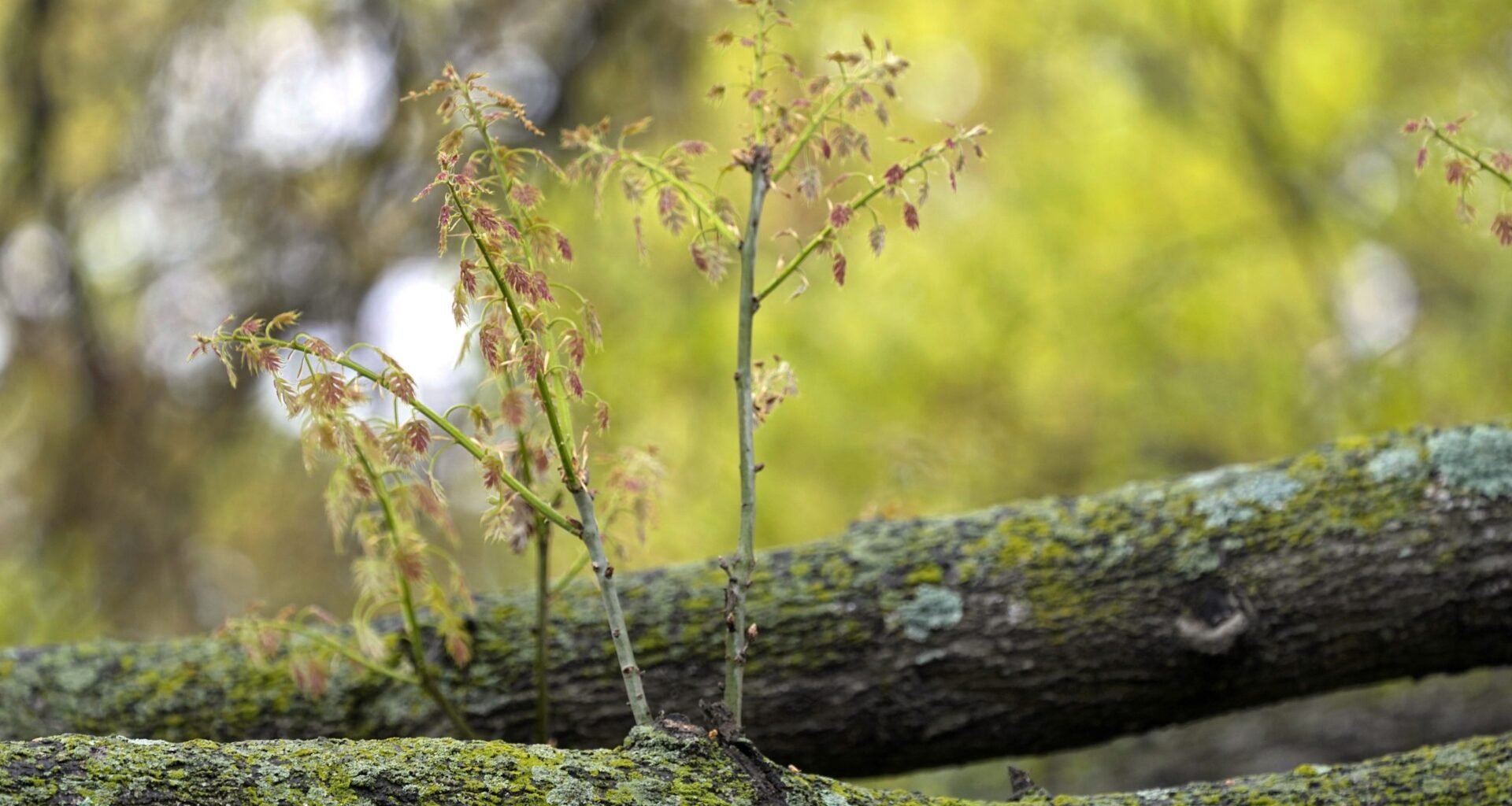
In what officials are describing as a rare instance, the city of Arlington has reported a positive case of oak wilt, a destructive tree disease.
The positive tree was identified in west Arlington, on a property in the 76017 area code, according to Wendy Pappas, the urban forest and land manager with the city.
“I’ve been here for almost 15 years; this is the first case that I’ve heard of since I’ve been here,” Pappas said. “It’s fairly rare in Arlington. It’s been around East Texas and South Texas around Austin. It has really devastated the trees.”
Oak wilt is an infectious disease caused by a fungus. Once infected, the tree can no longer effectively process water, quickly killing it. Some species are affected more quickly than others.
Demian Gomez, a regional health coordinator for the Texas A&M Forestry Service, said the disease is spread through open wounds on trees, a problem exacerbated by trimming or pruning, as well as through root systems of trees in close proximity.
Gomez said that every oak tree in Texas is susceptible to the disease, and that homeowners should be aware of the impact it could have on their property.
“There could be different ranges of susceptibility in how fast or slow that tree is either going to show symptoms or die, but all oak trees are susceptible,” Gomez said.
Pappas said the city has already adjusted its contract with third-party landscaping companies to help fight the spread, adding that the companies must use an approved sealing spray paint on open tree wounds after pruning.
The best thing homeowners can do is to educate themselves about the types of trees they have and how oak wilt shows itself in those types, Pappas and Gomez said.
Here are a few tips officials gave for spotting or preventing the spread of oak wilt:
Recognize which trees in your yard are oak and what species of oak they are.
Watch for signs your tree is affected: thinning of the tree canopy, leaf dropping or unusual patterns on the tree leaves.
Prune trees from July to January, but buy a tree-friendly pruning seal spray to close any open wounds you leave.
Be aware of treatment options if you find your tree has oak wilt.
If you believe your tree is infected, reach out to an arborist.
Visit TexasOakWilt.org for more information.
Chris Moss is a reporter for the Arlington Report. Contact him at chris.moss@arlingtonreport.org.
At the Arlington Report, news decisions are made independently of our board members and financial supporters. Read more about our editorial independence policy here.
This <a target=”_blank” href=”https://fortworthreport.org/2026/07/23/arlington-sees-positive-oak-wilt-case-heres-what-to-know/”>article</a> first appeared on <a target=”_blank” href=”https://fortworthreport.org”>Arlington Report</a> and is republished here under a <a target=”_blank” href=”https://creativecommons.org/licenses/by-nd/4.0/”>Creative Commons Attribution-NoDerivatives 4.0 International License</a>.<img src=”https://i0.wp.com/fortworthreport.org/wp-content/uploads/2021/04/cropped-favicon.png?resize=150%2C150&ssl=1″ style=”width:1em;height:1em;margin-left:10px;”>
<img id=”republication-tracker-tool-source” src=”https://fortworthreport.org/?republication-pixel=true&post=688476&ga4=2820184429″ style=”width:1px;height:1px;”><script> PARSELY = { autotrack: false, onload: function() { PARSELY.beacon.trackPageView({ url: “https://fortworthreport.org/2026/07/23/arlington-sees-positive-oak-wilt-case-heres-what-to-know/”, urlref: window.location.href }); } } </script> <script id=”parsely-cfg” src=”//cdn.parsely.com/keys/fortworthreport.org/p.js”></script>