
Water flows over a path of stones on May 22, 2026 at the Trinity River. (Maria Crane | Fort Worth Report/CatchLight Local/Report for America)
A positive resource. An economic engine. A benefit to recreation and quality of life.
This is how the Trinity River is perceived today by local stewards.
But it wasn’t always that way.
On a warm June morning, Teresa Patterson walked up from the riverbank to the trailhead where the Clear and West forks of the Trinity River meet and discarded a piece of plastic trash she had found in the river.
A longtime advocate of waterways, the Colorado native has stewarded — and paddled — the Trinity since 2008.
“You can’t be in nature without learning to care about nature,” Patterson said.
Patterson is a member of the Trinity Coalition, a group that was instrumental in getting the river nationally recognized as a paddling trail.
She’s observed the Fort Worth portion of the river — spanning hundreds of miles to the Gulf Coast — evolve from what once was a far less pleasant environment than it is today.
The Trinity River was not always seen as the asset it is today.
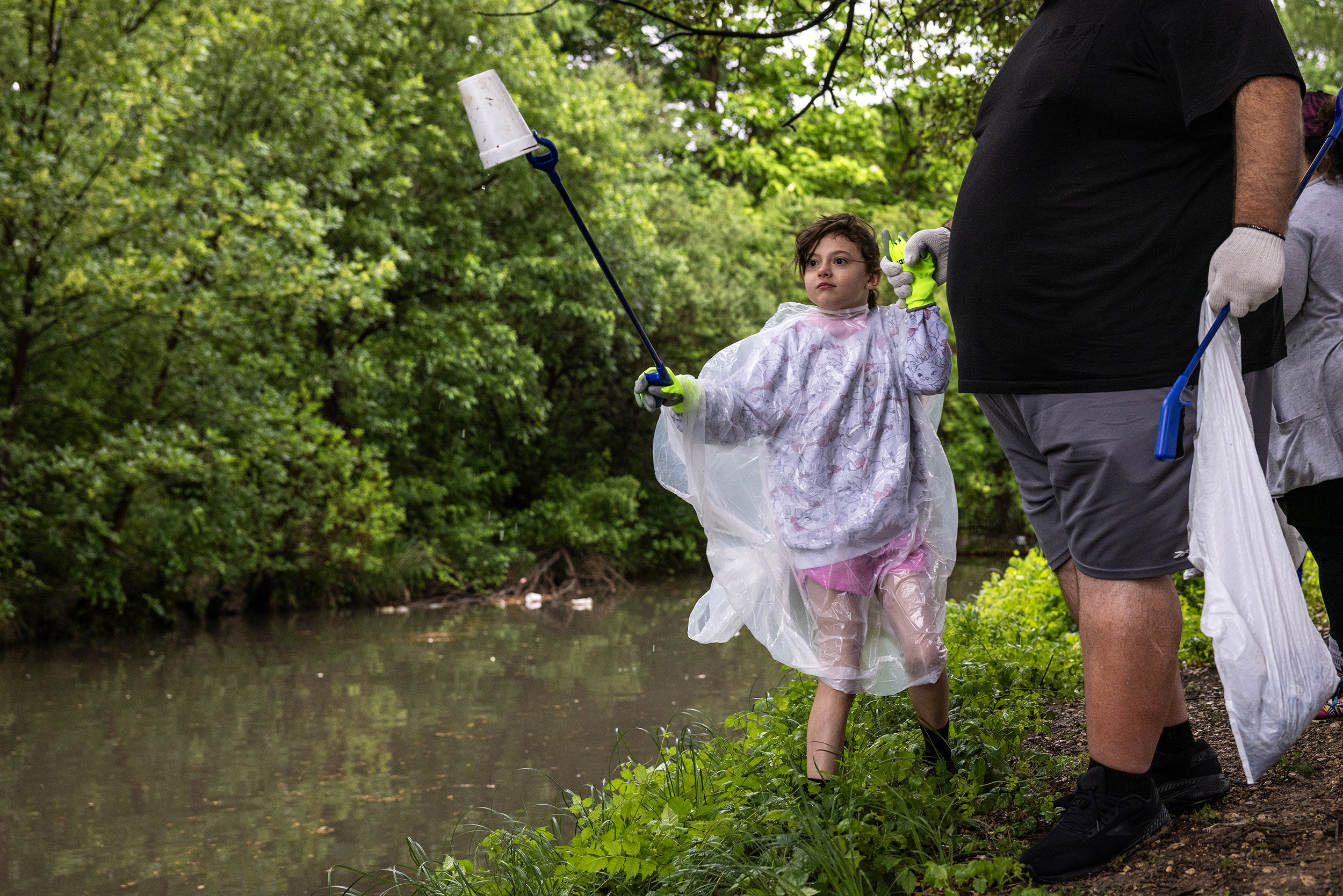 John Salyers and his daughter pick up trash from the Trinity River during the Trash Bash event on April 18, 2026. Salyers and his family have participated in the cleanup event for the past four years. (Maria Crane | Fort Worth Report/CatchLight Local/Report for America)
But over the years, work by community members, organizations, government agencies and self-appointed stewards invested in the Trinity’s well-being has enhanced the public’s perception of the river.
The Environmental Protection Agency’s Clean Water Act in 1972 led to a major makeover, implementing more standards for water quality and pollution. The introduction of infrastructure rerouted the river’s flood-prone sections, steering water away from downtown Fort Worth and making the Trinity more hospitable to boaters and kayakers.
The results have been transformational.
“Every time we take someone out who’s never been (on the river) before, they come back changed by the experience,” Patterson said. “Just being able to get out on the river and experience it helps people gain an affinity and care about it.”
Fort Worth’s history cannot be told without the Trinity River. Still, it wasn’t until the city’s interaction with the river shifted course that the bond between the two strengthened.
The Fort Worth Report, in conjunction with CatchLight Local and Report for America, spoke to some of the Trinity’s stewards, sorted through archives and captured changes in the waterway on camera to detail the critical importance of the relationship between the city and its river moving into the future.
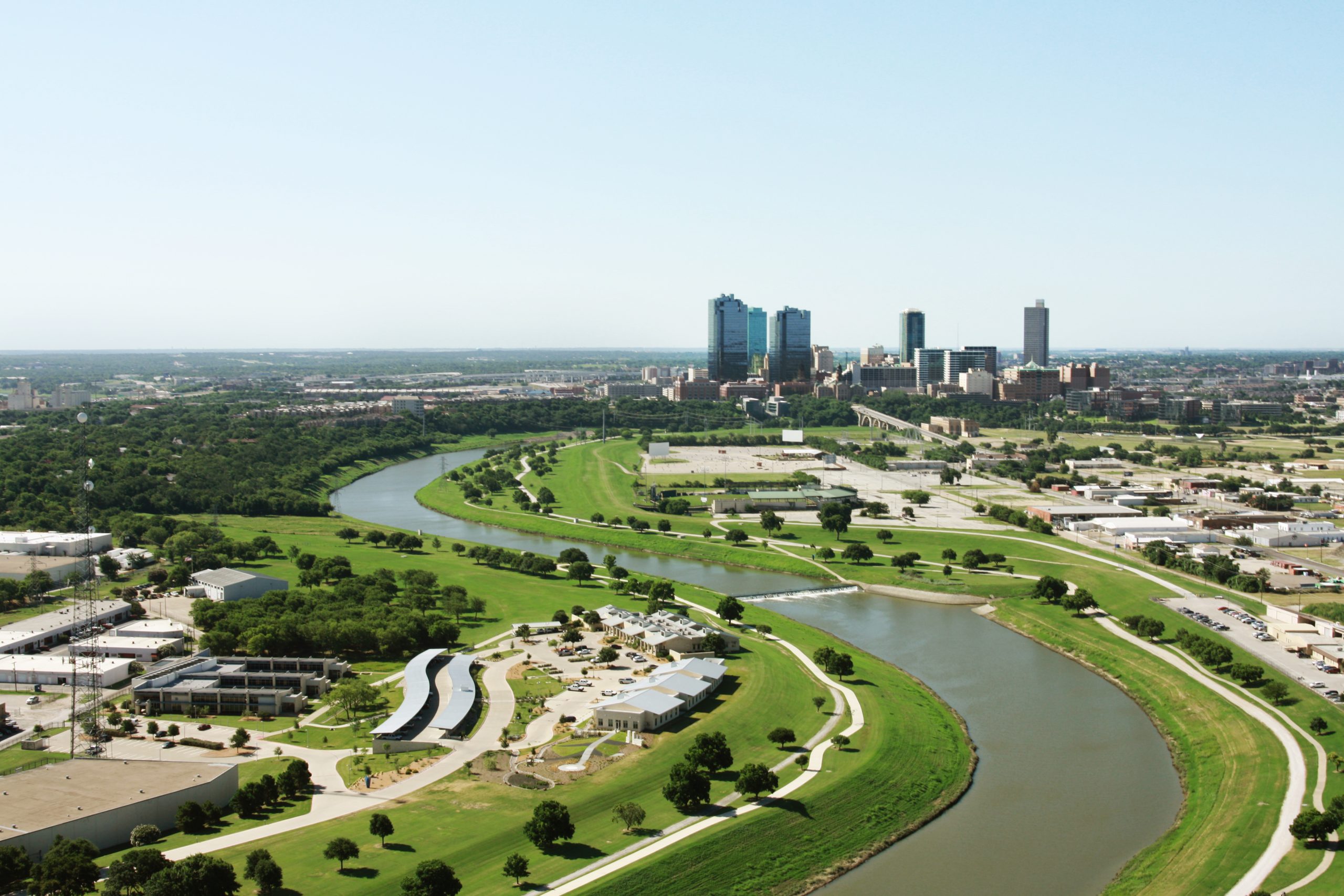
 Top: The U.S. Army Corps of Engineers built levees along the Trinity following a series of deadly floods during torrential storms. (Courtesy | Tarrant Regional Water District)
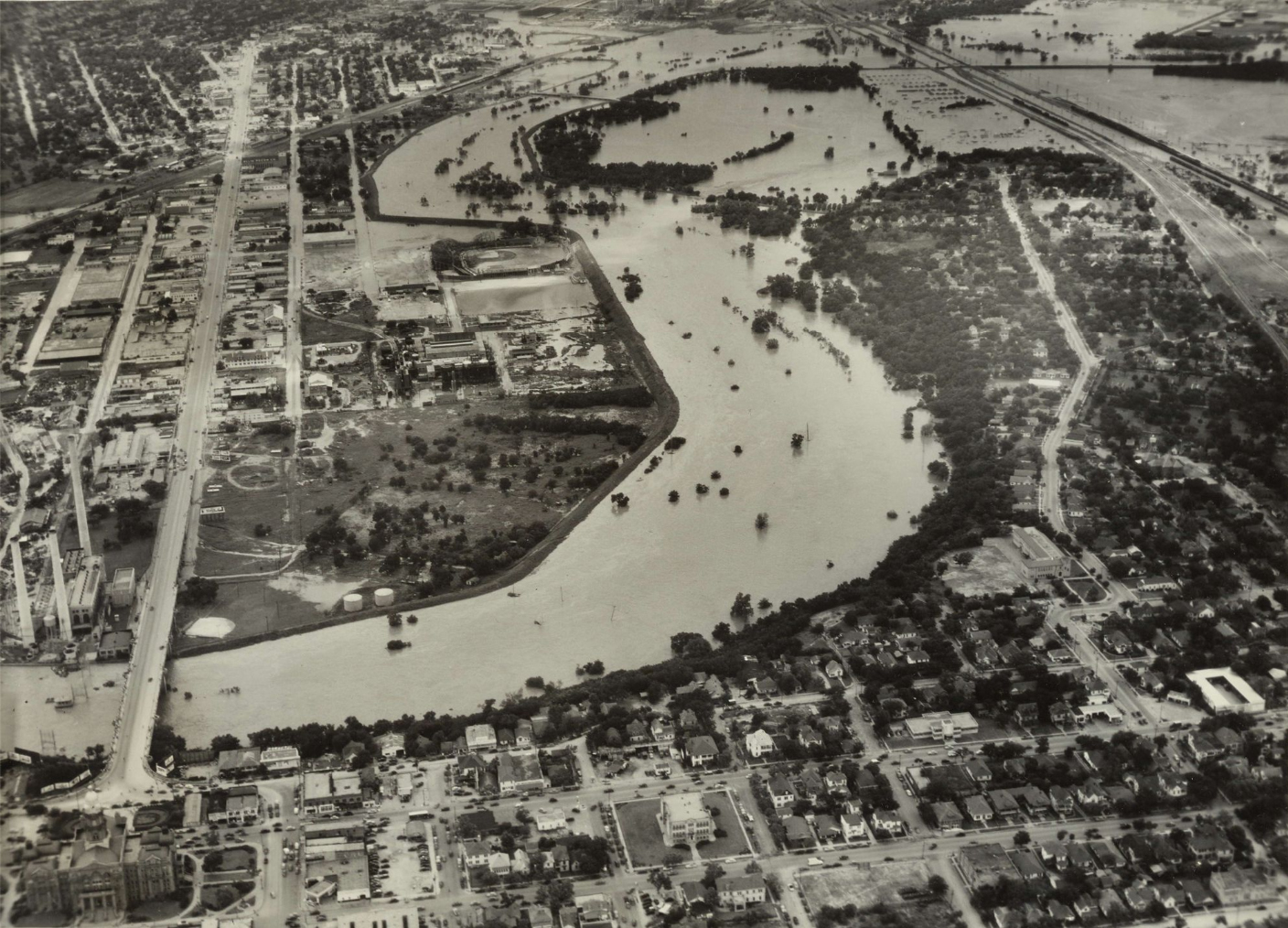
Bottom: An aerial view of the Trinity River captures the May 1949 flood that killed 10 people and caused over $11 million in property damages. (Courtesy | Streams & Valleys)
A city built around a river
The Trinity River’s recorded history dates to the 1600s, when Native American tribes drank its water and considered its banks a sacred homeland. Tribes settled along Village Creek, a tributary of the river that divides Fort Worth from Arlington.
Fort Worth was established in the 1840s as a military post where the West and Clear forks of the river meet.
The river became noticeably contaminated at the turn of the century, according to the Trinity River Authority of Texas. For many years, it was the dumping ground for waste from slaughterhouses along the riverfront.
Lacking protections, the river became an epicenter of urban waste.
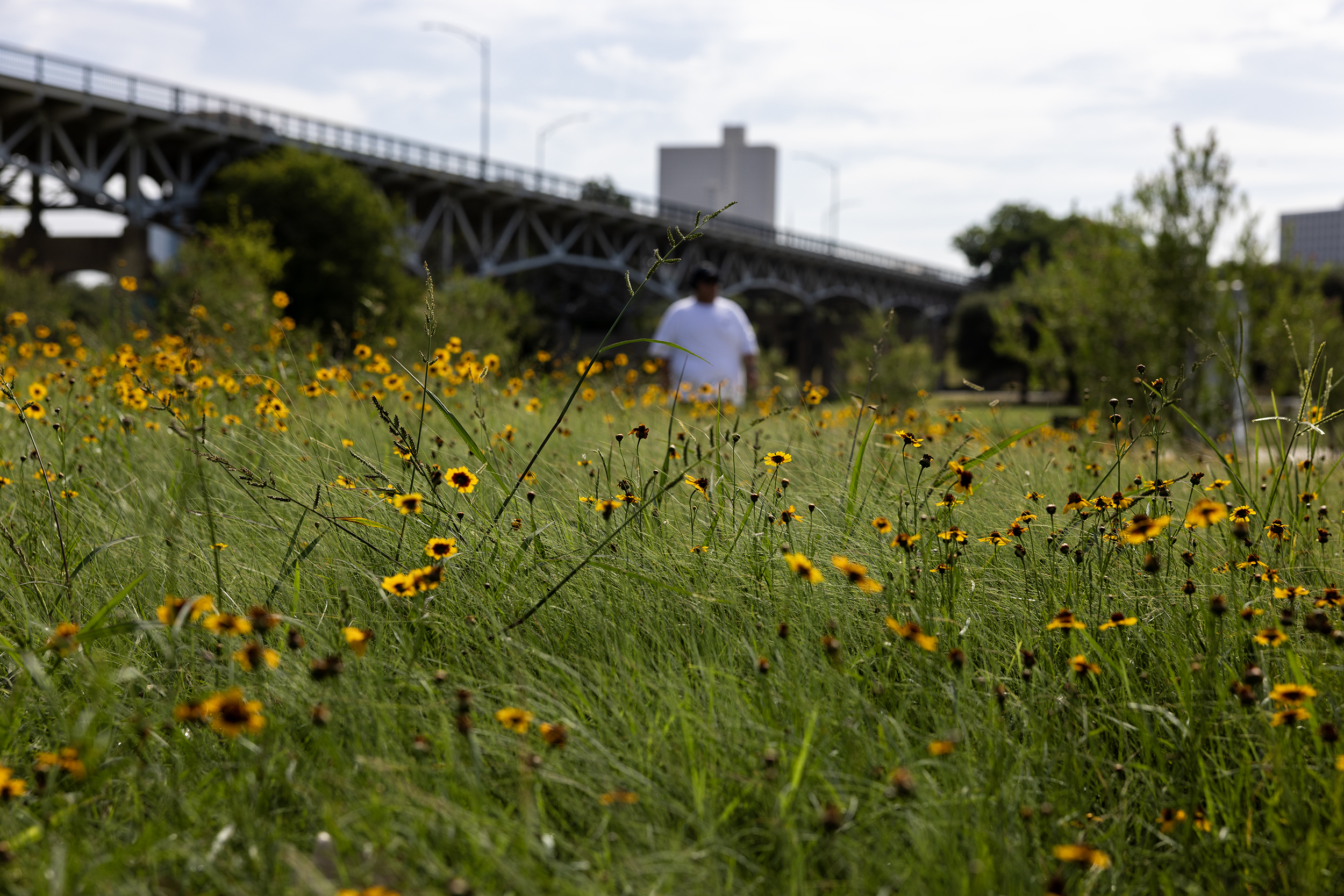 Wildflowers, pictured July 11, 2026, blanket a meadow at Streams & Valleys Plaza at Trinity Park, which sits next to the Trinity River. (Maria Crane | Fort Worth Report/CatchLight Local/Report for America)
 People use the Trinity Trails and green spaces at the riverfront on July 11, 2026, next to The Trailhead at Clearfork, for running, biking and walking. (Maria Crane | Fort Worth Report/CatchLight Local/Report for America)
Consolidation of the local wastewater treatment into a regional system in the 1950s and the establishment of the former Texas Water Quality Board in 1967 helped control pollution, according to the river authority. But even as Fort Worth gained more control over the river through the construction of a levee system, pollution and water quality became bigger issues.
The levees kept the Trinity within bounds when river levels rose, preventing water from spilling over banks and into neighborhoods. However, this system led to “choke points,” where trash and debris piled up, said John Stevenson, chair of Streams & Valleys.
When it came to beautifying the river, one individual in particular was monumental in the transformation of the Trinity: Phyllis Tilley, founder of Streams & Valleys, the nonprofit organization that protects, enhances and celebrates the river and its recreational opportunities.
A trip to San Antonio in the late 1960s ignited a fire in Tilley, Streams & Valleys executive director Lauren Deen said. Tilley observed how that city treated the San Antonio River and how the waterway central to the city was incorporated into its planning. She wanted the same for the Trinity.
Tilley gathered Fort Worth leaders, the Tarrant Regional Water District and others to spearhead the river’s makeover.
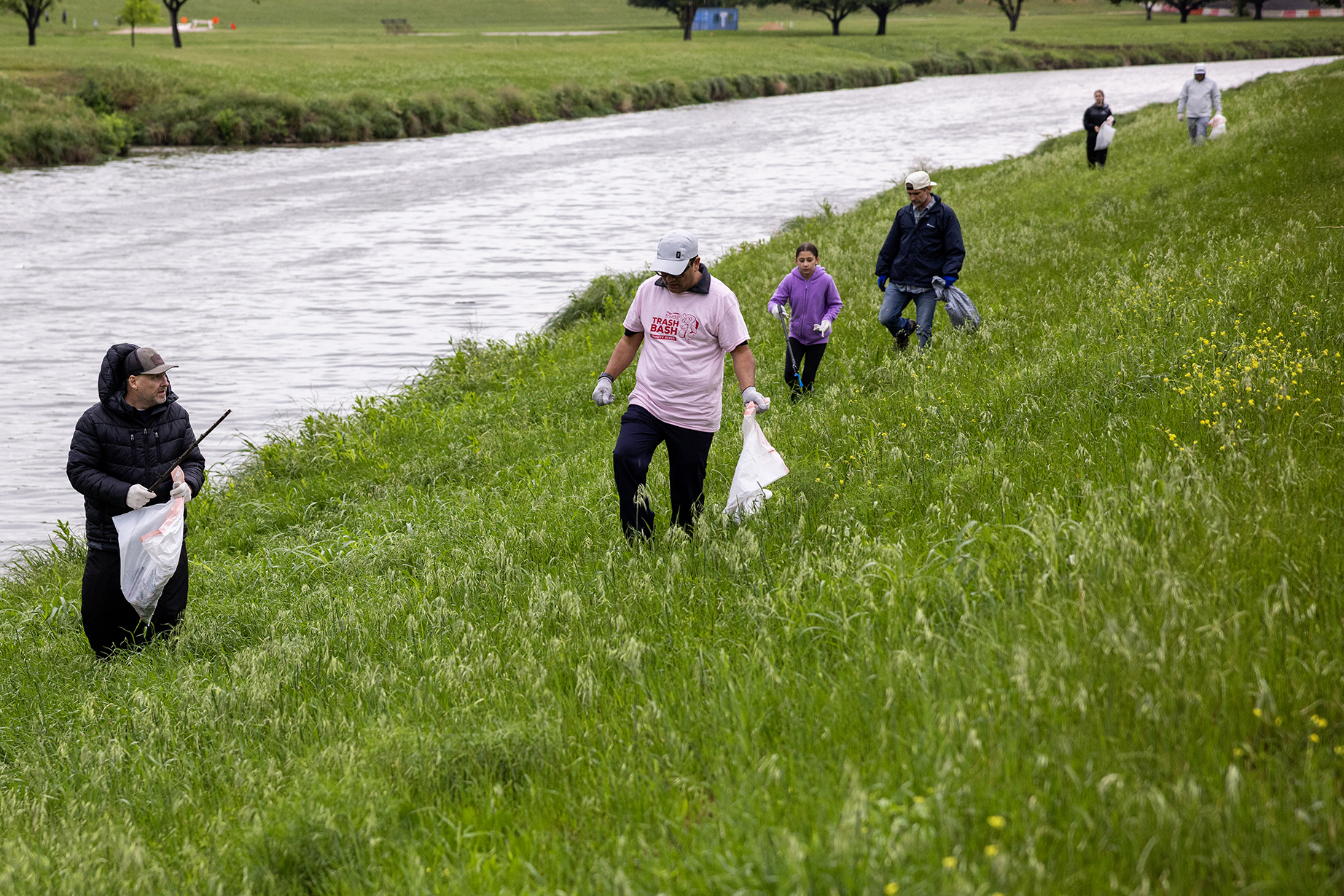 Volunteers collect trash on a cold and rainy morning at the biannual Trinity River Trash Bash event on April 18, 2026. Volunteers picked up litter from various parts of the river as well as other waterways across Fort Worth. (Maria Crane | Fort Worth Report/CatchLight Local/Report for America)
Before her death in 1996, Tilley was responsible for seeing numerous projects to fruition, including the launch of the Trinity Trails and Heritage Park, tree planting along the riverfront and the installation of dams to raise the river’s water level.
“So much of what Phyllis saw was created,” Stevenson said.
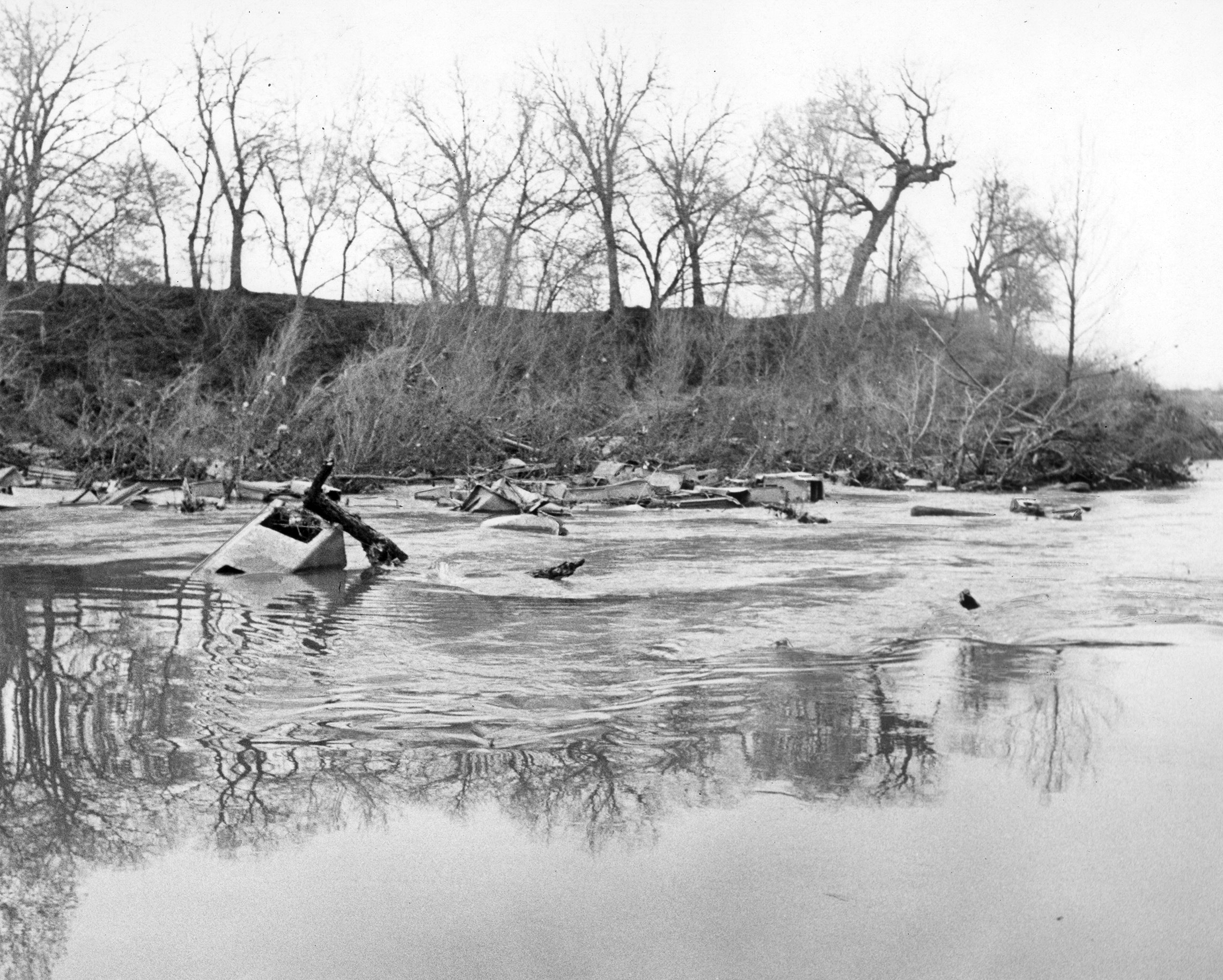
Trash piled up in the Trinity River before a levee system was built. (Courtesy | Streams & Valleys)
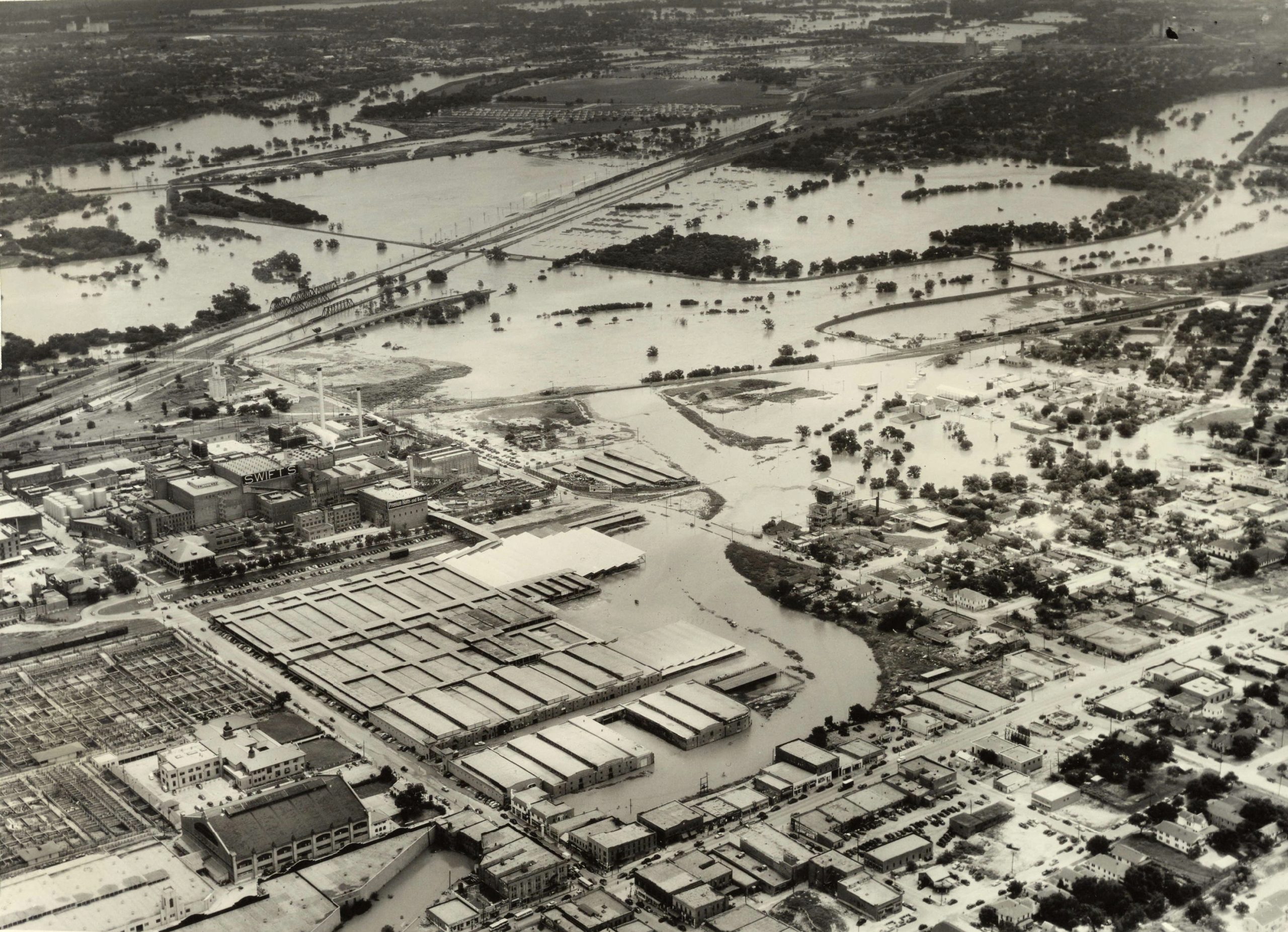
The Trinity River in 1949. Deadly floodwaters overflowed into the Stockyards and Marine Creek, a tributary of the river. (Courtesy | Fort Worth History Center, Fort Worth Public Library)
‘Conserve what we have left’
On an overcast morning in May, Sandy Schulze led a Raja Yoga session at the Trinity riverfront.
Dozens packed the grassy lot adjacent to The Trailhead at Clearfork’s Press Cafe, practicing mindful exercises along the river.
To her, engaging in yoga along the river speaks to the importance of nature and, especially, the resource that is the Trinity, enhancing wellness and quality of life.
“Where I feel like we are at peace is when you are out in nature,” Schulze said. “That’s what I love about the Trinity — we have that running through the city.”
Schulze worked at the former Pier 1 building — near a downtown section of the river — until the COVID-19 pandemic. She considers her transition from practicing and leading yoga in studios to leading classes on the riverfront an era of personal growth.
 People participate in a yoga session July 11, 2026, on the riverfront outside Press Cafe. The riverfront of the Clear Fork Trinity River is a regular spot for outdoor recreation. (Maria Crane | Fort Worth Report/CatchLight Local/Report for America)
Despite earlier grassroots efforts by conservation groups to revitalize the Trinity, the river did not always attract the numbers of people it now does. Schulze said when she first moved to Fort Worth, the Trinity “wasn’t exactly a pleasant thing to be around.”
“Never once did I honestly think about going to the Trinity River — for a while — because of the history with it,” she said.
The pandemic attracted other residents to the recreational potential of the Trinity, too.
“(The pandemic) opened people’s eyes to how important it is to be outside and recognize what we have here as an asset that we can get to,” said Jennifer Harnish, a former Streams & Valleys chair. “It is free.”
A notable area increasingly frequented by residents during the pandemic was a stretch along Chisholm Trail Parkway, Harnish said. Recent transformations to those hiking and biking trails include artwork and markers that map the river’s tributaries.
Trash Bash events further encouraged community stewardship. The biannual event hosted by the water district gathers hundreds of people every spring and fall.
Since its launch in 1991, over 500 tons of garbage — about a million pounds — have been removed from the Trinity.
Today, yoga instructor Schulze considers herself among the Trinity River’s stewards.
After wrapping up a yoga session in May, she was thanked by the gathering for offering mindful instruction as well as immersion into the wildlife and natural elements of the riverfront.
“It was just so awesome to hear people say they needed it,” Schulze said. “Not just the yoga, but just being out there with community and nature.”
She’s found that guiding people through yoga on the riverfront can encourage others to think more about how they can advocate for the river.
“I hope this brings more awareness to everybody to just appreciate, conserve what we have left,” Schulze said.
 The Trinity River at dawn on June 29, 2026. (Maria Crane | Fort Worth Report/CatchLight Local/Report for America)
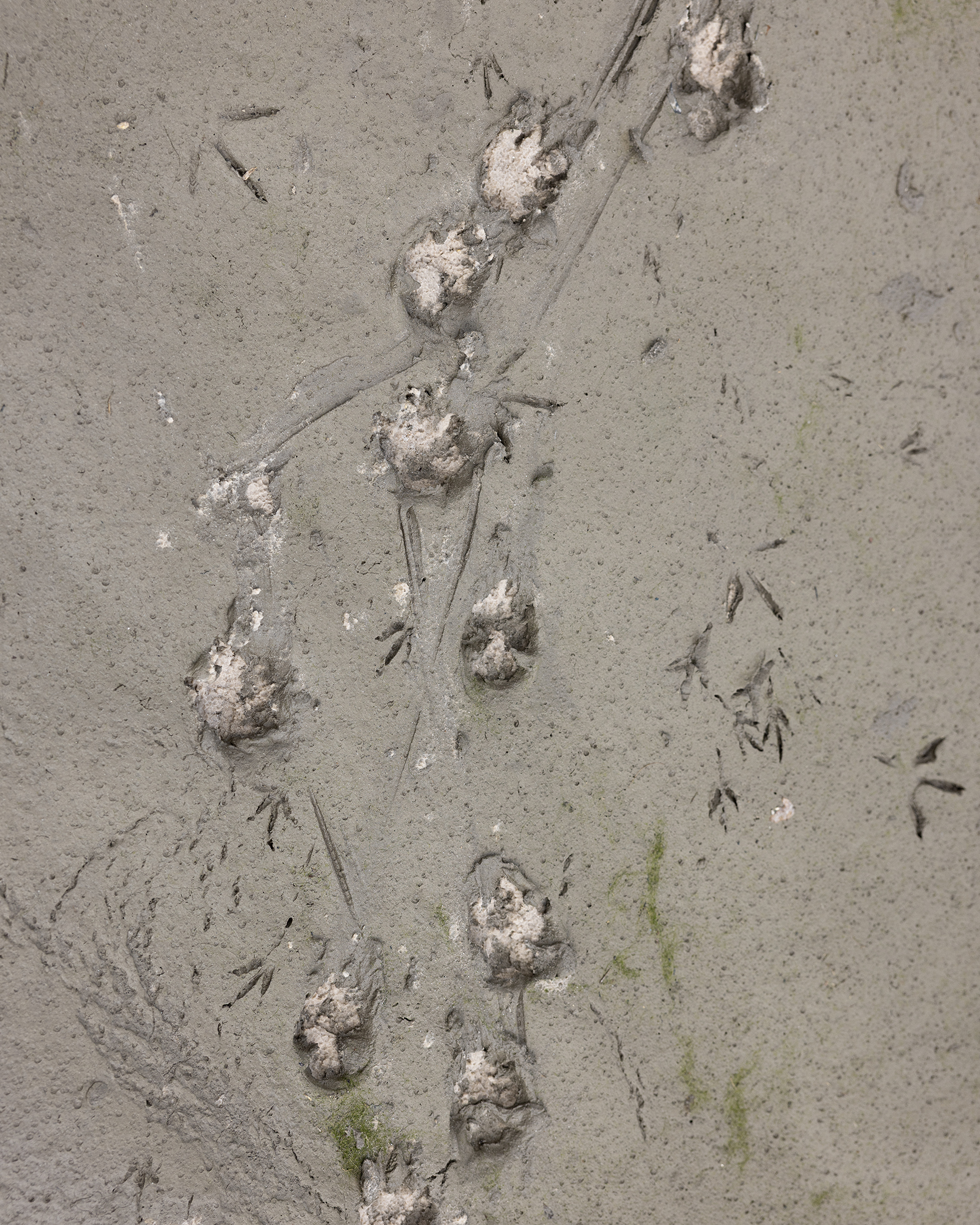 Animal tracks, pictured July 14, 2026, cross through silt following a rainstorm on the bank of the Trinity River. (Maria Crane | Fort Worth Report/CatchLight Local/Report for America)
Understanding the natural world through the Trinity River
Andrew Brinker lives no more than 3 miles from the Trinity River. He’s at the riverside almost daily, testing water quality and leading lessons for college and high school students.
Growing up, Brinker benefited from a nature center located just 10 minutes from his elementary school in Michigan. Observing the turtles, fish, insects and reptiles there inspired him to pursue a career in biology. His gateway to the Trinity was the Fort Worth Zoo, where he worked upon his arrival in North Texas.
The educator now teaches at the Texas Academy of Biomedical Sciences and spends the latter half of the day conducting lessons and labs at Tarrant County College.
While Brinker spends plenty of time in the classroom, he wants to get students out to the Trinity as much as possible to engage them in the natural sciences.
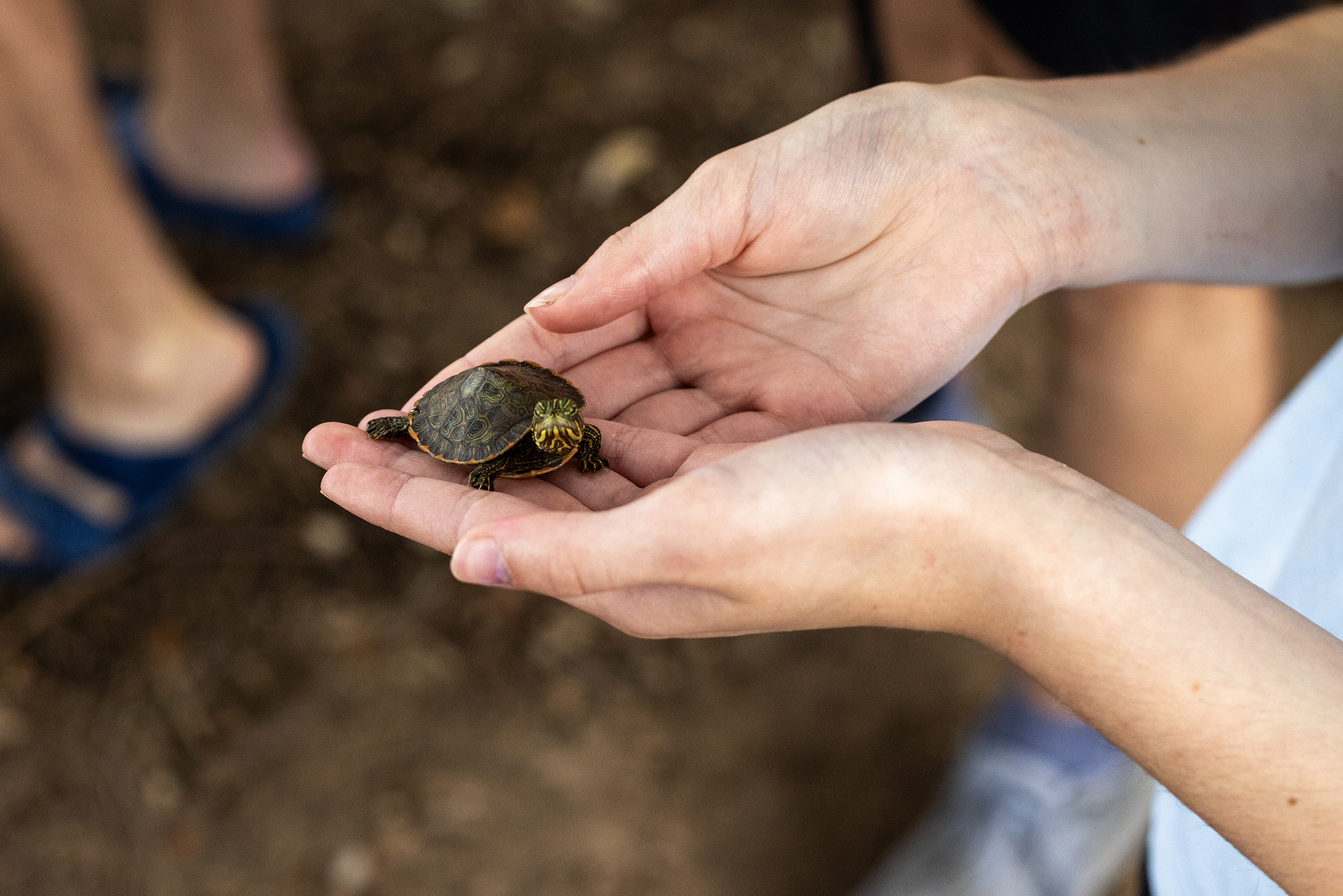 Twelve-year old Lexi holds a baby turtle pictured May 23, 2026, at Trinity River during the Spring Paddle Fest in Fort Worth. While celebrating World Turtle Day, Tarrant County College biology professor Andrew Brinker brought turtles to the Trinity River confluence to teach the public about the species that live in the waterway. (Maria Crane | Fort Worth Report/CatchLight Local/Report for America)
“That develops a huge connection with them to the river,” Brinker said. “They really connect well with nature, how everything works, where our water comes from, why we should take care of it.”
Brinker also partners with the Tarrant Regional Water District to help spread awareness of the educational opportunities around the Trinity. He describes his partnership with the water district as symbiotic.
“We both help each other. … They hold keys to the river,” Brinker said of the agency.
The water district’s environmental services division emerged in 1986 to build on the agency’s water quality program, under which staffers conduct testing and sampling from its reservoirs.
In March, Brinker and other academics joined representatives with the Tarrant Regional Water District and Trinity River authorities next to the confluence of the Clear and West forks to lead a fish and water resources lab for Tarrant County College students.
Students rotated through stations, collecting data on fish and learning about the Trinity’s watershed.
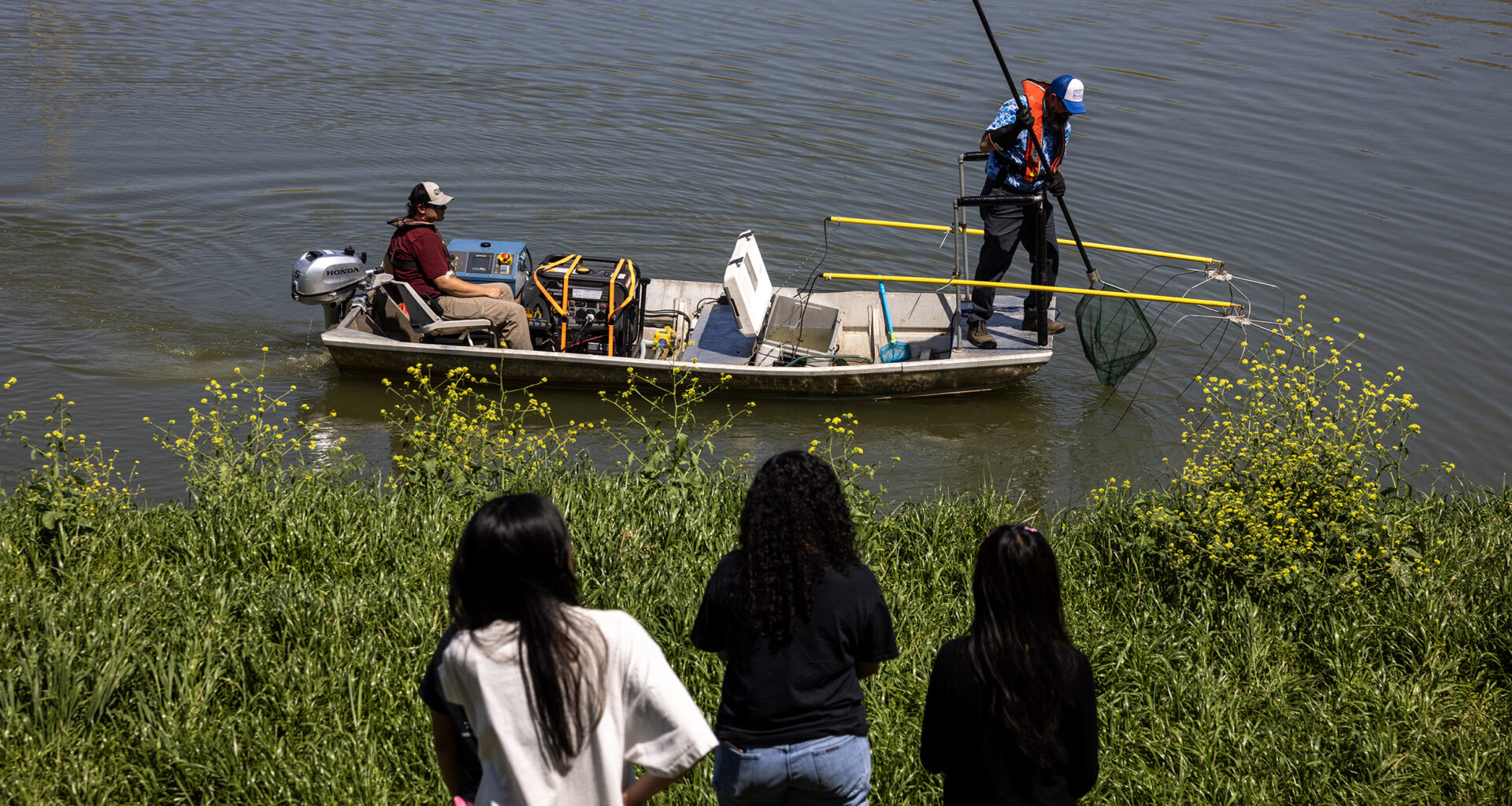
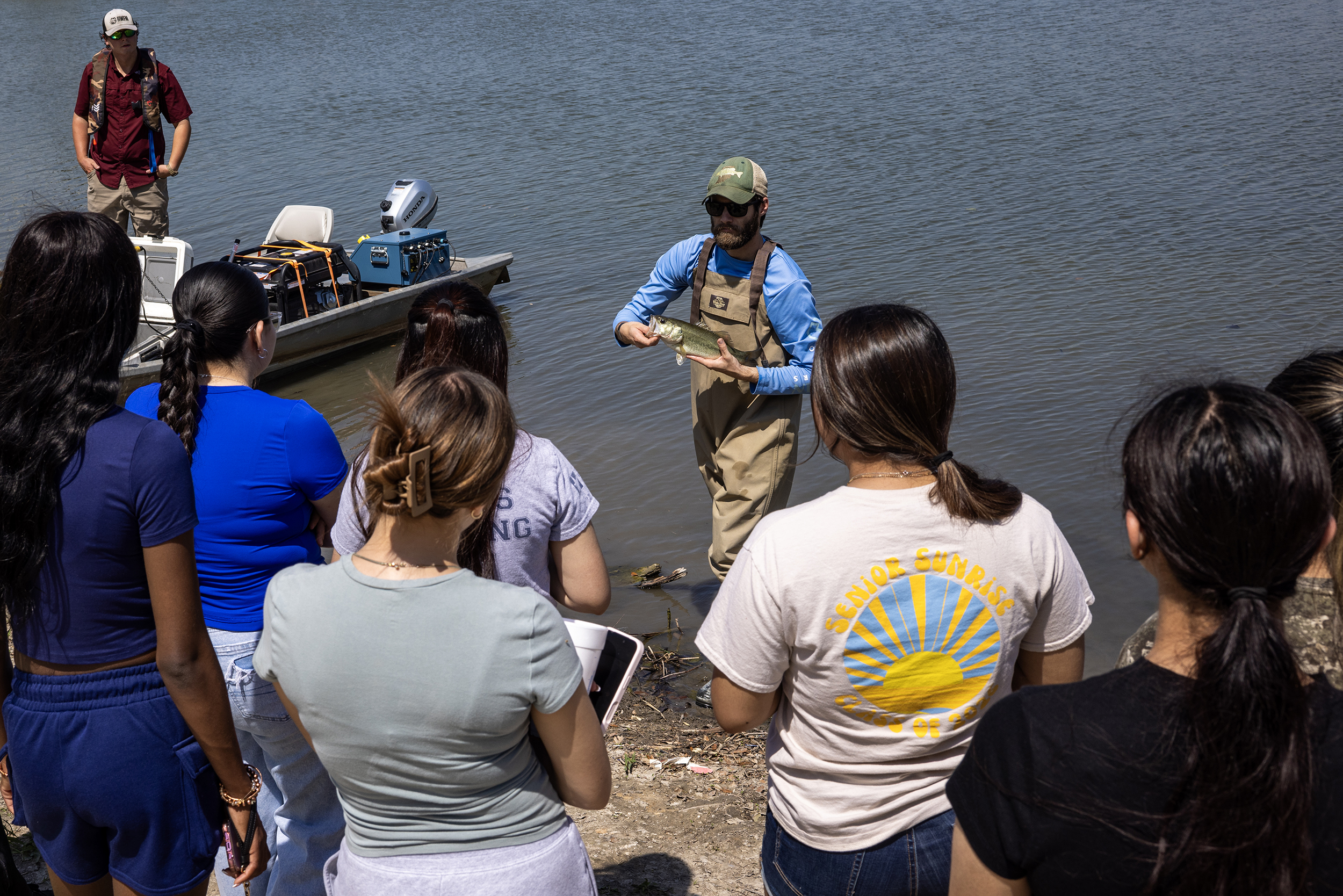 Ryan Seymour of the Trinity River Authority of Texas shows students some of the fish that he collected from the Trinity on March 25, 2026, outside of the Tarrant County College’s Trinity River Campus. (Maria Crane | Fort Worth Report/CatchLight Local/Report for America)
 Nonmajor biology students in Andrew Brinker’s fish and water resources lab handle varieties of fish from the Trinity River to measure their length on March 25, 2026, outside the Tarrant County College Trinity River Campus. (Maria Crane | Fort Worth Report/CatchLight Local/Report for America)
“Making that connection for the students with (the water district) is a big deal,” Brinker said.
The Trinity’s role as an educational resource has grown with help from the water district, Streams & Valleys and local stewards.
The water district’s environmental services division educates people about the importance of the natural environment and conservation, including the Trinity, said Paris Sanchez Leavell, landscape architect manager with the district.
Streams & Valleys launches educational campaigns through partnerships that include programs on water conservation, impacts from litter and interactive signs, and displays along the trail system.
Brinker’s work has contributed to regional and statewide projects, including surveys on turtles, alligators, fish, threatened species and water quality.
“People don’t realize how biodiverse the (Trinity) is,” Brinker said. “Rivers are like highways for plants and emulsion.”
Development along the river can lead to ecological succession — the process of how species and habitat in an area change over time. Studying this kind of impact on the river can be useful for the community when learning about chemical makeup and water management.
“It’s a baseline to know how our ecosystem and ecology and rivers are working,” Brinker said.
He also noted that depth mapping done on the river involves analyzing how the Trinity flows and where trash will collect.
The results of that and other projects act as tools for regional and state agencies to use, he said.
‘The definition of inclusion’
Much like Brinker and Schulze, Teresa Patterson spends most of her time outdoors and cares for the Trinity.
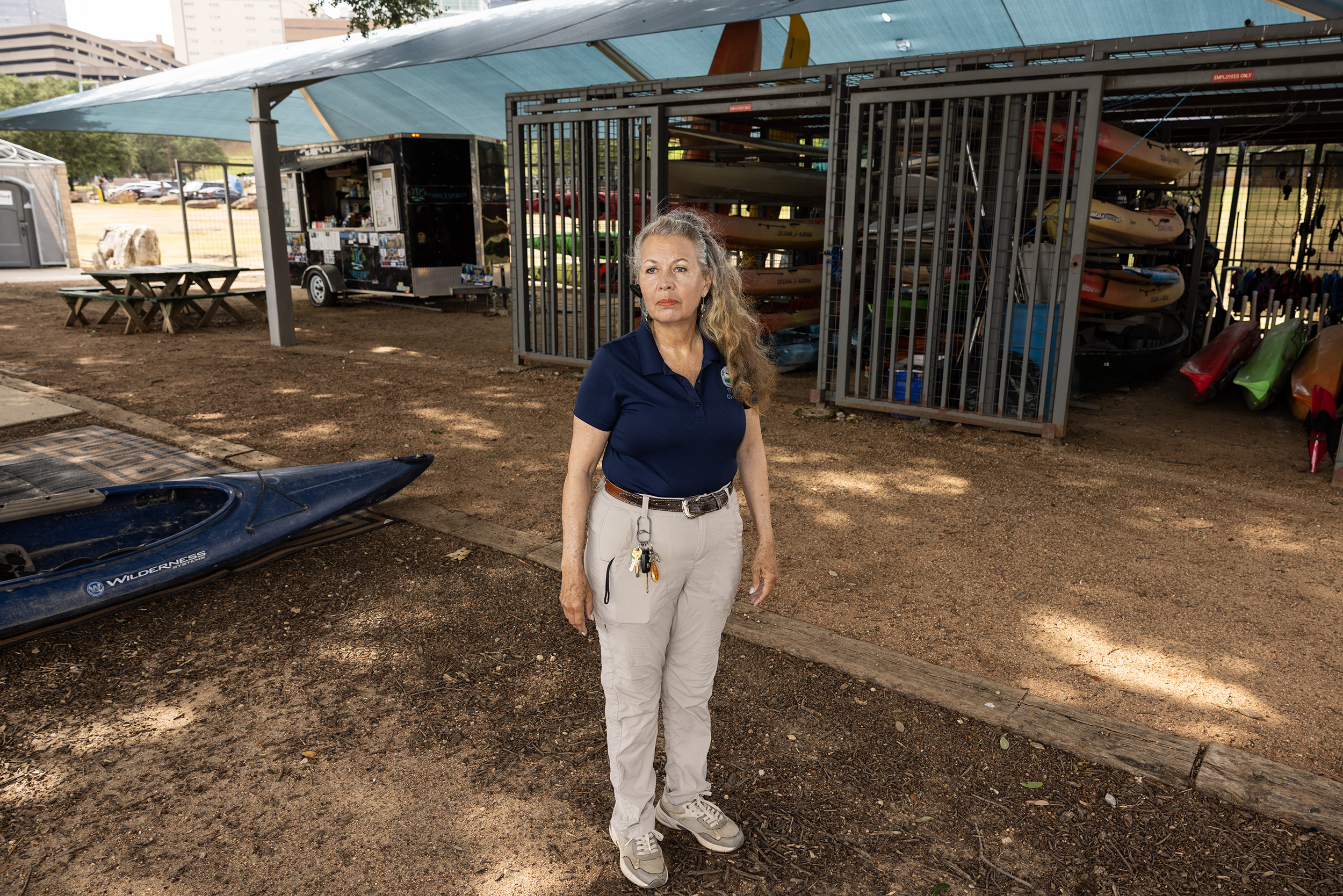 Teresa Patterson runs TC Paddlesports at Panther Island, where the public can rent out water sport equipment and participate in events at the Trinity River year-round. (Maria Crane | Fort Worth Report/CatchLight Local/Report for America)
Patterson was a scuba diver and worked with wildlife before she began paddling on the Trinity in 2008. The more she found herself on the river, the more she started to notice how much opportunity there was for recreation.
“You’re out in (the Trinity) and you start paying attention,” Patterson said. “Where are the paddle trails? Where can you go?”
From these thoughts and ideas, Patterson banded with fellow river advocates in 2015 to form the Trinity Coalition, a community-led group dedicated to improving the Trinity for recreational use. The group helped get 130 miles of the Trinity, winding from Fort Worth to Dallas, designated as a paddling trail by the National Recreation Trails.
Through the designation, Patterson and the group brought more boat launches, signage, a portage trail at Lake Worth and added even more stretches of the Trinity to the paddling trail.
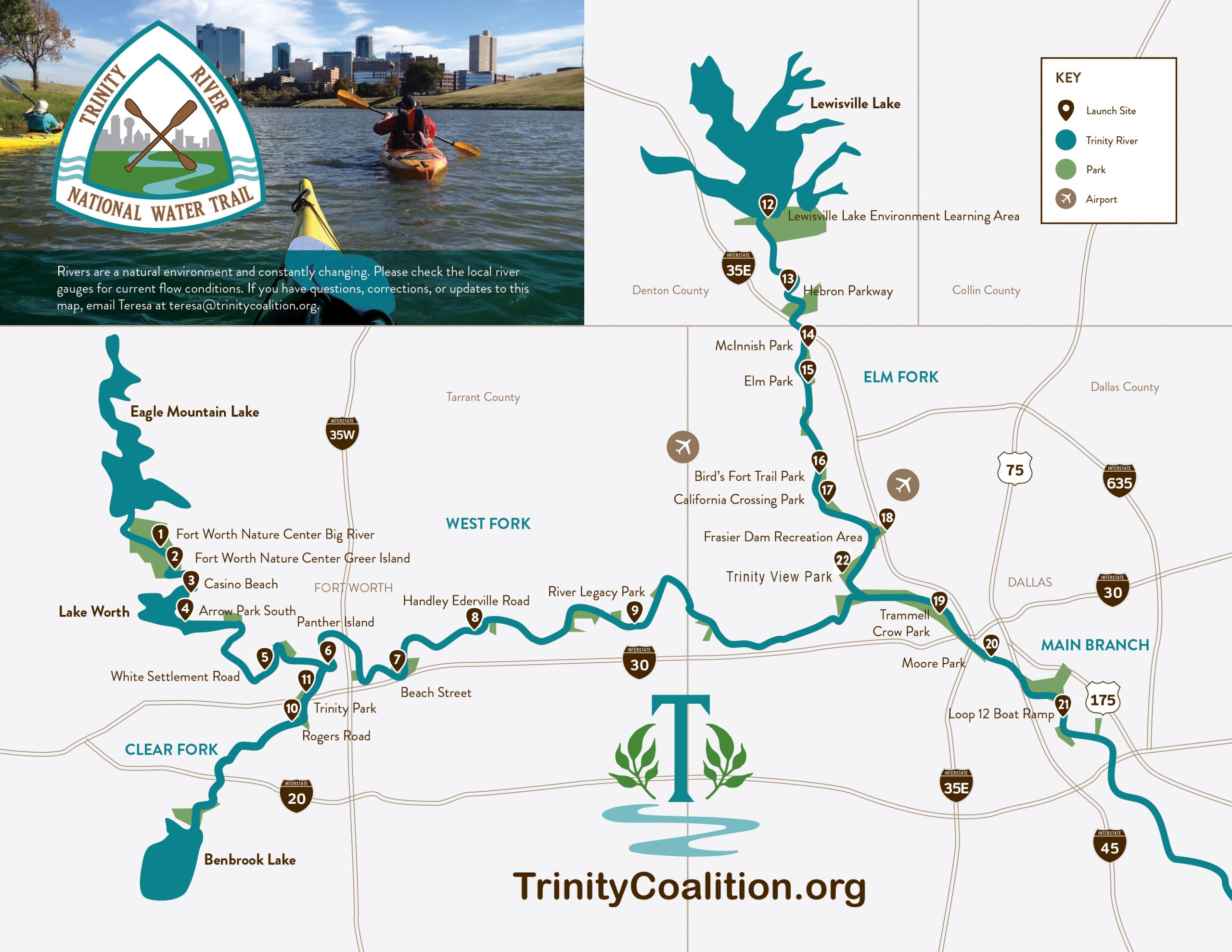
The map shows launches along the 130-mile Trinity River paddling trail from the Fort Worth to Dallas areas. This portion of the river was recognized as a paddling trail by the National Recreation Trails. (Courtesy | Teresa Patterson)
Since she first became enamored of the riverway, Patterson, who manages the rental boat business TC Paddlesports at Panther Island, has noticed a positive difference in the way people value and interact with the Trinity.
“It’s changing, and part of it, I hope, is (Trinity Coalition’s) outreach to help people discover that it is cleaner than they think and discover what it’s like to be on it,” Patterson said.
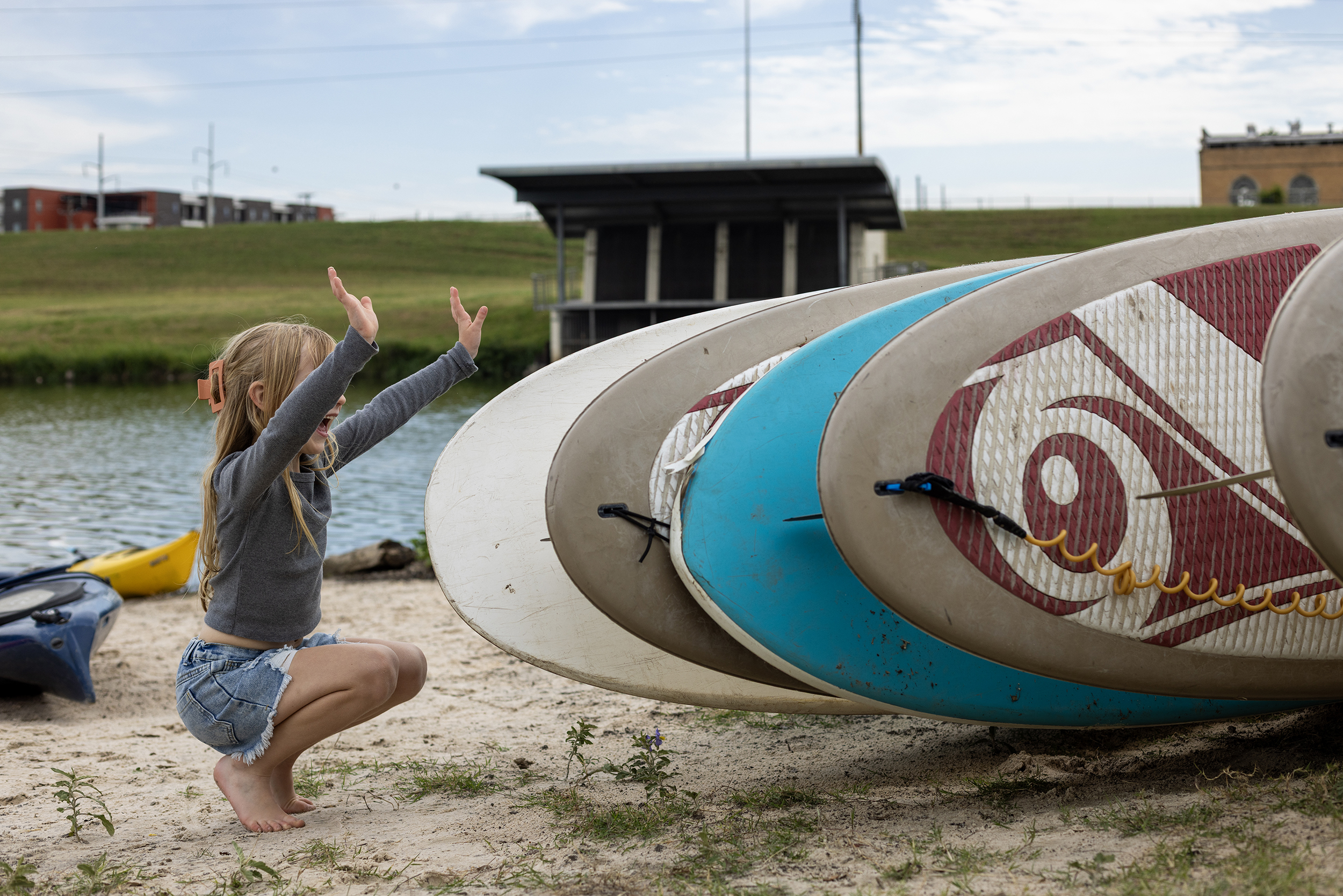 TC Paddlesports at Panther Island hosts Spring Paddle Fest on May 23, 2026, at the Trinity River in Fort Worth. The event welcomes people to test out recreational water gear and learn about how they can interact with the river. (Maria Crane | Fort Worth Report/CatchLight Local/Report for America)
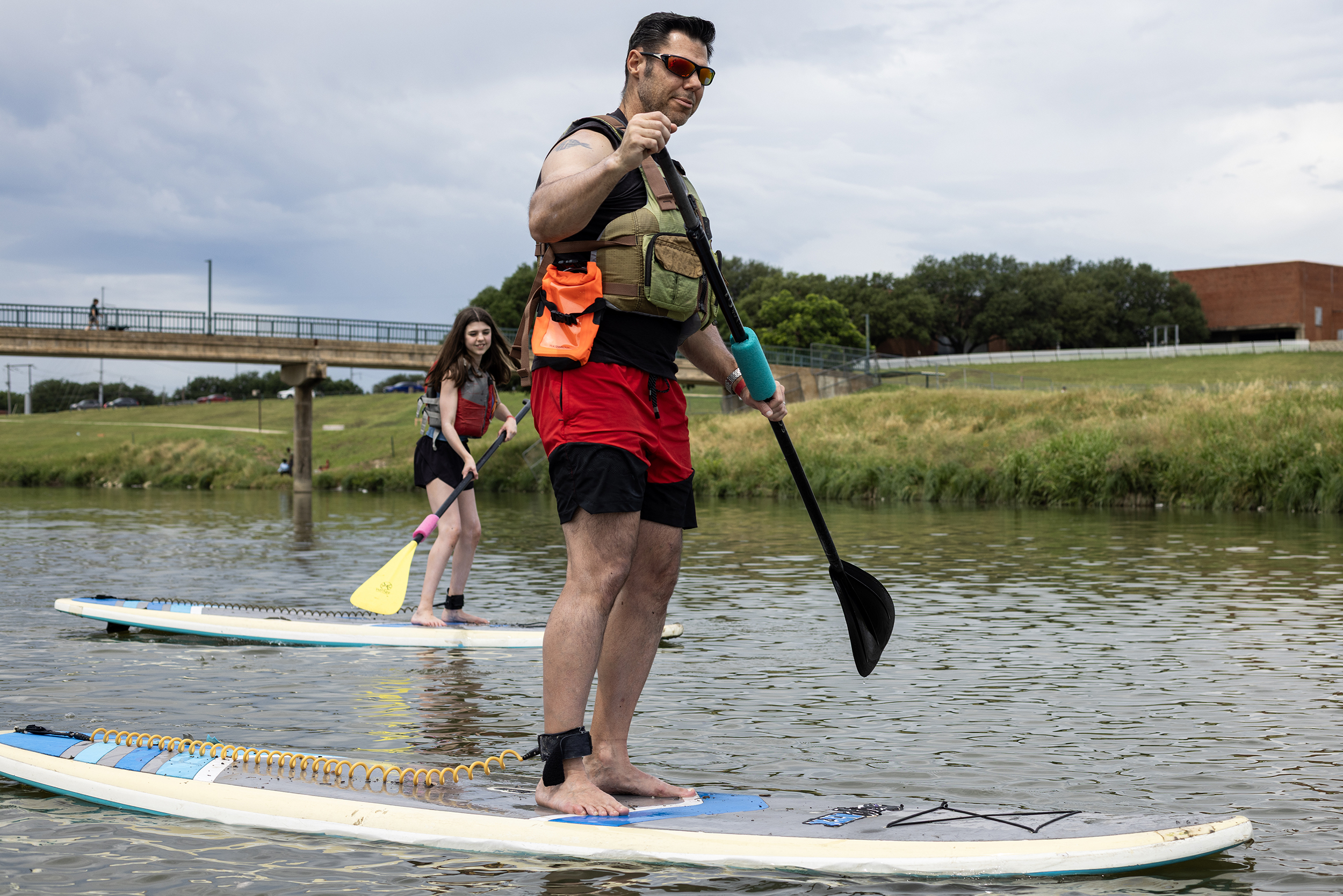 Brian Overton paddleboards on the Trinity River May 23, 2026, as part of the Spring Paddle Fest event in Fort Worth. Attendees are encouraged to try out various water gear, from paddleboards to canoes and kayaks. (Maria Crane | Fort Worth Report/CatchLight Local/Report for America)
A view of downtown Fort Worth from a paddleboard on the Trinity River on May 23, 2026. (Maria Crane | Fort Worth Report/CatchLight Local/Report for America)
Recreation became a core pillar of the water district in the mid-1980s when the agency began considering how to open its land to the public — including the Trinity riverfront. Their efforts largely included the Trinity Trails.
The first portion of the trail was brought to the riverfront in 1972, according to Visit Fort Worth. The following decade, the water district and Streams & Valleys collaborated to expand the trail system.
By 2003, the trails stretched across 30 miles on the riverfront. In 2018, the trail system grew to 72 miles along the river. Today, the trail is a network of over 100 miles, according to the city.
The water district has ramped up its focus on recreation in and around the river with master planning in the last 10 years, Sanchez Leavell said.
Agencies have brought several events to the river in addition to Trinity FlyFest, including Fort Worth’s Fourth and Mayfest.
“We wanted people to be able to interact with the river and be able to interact with nature,” Sanchez Leavell said.
What does the future hold for the Trinity?
As Fort Worth’s population grows, the Trinity is changing with it.
Some of the greatest changes and challenges in Fort Worth’s plans for the river involve the $1.6 billion Panther Island / Central City flood control project.
Later this year, construction is set to begin on the project requiring engineers with the U.S. Army Corps of Engineers to break up the river into two bypass channels, running north and south, to reroute the Trinity’s floodwaters away from downtown and northside Fort Worth. The bypasses will create a manmade island at the center, dubbed Panther Island. While the U.S. Army Corps of Engineers is solely focused on the federal flood control project, city officials are leading the development of the future island to become a driver for businesses and economic opportunities.
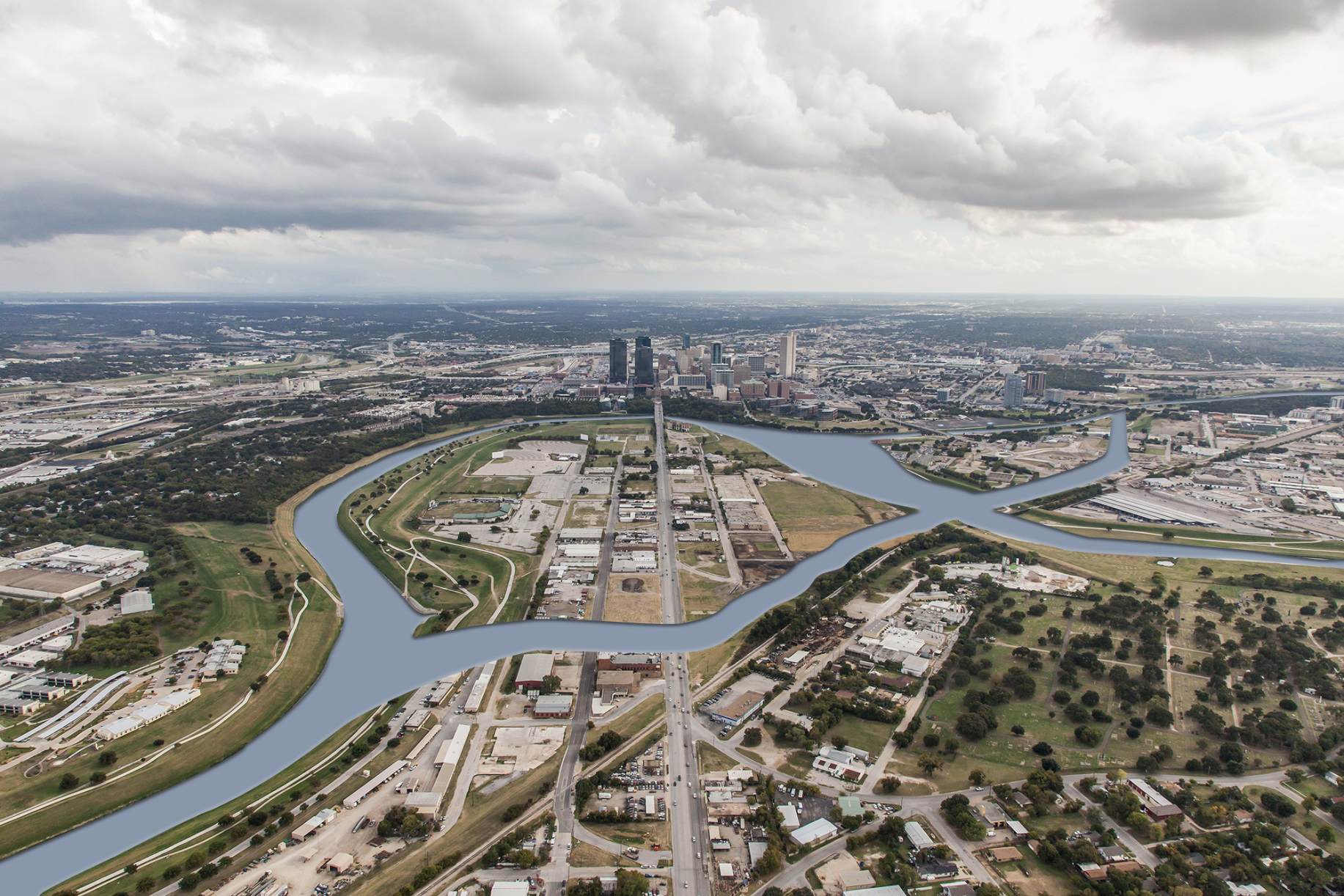 The rendering shows how the Trinity River will be rerouted into two bypass channels, running north and south, after construction wraps up on the $1.6 billion federal flood control project. (Courtesy | Tarrant Regional Water District)
The Trinity’s current levee system accounted for a city population of 350,000 — a population Fort Worth has long since exceeded. Safe growth of the Trinity is a priority at Streams & Valleys, a partner of the federal flood control project.
Inclusion and community fostered by the Trinity is also a goal alongside safety. The planning from Streams & Valleys and the water district outlines projects related to land management, parks and increased connectivity to the Trinity.
Through its confluence master plan, Streams & Valleys has 70 projects to enhance the river. That includes the future Bomber Spur Trail, designating more natural areas, trail extensions, creating more kayak loops and increased accessibility to the Trinity across several areas in the city.
One of those projects included improvements to the Phyllis Tilley Memorial Pedestrian Bridge, which Streams & Valleys has already broken ground on.
“The definition of inclusion is the Trinity River,” Stevenson said. “Streams & Valleys is here to make sure that that continues to be at the forefront of everyone’s minds.”
Patterson says she continues to hear criticisms from residents — including regarding the river’s water quality. Nevertheless, she celebrates how far the Trinity has come.
There will always be challenges with an urban river, Patterson said.
Still, she said, “It is so much better than the historic memory of it.”
The sun gets ready to rise over the Trinity River on a warm summer day June 29, 2026. (Maria Crane | Fort Worth Report/CatchLight Local/Report for America)
Editor’s note: This story has been updated July 23, 2026, at 1 p.m. to reflect Teresa Patterson’s role at TC Paddlesports at Panther Island.
Nicole Lopez is the environment reporter for the Fort Worth Report. Contact her at nicole.lopez@fortworthreport.org.
The Report’s environment coverage is supported by the Marilyn Brachman Hoffman Foundation.
Maria Crane is a multimedia journalist for the Fort Worth Report. Contact her at maria.crane@fortworthreport.org.
At the Fort Worth Report, news decisions are made independently of our board members and financial supporters. Read more about our editorial independence policy here.
This <a target=”_blank” href=”https://fortworthreport.org/2026/07/22/recreational-gem-valued-natural-resource-a-look-at-the-trinity-rivers-course-past-and-future/”>article</a> first appeared on <a target=”_blank” href=”https://fortworthreport.org”>Fort Worth Report</a> and is republished here under a <a target=”_blank” href=”https://creativecommons.org/licenses/by-nd/4.0/”>Creative Commons Attribution-NoDerivatives 4.0 International License</a>.<img src=”https://i0.wp.com/fortworthreport.org/wp-content/uploads/2021/04/cropped-favicon.png?resize=150%2C150&ssl=1″ style=”width:1em;height:1em;margin-left:10px;”>
<img id=”republication-tracker-tool-source” src=”https://fortworthreport.org/?republication-pixel=true&post=679214&ga4=2820184429″ style=”width:1px;height:1px;”><script> PARSELY = { autotrack: false, onload: function() { PARSELY.beacon.trackPageView({ url: “https://fortworthreport.org/2026/07/22/recreational-gem-valued-natural-resource-a-look-at-the-trinity-rivers-course-past-and-future/”, urlref: window.location.href }); } } </script> <script id=”parsely-cfg” src=”//cdn.parsely.com/keys/fortworthreport.org/p.js”></script>