
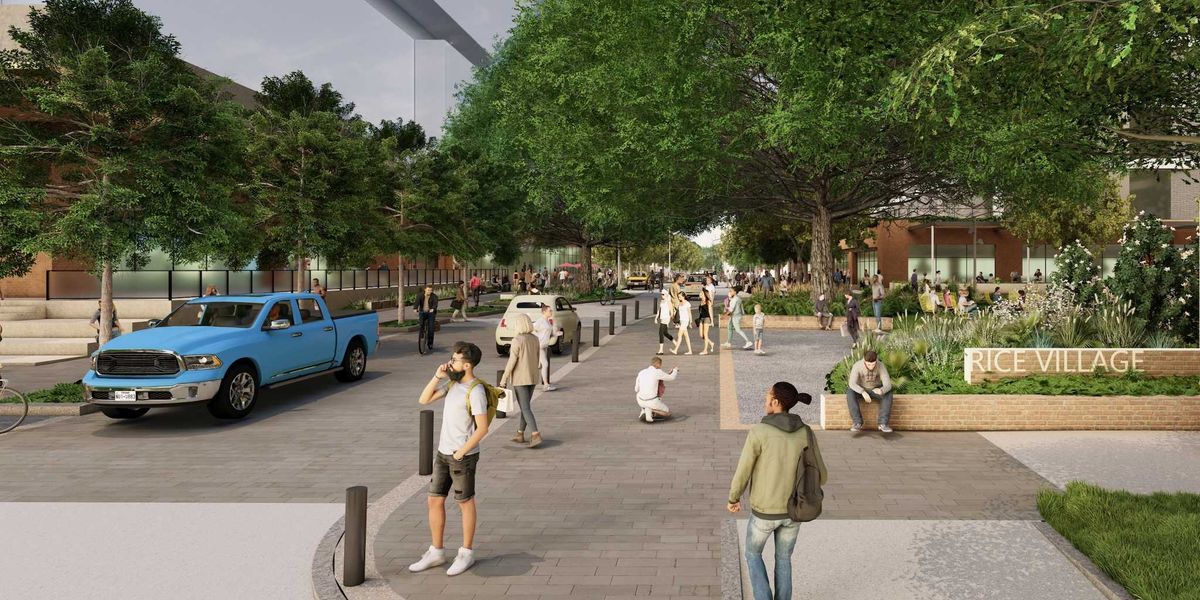
Rice University is building a new development to better connect its campus with the nearby Rice Village shopping district. On Thursday, November 6, the university announced the Gateway Project, which it describes in press materials as a “transformative initiative to unify campus, reimagine athletics, and strengthen ties with the Houston community.”
Called the Gateway Project, the development will create a seamless, pedestrian-friendly corridor linking the campus to the heart of the Village, while reimagining the campus’ west side by renovating Rice Stadium.
The $120 million venture — all of it on university-owned land in Rice Village — will position both the school and the city for the future, Rice officials say.
“This is a generational investment in the growth and vitality of Rice University,” said Robert T. Ladd, chairman of the Rice Board of Trustees in a statement. “By physically linking our university to one of Houston’s most dynamic neighborhoods and modernizing a cornerstone of our athletics district, we are honoring Rice’s legacy while paving the way for future growth, connectivity and impact.”
Campus Connection
The Gateway Project will transform the campus and its western edge in several ways. A new pedestrian-oriented street will extend Amherst Street two blocks east from Morningside Drive, through Chaucer Drive, to a new campus entrance near Entrance 13A on Greenbriar Drive. The new walkable, tree-lined path will activate underused outdoor spaces. Planned water, sewage, and drainage lines are designed to attract retail, multifamily housing, restaurants, and a grocery store. A public greenspace is planned to host community events and performances.
“Rice Village has long been a beloved destination and part of the Rice community,” Rice President Reginald DesRoches said. “By connecting our campus directly to the Village, we are strengthening our ties to Houston while enriching the student experience, advancing our growth and reinforcing Rice’s commitment to innovation and community.”
Stadium Renovations
In addition to the improved campus-to-Rice Village corridor, major upgrades are in store for the 75-year-old Rice Stadium. The university’s football field has hosted multiple major events, including President John F. Kennedy’s iconic “We choose to go to the moon” speech in 1962, Super Bowl VIII in 1974, and Rice’s own 19-17 upset over Texas in 1994, the last time the Owls beat the Longhorns.
The aging stadium will become a fan-focused destination, transformed into what the university is calling a “stadium in a park.” The goal is to prioritize sustainability and offer greater flexibility for hosting a wide range of sports and events. Capacity will be reduced from 47,000 to 30,000, which not only better aligns with current trends, according to the university, but will provide richer opportunities for Owls fans.
Expect a dramatic overhaul, including the demolition of the existing press box, upper bowl, and upper concourse. In their place will be a new, three-level west concourse building with new, premium club seating that extends into the lower bowl, featuring chairback seats, loge boxes, and living room-style box seating. This club level can be converted into flexible conference and banquet space, accommodating more than 600 guests for seated events such as conferences and banquets, and more than 1,000 attendees on game days.
The stadium’s second level will house 14 private suites, while the third will include new spaces for media, broadcast, game operations, and coach’s booths along with dedicated suites for the university and athletics department. A dramatic shade canopy will extend from the top of the concourse over a portion of the lower bowl, offering comfort and energy efficiency. A suite-level outdoor patio will offer space for private events, recruiting, alumni gatherings, and other events.
Owls fans can also expect improved sightlines, larger restrooms and concessions stands, and a 360-degree concourse allowing them to move freely around the stadium. A new kitchen will allow for on-site food preparation. The campus’ southwest entry plaza will reinforce the “stadium in a park” concept and connect to the landscaped walkway leading to Rice Village.
Redevelopment will begin with the demolition of the Greenbriar Annex building, clearing the way for the new corridor and mixed-use improvements. Rice Real Estate Co., the university-affiliated company that is the largest landowner in Rice Village, owns roughly 260,000 square feet of building area — 97 percent of which is leased to a diverse mix of national brands, independent boutiques, and local restaurants
The stadium renovation will be led by Populous, a globally recognized architecture firm, in conjunction with Nations Group. The Gateway Project’s design and development are guided by the university’s 30-year Campus Land Use Plan. Construction on the stadium and gateway components is expected to continue through 2028.