
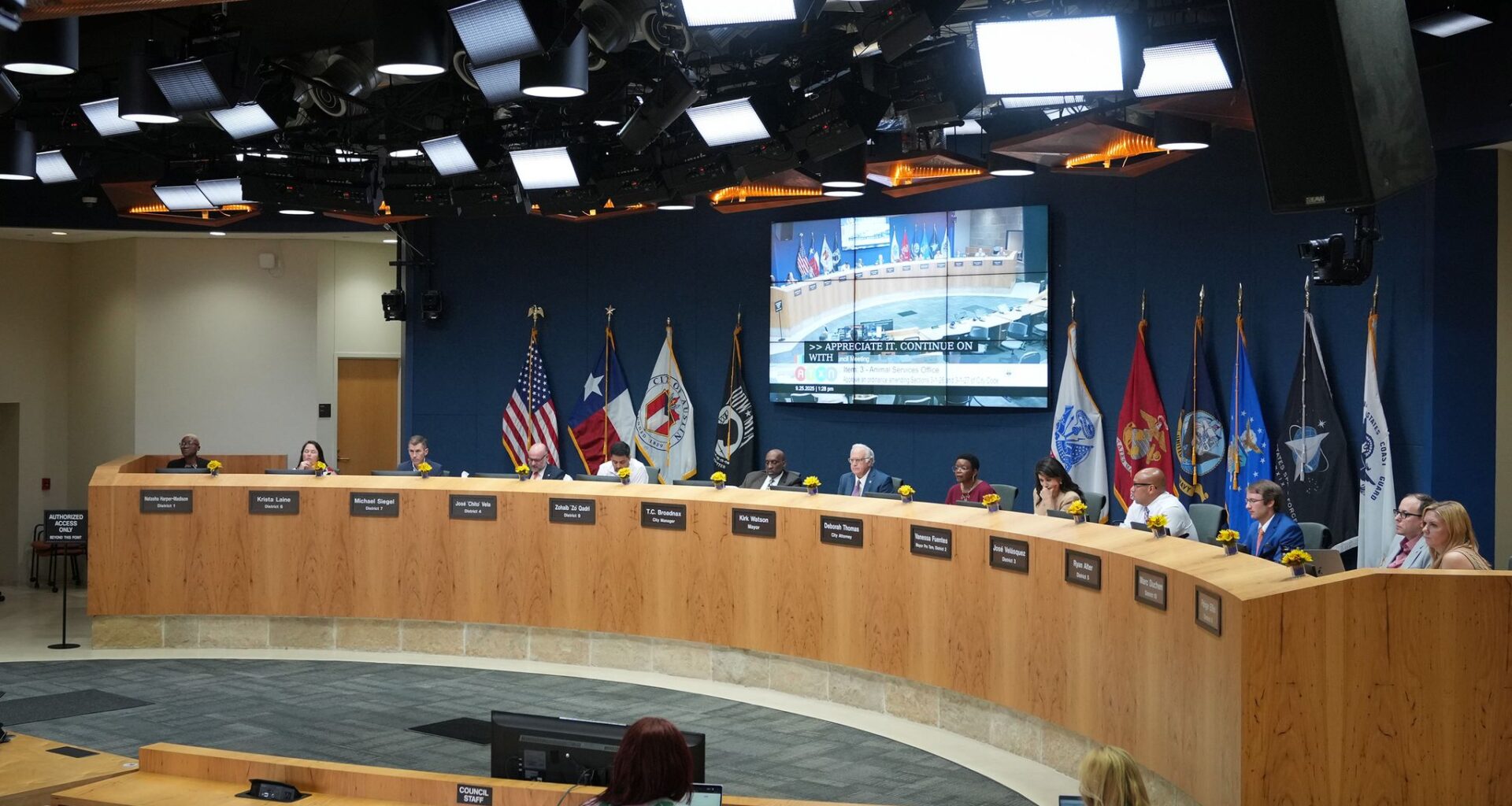
The Austin City Council meets at City Hall on Thursday, Sept. 25, 2025.
Jay Janner/Austin American-Statesman
Austin City Council staff will soon get a refresher on what they can and can’t charge to their taxpayer-funded credit cards.

An email obtained by the American-Statesman shows council staffers were asked Wednesday to attend a “refresher course” next week covering city rules for credit card use and travel. The directive came days after the Statesman published its latest investigation into questionable credit card and travel expenses by Austin City Council members — some likely made in violation of city policy.
Article continues below this ad
The training, described as specifically for City Council staff, will walk through “what are and aren’t allowed purchases” on city-issued cards and offer “best practices for completing travel authorization and reimbursement forms,” according to the email from City Manager T.C. Broadnax’s chief of staff.
Previous Statesman reporting revealed that Broadnax himself had expensed his lunch almost every working day since he started the job last year, mostly at the upscale salad chain Sweetgreen. Council Member Ryan Alter likewise expensed thousands of dollars worth of “working lunches” in likely violation of city policy. Both men agreed to reimburse taxpayers for a combined $4,500 after the Statesman started asking questions.
MORE: Inside Austin City Council’s spending habits
City spokesperson Erik Johnson did not provide answers to several specific questions from the Statesman about next week’s training, including whether it was called in response to the newspaper’s recent reporting.
Article continues below this ad
In prepared statements, Johnson said Wednesday’s invite was directed at “designated staff members,” “but City Council members and other staff in their offices are able to attend as well.” An earlier statement noted that “refresher trainings” are offered annually to council offices, as well as one-on-one sessions for new chiefs of staff, and that all city employees receive training before they are issued a procurement card, or ProCard.
“This training will also include guidance on other financial topics related to travel and ProCards as a knowledge refresher,” Johnson said of the Nov. 14 training.
A second refresher will be offered in March, according to Wednesday’s email.
The Statesman’s latest investigation revealed that some council members, including Alter, had spent thousands of taxpayer dollars on donations to nonprofits and advocacy organizations, furniture, artwork, consultants, staff development, international travel and more.
Article continues below this ad
While many of the questionable expenses the Statesman has uncovered did not constitute a clear violation of city policy, experts also told the newspaper the city’s spending rules are too permissive with one saying they’re “about as minimal as you can get while still having a policy.”
Audit revealed procurement card abuse
The refresher training invitation also comes a week after the release of a city audit report that details allegations of city credit card misuse against a former Austin Water hydrologist. The employee, Nico Heuwert, resigned last summer after an internal investigation found he reportedly charged $78,000 to his city ProCard improperly between 2019 and 2023, the Statesman reported last week. Much of the sum was directed to contractors for work on private land, according to the report.
Heuwert has defended the charges, saying they were necessary to get around red tape and meet federal requirements.
Article continues below this ad
City Auditor Brian Molloy told a City Council panel late last month that his office was working through another investigation into ProCard misuse, which he expects to wrap up soon. In addition, Molloy said he’s launched a wider review of credit card use, with results expected next year.
Mayor Kirk Watson called for an audit of the entire city budget following Tuesday’s election where Austin voters soundly rejected Proposition Q, a planned 20% property tax increase that would have sent $110 million in additional revenue to the city for a variety of initiatives, including housing and homelessness services. More than 63% of Austin voters said “no” to the proposal.
The outcome sent the city scrambling to come up with a balanced budget proposal for the current fiscal year, with some council members expressing support for a review similar to one conducted in Houston that identified tens of millions of dollars in savings.
Article continues below this ad