
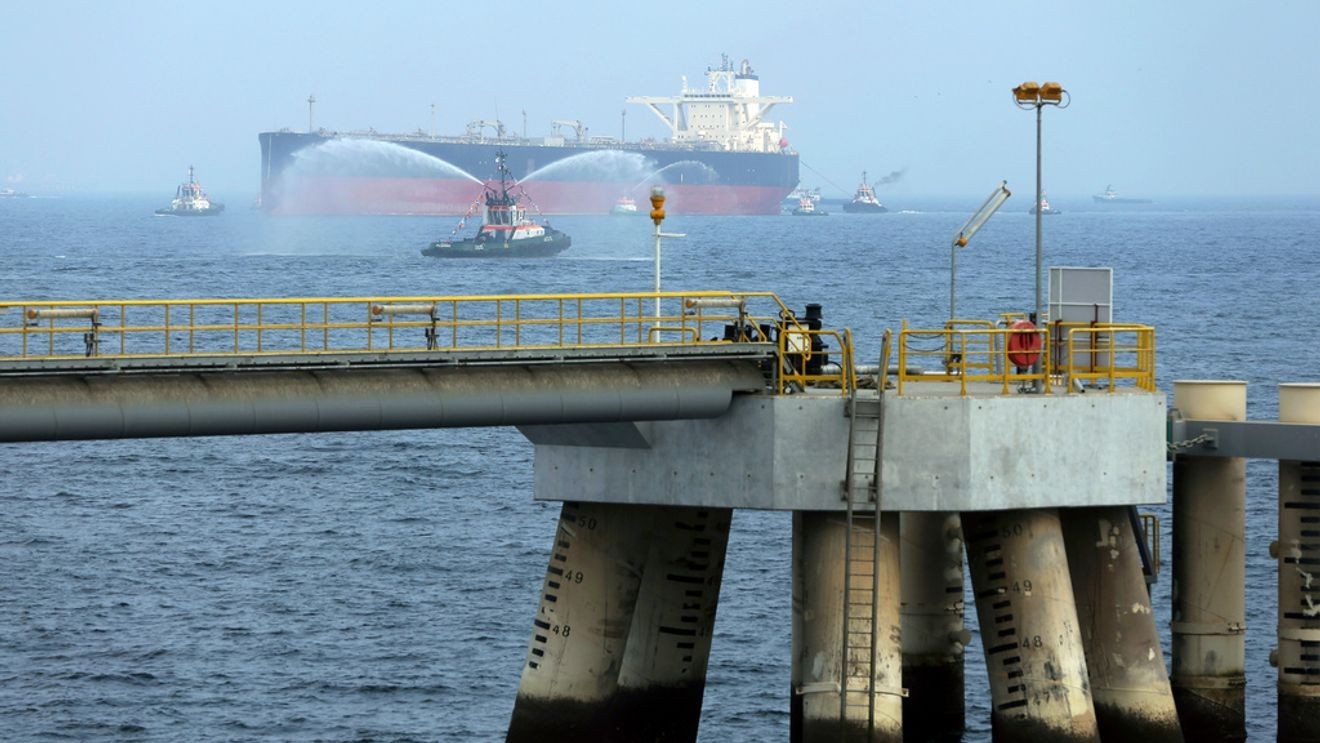
(TNND) — Mediators working to end the war between the United States and Iran said Monday they have made “significant” progress in negotiations after three days without major attacks, raising hopes the rapidly escalating conflict could be moving toward a diplomatic breakthrough.
Two regional officials, speaking on condition of anonymity to The Associated Press, described the progress in mediation efforts as “significant.” They said mediators were working with Iran and Oman on a mechanism to manage vessel traffic through the Strait of Hormuz, the strategic waterway at the center of the latest fighting.
Iran’s Foreign Ministry spokesperson, Esmail Baghaei, said Monday that while mediators continue to relay messages between Washington and Tehran, there are no direct negotiations taking place.
Mediators may convey messages to us from the American side regarding ongoing developments in the region. But at present, we have no negotiations with the American side,” Baghaei said during a news conference in Tehran.
Baghaei said Iran and Oman, which sit across the Strait of Hormuz, held talks Friday and Saturday on managing shipping through the waterway.
“The objective is for Iran and Oman, as the two coastal states, to develop mechanisms to ensure safe navigation through the Strait of Hormuz while respecting the sovereign rights of both coastal states, as well as Iran’s security and national interests,” Baghaei said. He added, however, that the strait remains closed.
Tehran has maintained that an interim agreement with the United States allows Iran to oversee shipping through the waterway for now, while objecting to U.S. efforts to support an alternative route closer to Oman. Before the war, the Strait of Hormuz was considered an international waterway.
Despite the diplomatic progress, military tensions remain high.
The U.S. military said Saturday its recently reimposed naval blockade against Iran remained in effect, with a dozen commercial ships redirected, two disabled and two boarded. U.S. forces “remain highly vigilant, focused, lethal, and ready,” the military said.
The 60-day negotiating period established under the interim agreement in mid-June is now well into its second half, but the major issues that fueled the conflict — including Iran’s nuclear program — remain largely on hold as mediators work to keep both sides engaged.
The latest diplomatic push comes after President Donald Trump said Friday the United States is “locked and loaded” for a potential military strike on Iran, while emphasizing that talks with Tehran remain ongoing.
“Look, we’re talking to them right now. I think they’re getting more and more serious as the days go by,” Trump said during a White House news conference.
Mike Waltz also told Fox News that Trump is “giving talks some space” and “giving it a little bit of room.”
Meanwhile, Israeli Prime Minister Benjamin Netanyahu is traveling to Washington to meet with Trump on Tuesday. The two leaders last met in February, weeks before launching the military campaign against Iran that killed several senior Iranian leaders, including Supreme Leader Ayatollah Ali Khamenei.
“We will discuss all the issues on the agenda, first and foremost, Iran. Naturally, our goal is to safeguard our security and also to expand the circle of peace around us,” Netanyahu said in a video posted by his office. “I am embarking on this mission with one clear goal – to ensure the security, strength, and future of our dear State of Israel.”
The conflict has also spread beyond Iran. Iranian-backed Hezbollah fired on Israel two days after the war began, prompting Israeli airstrikes and a ground operation in southern Lebanon. Since then, the United States has backed direct talks between Lebanon and Israel aimed at easing tensions along that front and finding a path to disarm Hezbollah.
_____
Editor’s note: The Associated Press contributed to this article.