
Update as of 3:40 p.m.
The City of Austin issued an updated notice on Monday afternoon, July 27 that its waterways ban – extended until 5 p.m. on Monday for Lady Bird Lake and the Colorado River south of Longhorn Dam – had lifted immediately. The rescinded ban allows for both personal and commercial watercrafts and water-based recreation to continue as usual.
Original story
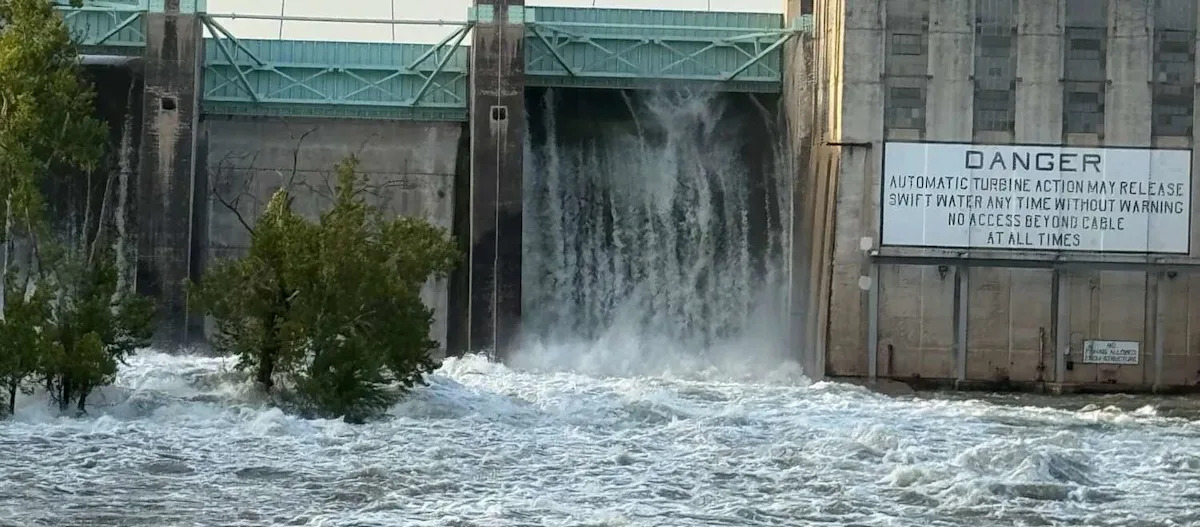
Two weeks after torrential downpours rocked Central Texas, bringing flooding all the way from Del Rio to Boerne, parts of Austin are still grappling with the aftermath. The City of Austin once again extended its ban on several area waterways due to unsafe conditions and stronger currents amid floodgate operations.
City officials confirmed the waterways ban on Lake Austin expired as planned at 5 p.m. on Saturday, July 25. However, city leaders added its ban applicable to both Lady Bird Lake and the Colorado River south of Longhorn Dam would remain in effect until 5 p.m. on Monday, July 27.
The city’s announcement came after the Lower Colorado River Authority said over the weekend it would be continuing floodgate operations at Tom Miller Dam into this week, paving the way for potentially unsafe conditions along Lady Bird Lake. In a follow-up social media post on Monday morning, LCRA revealed that floodgate operations at Tom Miller Dam had closed, with no other food gates open at this time.
“As long as floodgates remain open, further waterway ban extensions may be necessary,” Austin officials said. “In coordination with LCRA, Austin Water will keep flood gates at Longhorn Dam open until flow from Tom Miller Dam slows to a point where current flood operations can be safely scaled back.”

Aerial photograph of the downtown Austin skyline rising above Lady Bird Lake on a sunny afternoon. (halbergman/Getty Images)
The ban is applicable to recreational, commercial and navigational use, given the dam operations increase the risk of higher water levels and faster currents. That heightened flow can also increase the water’s turbidity due to disrupted sediment, impacting water quality and visibility on top of already increased bacteria and pollutant levels found after excess rainstorms.
The ban applies to personal and commercial watercrafts, wet bikes, motorized surfboards, canoes, kayaks, paddleboards and other devices, with all of the above restricted on both waterways.
“Residents and visitors also are urged to avoid riverfront trails which may be unsafe to navigate and are susceptible to flash flooding at this time due to raised water levels,” city leaders noted as well.
This article originally published at Austin rescinds waterways ban 2+ weeks after Texas flash floods.