
More than 1,000 Texas restaurants closed during the first half of 2026, according to a new market analysis from RestaurantData.
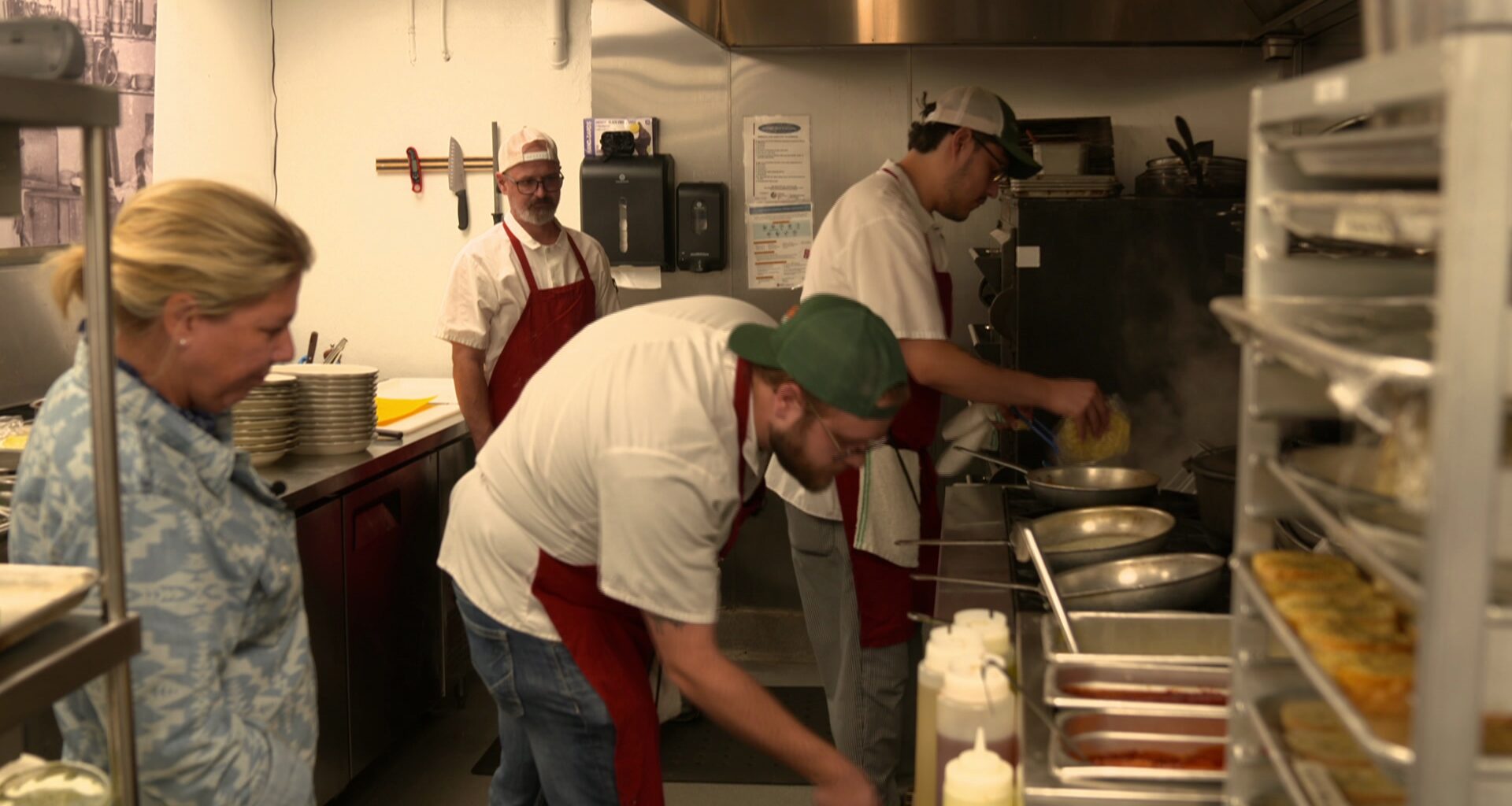
FORT WORTH, Texas — On a Monday afternoon, the dining room at Margie’s Italian Gardens was bustling with customers.
For Westland Hospitality co-founder Gigi Howell, that’s more than a business success. It’s personal.
Her company has built a reputation for restoring struggling or shuttered restaurants across North Texas, bringing longtime neighborhood favorites back to life. But as restaurant closures continue to mount across Texas, Howell says keeping those institutions alive has become increasingly difficult.

This story continues below.
“I hate, hate, hate, strong word, that places are having to close,” Howell said. “And it hurts my heart that people working so hard have to close.”
Howell says preserving restaurants means preserving the memories attached to them.
“We try to take restaurants that are suffering or that have closed and we try to revamp them and try to bring them back because they were part of our childhood,” Howell said. “I grew up coming here. My parents met here.”
Her comments come as a new market analysis from RestaurantData estimates 8,171 restaurant locations closed across the United States and Canada during the first half of 2026.
Texas recorded the highest number of closures, with an estimated 1,039 restaurants shutting their doors in the first half of 2026.
Dallas-Fort Worth accounted for 120 verified closures, representing about 30% of the state’s total. Only the Austin-San Antonio corridor recorded more closures with 124, while Houston-Galveston followed with 109.
Several North Texas restaurants have announced permanent closures in recent weeks, including Taste of Europe in Arlington, Loco Coyote Grill in Glen Rose, Cindy Sue Café in Arlington, Jon’s Grille in Fort Worth, Los Girasoles Mexican Food in Sansom Park, Cibi Italian in Aledo and Willow Park, and Paul’s Donuts Subs & Gyros in Fort Worth.
Emily Knight, President and CEO of the Texas Restaurant Association, says many longtime operators are facing a perfect storm of financial pressures.
“Whether it be tariffs or supply chain or immigration enforcement, declining traffic, it just feels like a lot of our long-term operators are saying this is really, really hard,” Knight said.
Knight says inflation continues to weigh heavily on both businesses and customers.
“If the consumer doesn’t get some type of inflationary relief, and if fuel prices don’t begin to come down, we will see more closures throughout the remainder of the year here in North Texas,” she said.
She also says North Texas has experienced an unusual number of well-known restaurant closures.
“We’ve had a long run of iconic brands close in North Texas, and that’s part of our culture, which I think we should really be concerned about,” Knight said.
At the same time, she says the region remains one of the country’s fastest-growing restaurant markets.
“What surprises me is these high-profile brands coming in from Vegas, Miami or New York. Their next stop now is Dallas, Texas,” Knight said.
RestaurantData’s latest report reflects that growth.
According to the report, during the three-week period ending July 23, Texas added 391 verified net-new restaurant locations, accounting for 26.7% of all new restaurant openings tracked nationwide. Dallas-Fort Worth was tied with Austin-San Antonio for the largest number of new locations at 120, followed by Houston-Galveston with 109.
Together, those three Texas markets accounted for more than one-quarter of all verified restaurant openings nationally.
Still, Howell says the industry’s growth doesn’t erase the heartbreak that comes with watching longtime restaurants disappear.
Even her own company recently had to close one of its restaurants.
“We did close a restaurant,” Howell said. “Nothing was really wrong with the area or restaurant. It just didn’t work.”
She says closure announcements have become impossible to ignore.
Despite the challenges, Howell says she remains committed to saving as many local restaurants as possible.
For her, each reopened restaurant is more than another business.
It’s another piece of North Texas history that gets to stay on the table.