
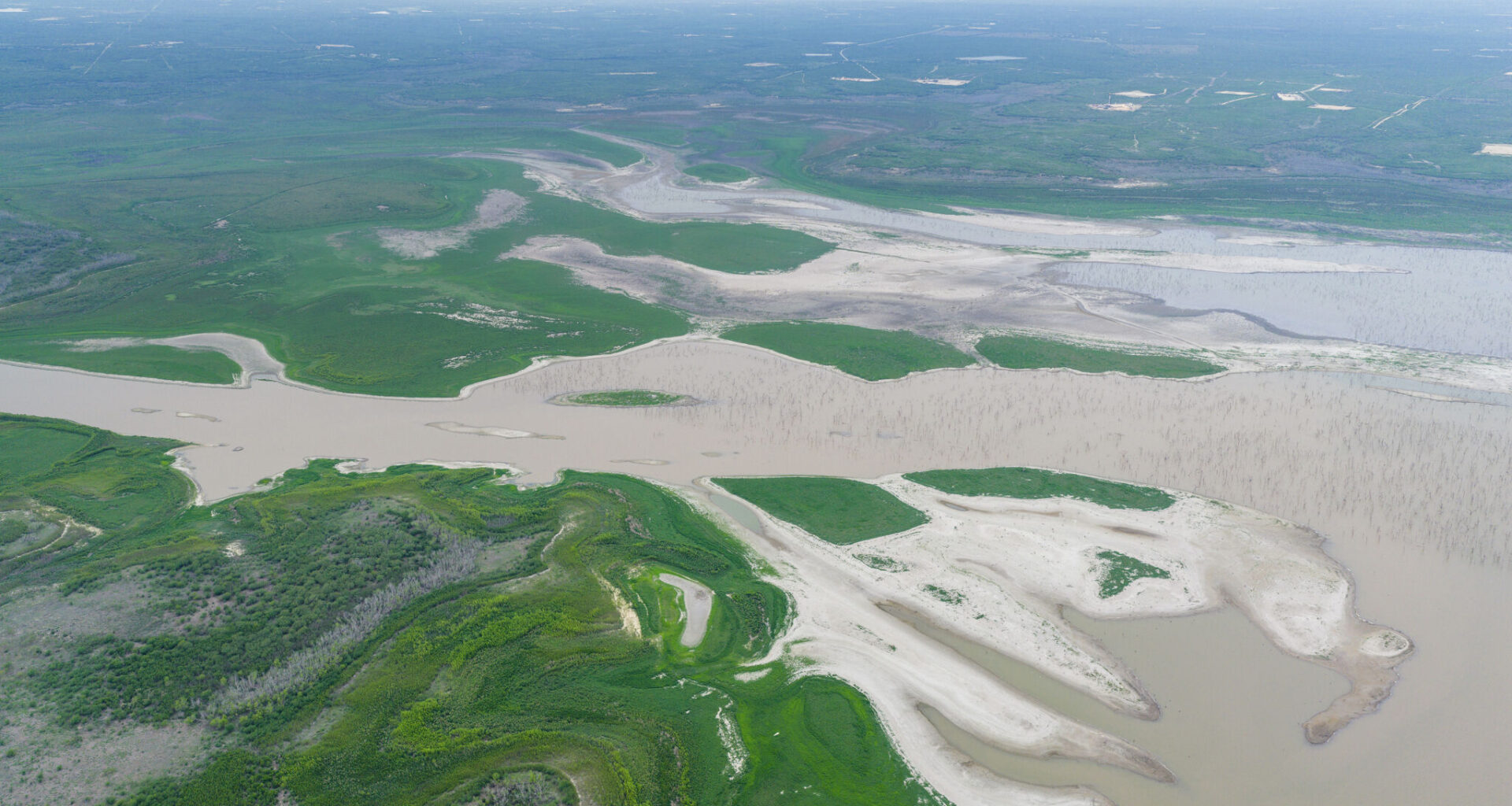
The Coastal Bend’s largest reservoir has risen to levels not seen since 2024 after a deluge of rain poured over South Central Texas earlier this month and busted a years-long drought.
As of Monday, July 27, Choke Canyon Reservoir was precisely 24% full with just over 159,000 acre-feet of water, according to Water Data For Texas, a water-tracking product of the Texas Water Development Board (TWDB). Choke Canyon hasn’t seen that much water since 2024, according to TWDB’s historical data.
It’s taken more than a week since heavy rains first deluged South Central Texas between the borderlands and San Antonio for the resulting storm runoff to begin reaching the Coastal Bend through the Nueces and Frio rivers. But now that the floodwaters have begun trickling in, data show that Choke Canyon’s levels have risen sharply.
One week ago, on July 20, the reservoir stood at just 7.9% of its total conservation capacity of 662,820 acre-feet of water — just slightly higher than the historic low of 7.3% the reservoir had fallen to in late April. Over the next five days, Choke Canyon’s levels skyrocketed by nearly 88,000 acre-feet to 21.2% full as of Saturday, July 25. By Monday, the reservoir had risen another 2.8%.
The reservoir’s rise is expected to continue over the next couple of weeks as storm runoff continues to make its way down the Nueces and Frio rivers. As MySA previously reported, though the Frio River has already crested at Tilden, located about 10 miles west of the reservoir in McMullen County, the Nueces River has yet to reach Live Oak County next door. The Nueces River is expected to reach major flood stage in Three Rivers in the overnight hours between Wednesday and Thursday this week. The Nueces is expected to crest in Three Rivers at just over 40 feet as floodwaters continue eastward.