
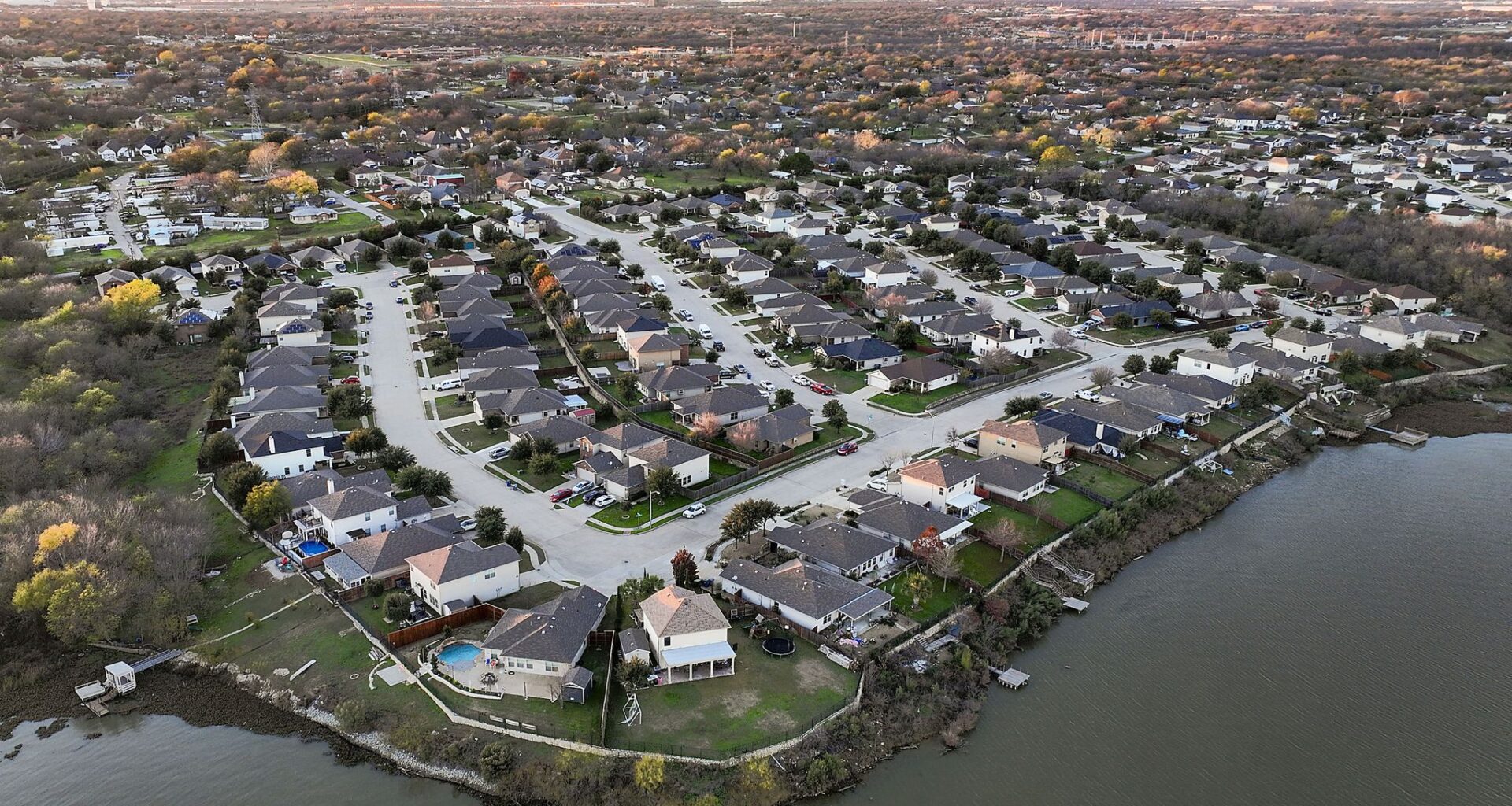
Homes are seen along Mountain Creek lake on Wednesday, Dec. 14, 2022, in Grand Prairie.
Smiley N. Pool/Staff Photographer
Dallas County cities like Wilmer and Hutchins saw some of the largest percentage increases in their tax base this year. Meanwhile, larger tax jurisdictions like Dallas and Dallas ISD continued their growth.
Dallas County’s property appraisal roll was published on Saturday. The tax document records changes in property values, signaling what parts of the county are growing the fastest.

The Dallas Central Appraisal District documents the estimated values of properties across the county in cities, school districts and special districts. The newly released appraisal roll is part of the equation that will determine how much people pay in property taxes.
Countywide tax jurisdictions — Dallas County, Parkland Hospital and Dallas College — saw an increase of nearly 5.8% from 2025 to 2026. Tax jurisdictions like Wilmer, Hutchins and Grapevine-Colleyville ISD saw some of the largest increases in their property tax base.
Article continues below this ad
Cities
Property taxes are a large part of how local jurisdictions get tax revenue. For example, in Dallas’ 2025-26 budget, property taxes made up about $1.13 billion of the city’s $1.96 billion general fund.
Wilmer had the biggest percentage change in its total taxable value, increasing by about 20.2%. In 2025, the city had a taxable value of about $3.15 billion, according to the appraisal district. In 2026, the taxable value jumped to $3.79 billion.
Related: Dallas mayor’s budget blueprint: Reduce taxes, shrink bureaucracy
Other cities with large percentage increases from last year include Hutchins, Wylie, Grapevine, Lancaster, Garland and Seagoville. Similar to last year, many of the largest gains were in the southeastern part of the county.
Article continues below this ad
Meanwhile, Dallas had the largest taxable value increase by dollar value, going from $210 billion to $222 billion, according to the appraisal district. Garland, Irving, Grand Prairie and Mesquite all had increases between $1 billion and $2.5 billion.
Only two cities in the county — Lewisville and Ferris — saw their taxable values decrease. However, only small portions of the two cities are within Dallas County.
School districts
Among the county’s school districts, Grapevine-Colleyville ISD saw the largest percentage increase in taxable property value. The school district — most of which isn’t in Dallas County — went from about $513 million in 2025 to $631 million in 2026, an increase of about 23.1%, according to the appraisal district.
Article continues below this ad
Grand Prairie ISD and Lancaster ISD went from small decreases in taxable value last year to double digit increases in 2026.
Dallas ISD had the largest total taxable value of any school district in the county at about $210 billion, up from $199 billion in 2025, according to the appraisal district.
Special districts
Dallas County also has a variety of special districts — like municipal utility districts, road utility districts and flood control districts.
A district near Wilmer called the Texas Tri-Modal Municipal Utility District No. 2 went from a 2025 taxable value of $37.6 million to a 2026 taxable value of $167 million, an increase of over 344%.
Article continues below this ad
Municipal utility districts are state tax authorities requested by property owners to pay for infrastructure that could provide water, sewer and other services.
From values to taxes
Although the appraisal roll has been certified, jurisdictions across the county still have to set their property tax rates, which will determine how much tax revenue cities will receive.
Estimated property tax rates will be available on Dallas County’s Truth in Taxation website after Aug. 5. The site will be updated as officials propose and adopt tax rates. Dallas will consider its property tax rate and budget in September, according to city documents.
Related: Property taxes: Here’s what Dallas-Fort Worth residents are paying, and where it goes
Article continues below this ad
The appraisal district is also working to resolve remaining property value protests. The district saw a record number of protests in 2026. The remaining protests represent less than 3.2% of the total appraisal roll, according to a statement from the appraisal district.
Dallas County has historically experienced positive and steady appraisal roll growth, the appraisal district said. Although the appraisal district doesn’t like to speculate what will happen in future years, it said the Dallas-Fort Worth area has continued to experience population and job growth which typically has a positive impact on appraisal roll growth.
All total taxable values for cities, school districts and other tax jurisdictions in Dallas County can be found on the appraisal district’s website.