
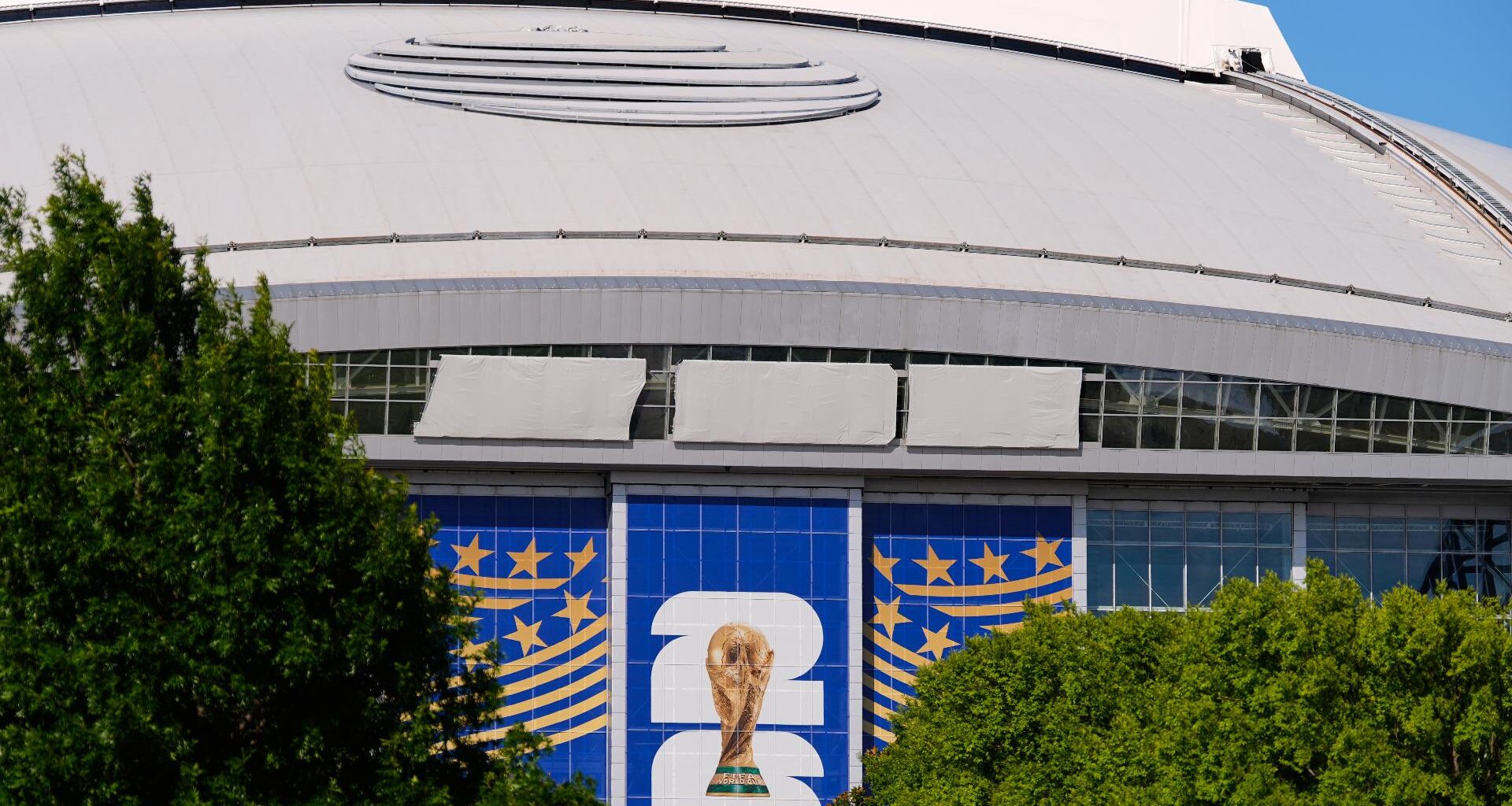
Federal officials say every unauthorized drone was treated as a potential threat as investigators worked to secure airspace around World Cup venues.
ARLINGTON, Texas — The U.S. Attorney’s Office for the Northern District of North Texas says federal authorities seized 94 unauthorized drones during the 2026 FIFA World Cup in North Texas, offering new details Wednesday about the extensive security operation that protected the airspace around tournament venues.
According to federal officials, temporary flight restrictions were in place around AT&T Stadium in Arlington and FIFA Fan Fest locations three hours before, during and three hours after the nine matches held in North Texas. The restrictions made unauthorized drone flights illegal within designated areas during those times.
While most encounters resulted in administrative enforcement, federal prosecutors have charged three people in connection with alleged drone violations. According to the U.S. Attorney’s Office, the charges include operating a drone without the required certification and violating national defense airspace restrictions. The criminal cases remain pending.
The following individuals are facing federal charges, federal officials said:
Luis Mauricio Flores Ordonez: charged with violation of national defense airspace for flying a drone near Dallas Stadium on June 14.Cristobal Torres Alvarez: charged for operating a drone without an airman’s certificate in restricted airspace near Dallas Stadium on June 27.Servando Piedra Munoz: charged for operating a drone without an airman’s certificate in restricted airspace near Dallas Stadium on July 14.
Ryan Raybould, the U.S. attorney for the Northern District of Texas, said investigators approached every unauthorized drone as a potential safety threat.
“Our biggest concern was what would be on that payload,” Raybould said. “We had nothing on those payloads.”
Officials said none of the seized drones were found to be carrying dangerous payloads. However, Raybould said law enforcement could not determine that until each drone was intercepted.
“That’s the biggest threat because when you see a drone going toward a massive group of people, you have a heightened sense of we need to do something to interdict this drone,” he said.
Federal officials said the World Cup required unprecedented coordination among local, state and federal agencies to monitor the skies around crowded venues.
When asked why only three cases resulted in criminal charges, Raybould declined to discuss the specifics of the pending prosecutions but said prosecutors only file charges when they believe they can prove a knowing violation of federal law.
“If we didn’t have knowledge or willfulness, we wouldn’t have brought the charge,” Raybould said. “They would’ve had to understand the law and knowingly violated the law. They have every right under our Constitution to challenge that.”
The Department of Justice said the operation was designed not only to protect World Cup crowds but also to establish a model for future large-scale events.
“The goal is to get the message out of deterrence,” Raybould said.