
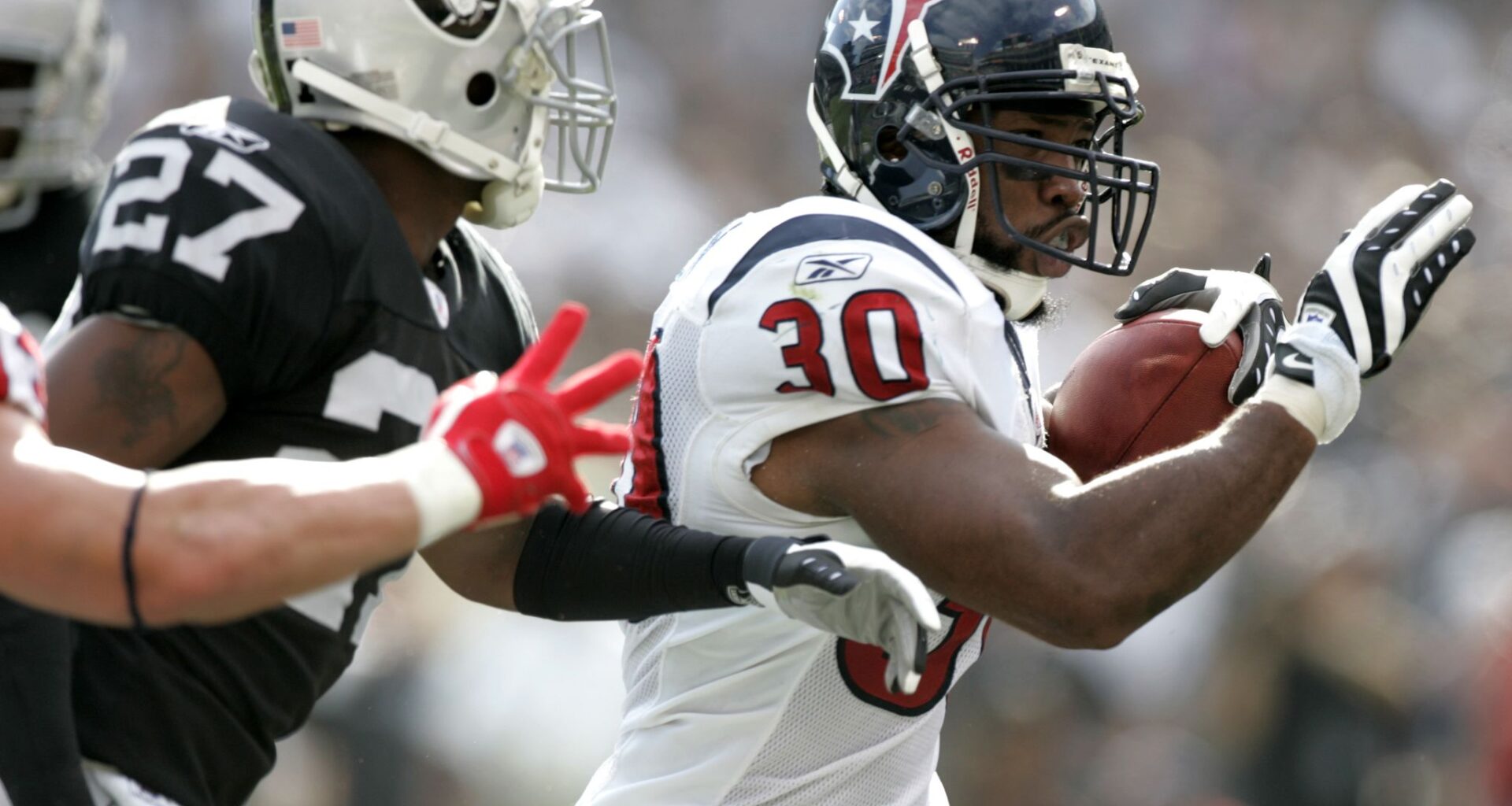
The 49-year-old, who played for the Texans in 2007 and 2008 after four Pro Bowl seasons with the Green Bay Packers, said he was diagnosed last year after undergoing a series of tests because he realized something wasn’t right with his body.
“I had a little bit of the feet twitching when I’m in my sleep and stuff like that,” Green said on Wednesday night’s episode of the “Go Long with Tyler Dunne” podcast. “I knew something was going on long before that, I just got a hold of some doctors that I was able to get in contact with. Get the diagnostics, get the testing, and finally got it tested in January of 2025. I didn’t share it for a long time because I wanted to let my kids know, my family. I have four daughters and a son, so I let them all know first, then told friends and family before I told somebody like yourself and went down that lane.”
Green says people really familiar with Parkinson’s have been able to recognize his symptoms from little things like how he walks or how he stands up, but the biggest symptom has been loss of memory.
“Short-term memory is trash,” he said. “I’ve got to remind myself of things. Like when I meet somebody for the first time, I hear that name, then I try to repeat it or write it down, and if I don’t, I have to follow up with them. I have kind of like a twitch in my sleep, something I wasn’t aware of until my wife told me when I first retired. That’s been around for a long time. My legs twitch, reacting. Some sleepwalking and not having any recollection of it. I wake up and my wife is just looking at me like, ‘You OK?’ I’m like, ‘What are you talking about?’ She says ‘You were up, eyes wide open, talking crazy to me.’ And I’m like, ‘Really, I don’t remember none of that.’”
Green, who was a third-round pick out of Nebraska in 1998, played 12 seasons in the NFL, two with the Seattle Seahawks, eight with the Packers and two with the Texans. He rushed for 9,205 yards and 60 touchdowns on 2,056 carries and still is the Packers’ all-time leading rusher. Green also was known for his fearless running style, which he didn’t blame for his disease, but also didn’t shy away from its possible impact. Brett Favre, who was the Packers’ quarterback when Green was in Green Bay, also has been diagnosed with Parkinson’s.
“It needs to be up front,” he said of the dangers of head trauma that football players endure. “It needs to be a topic that’s always hit.”
The Texans signed a 30-year-old Green to a four-year contract worth $23 million in 2007. He suffered a knee injury in his first game, which was a sign of things to come in his time in Houston. He played 14 games over two seasons, rushing for 554 yards and five touchdowns on 144 carries before he was released after the 2008 season.
Green says he’s dealing with his diagnosis by taking medication, but also by eating a clean diet and working out daily. He also says he’s not scared about his future.
“I know that unfortunately there is a day when eventually our clock stops ticking,” Green said. “The way I look at it is my clock is going to stop ticking when I want it to stop ticking. That’s how I’m looking at it. I’ve always been like that. The way I ran the ball, you’re going to have to break both my legs to stop me running the ball.”