
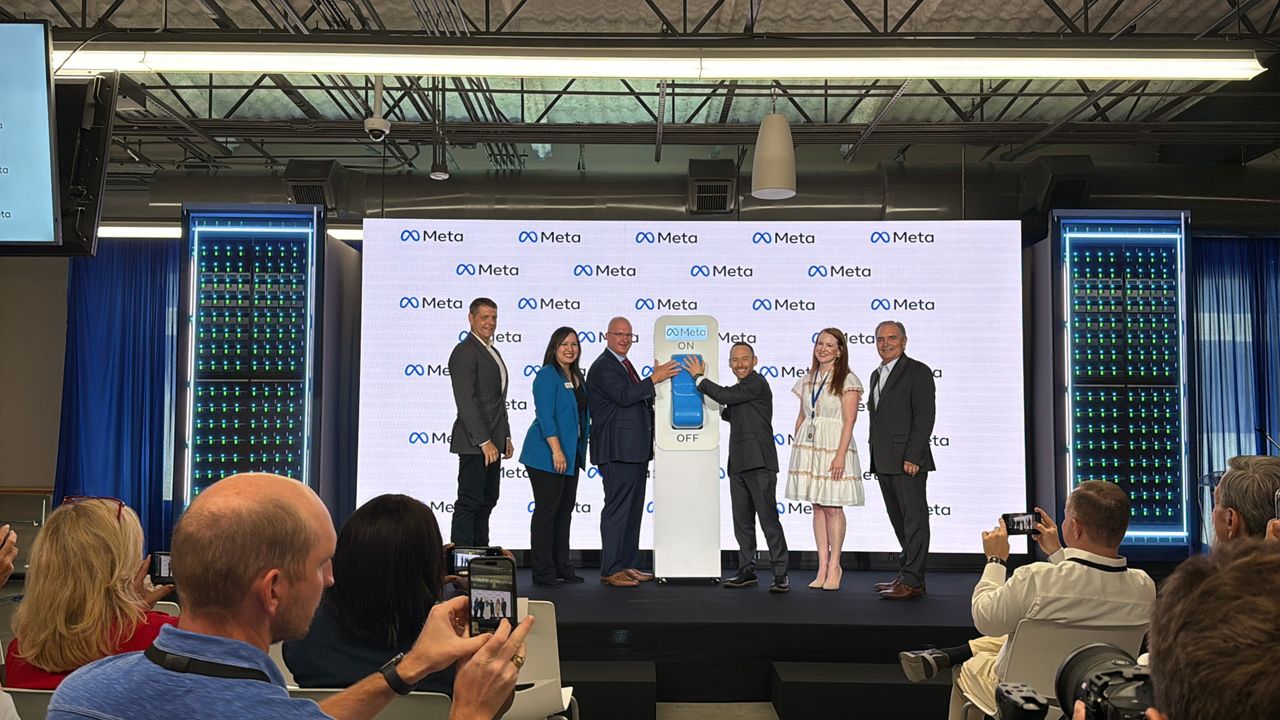
TEMPLE, Texas — Hundreds of data centers are already operating in Texas with hundreds more proposed projects on the way. Meta has three data centers across the state: one in Fort Worth that broke ground more than 10 years ago, one in El Paso that broke ground last fall and is still under construction and one in Temple that is now operational.
The 760,000 square foot center in Temple, between Austin and the Dallas-Fort Worth area, is Meta’s first artificial intelligence optimized data center in the world to go online. The company says that AI optimization will support the next generation of AI systems like hardware equipment, network design and cooling systems.
“These buildings and the hardware inside of them help people connect, find communities and grow businesses, and we’re proud that this is our first AI optimized data center to come online,” said Bradley Davis with Meta’s data center global economic development team.
Meta’s data center in Fort Worth is not AI optimized and supports Facebook, Messenger, Instagram and other services. About 600 miles west, the Meta project in El Paso will also support AI workloads like the one in Temple once construction is complete.
“We’ve had a lot of success here, and we look forward to continued shared success with the state as we go forward,” Davis said.
Like dozens of other communities across the state, there has been pushback on data center construction in Temple. People are concerned about water, power and these projects causing surrounding temperatures to go up.
“The heat island alone… no one has addressed that at all,” said Joe Royer, the president of Temple Stands Together, a grassroots movement opposed to data center construction in the community.
Meta discussed the Temple data center’s water use during its recent grand opening event.
“We use a water-efficient, closed-loop liquid cooling system that will use zero water for the majority of the year,” Davis said.
Meta also says the Temple data center will use clean energy it pays for, and the company will add enough of that energy to the state’s power grid to match its power use. Therefore, according to Meta, the cost of electricity will not get passed down to nearby residents. However, there’s still skepticism from those living nearby.
“Meta has a very powerful marketing engine, and we found a lot of holes in their promises,” Royer said.
Meta says it has been transparent with its neighbors and will release sustainability reports in the fall.