
Homes on Las Ventanas Drive in the Northwest Hills neighborhood on Thursday April 28, 2022.
Jay Janner / American-Statesman, Austin American-StatesmanAn Austin homeowner is suing the city after officials ordered him to plant replacement trees or pay $8,800 for removing one tree and heavily pruning two others.The Texas Public Policy Foundation, a conservative Austin think tank, filed the federal lawsuit as part of a broader campaign challenging municipal tree ordinances and other local regulations.The foundation has brought similar cases in California and Michigan, winning a partial victory in Michigan, and a legal expert said even a limited ruling against Austin could weaken the city’s enforcement authority.
An Austin homeowner is suing the city over its tree-protection ordinance after officials ordered him to plant replacement trees or pay nearly $9,000 for what he describes as routine trimming intended to protect his Northwest Hills home and family.

The Texas Public Policy Foundation, an Austin-based conservative think tank with a history of suing Austin, filed the federal lawsuit Monday on behalf of Michael Petrick, arguing that the city’s requirements violate constitutional protections for private property. The suit seeks to prevent Austin from enforcing the ordinance against Petrick and asks a judge to declare all or part of it unconstitutional.
Article continues below this ad
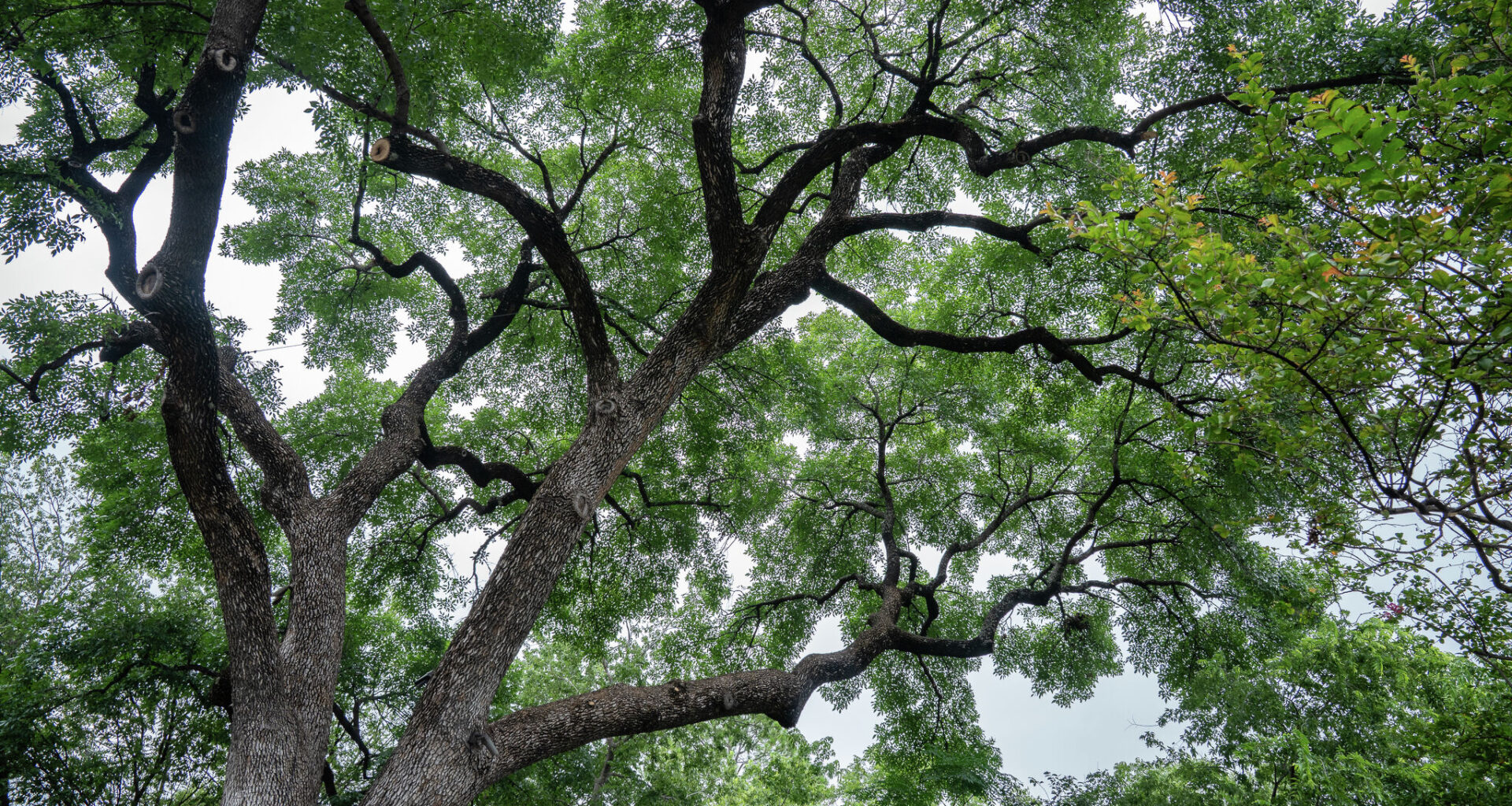
A large oak tree grows in the yard at 1411 West 10th Street in Austin, June 18, 2026.
Sara Diggins/Austin American-Statesman
“The City cannot lawfully demand that Mr. Petrick pay thousands of dollars or plant a miniature forest in his yard simply because he engaged in ordinary, harmless, yard maintenance,” the foundation’s lawyers wrote in the complaint.
The litigation is part of a broader effort by the foundation to challenge local permitting and tree-replacement requirements that it argues infringe on property rights and increase housing costs.
The Austin case is the third such legal challenge the foundation has brought against a municipal tree ordinance in recent years. An Oakland case filed in June remains pending, while a federal judge partially sided with the foundation in a 2020 Michigan case, ruling that the ordinance was unconstitutional as applied to the developer represented by the group but declining to invalidate the entire law.
Article continues below this ad
City spokesperson Erik Johnson said Monday that Austin had not yet been served with the lawsuit but would review it and respond appropriately.
Homeowner says tree work was for safety
Petrick bought his Northwest Hills home in August 2025 after he and his wife spent years searching for the right home in Austin. Petrick grew up a few streets away, and the couple was preparing for the birth of their first child.
Three overgrown trees on the property quickly raised safety concerns, Petrick said. One was split and leaning toward the house while another was touching a power line and extended into the street where large trucks brushed against it.
Article continues below this ad
Petrick’s father hired a company to remove the split tree and trim the others.
A few months later, in February, the city notified Petrick that removing the split tree without a permit violated Austin’s tree protection ordinance.
Petrick then applied for an after-the-fact permit.
The city determined that the removed tree was too small to require replacement, according to the lawsuit. But an arborist inspecting the property concluded that more than 25% of the crowns of the other two trees had been pruned. Austin treats such “excessive pruning” as tree removal under its ordinance.
Article continues below this ad
The city issued Petrick an after-the-fact permit in June that required him to plant 44 inches of replacement trees on his .28-acre property or pay $8,800.
“All we were trying to do was clean up the property and beautify it, and then make it safe for my newborn baby,” Petrick said in an interview.
The lawsuit, filed in the U.S. District Court for the Western District of Texas, alleges that the ordinance violates the Fifth and 14th Amendments by imposing requirements that are not sufficiently connected or proportional to any harm caused by Petrick’s tree trimming. It challenges the ordinance both as written and as applied to Petrick.
A ruling in Petrick’s favor could eliminate the replacement requirement against him and force Austin to revise any portions of its ordinance that the court finds unconstitutional, said Martin Camp, a law professor at Southern Methodist University’s Dedman School of Law.
Article continues below this ad
Camp said it is unlikely that the court will strike down the entire ordinance because state law gives cities the right to regulate trees, but a judge could find particular provisions unconstitutional or the ordinance’s application to Petrick’s case.
Even if the ordinance isn’t changed or fully repealed, Camp said a ruling against Austin could weaken the city’s position when enforcing it against developers and other property owners.
“The city’s strength to just say, ‘This is our ordinance, you have to comply,’ is weakened if they lose a case like this, because each case is individual and based on its own facts and circumstances,” he said.
This is the fifth time the foundation has sued the city in recent years over a variety of policies. It has won two of those cases – one challenging a short-term rental ban and another challenging mandatory paid sick leave requirements – and has one pending that challenges the city’s transportation user fee. It lost a case challenging the fire department’s release time policy.
Article continues below this ad
Part of broader property-rights strategy
Petrick’s case follows similar TPPF lawsuits challenging tree regulations in Oakland, California, and Canton Township, Michigan.
Chance Weldon, the foundation’s litigation director, said the cases are intended to challenge permitting systems that the organization contends increase housing costs.
“The genesis behind all of this litigation is to take a run at these permitting regimes that artificially drive up the cost of housing,” Weldon said.
Article continues below this ad
Last month, the foundation sued Oakland on behalf of property owners facing a $915,000 penalty after city officials found that they had illegally removed 38 mature trees from their property, neighboring lots and city-owned land. The property owners dispute how many trees they removed and where they were located, according to the San Francisco Chronicle. That case remains pending.
The foundation achieved a partial victory in its Michigan case. TPPF sued Canton Township in 2018 on behalf of a developer facing nearly $48,000 in tree-replacement costs after clearing 173 trees without a permit. In 2020, a federal judge ruled that the township’s ordinance amounted to an unconstitutional taking as applied to the developer. The judge did not invalidate every provision of the ordinance.
Weldon said that this type of litigation typically takes three to four years to resolve.
Article continues below this ad
“My hope would be that the policy gets changed,” Petrick, the plaintiff, said. “You should have the right to do things on your own property that are not causing an issue with anybody else and just trying to beautify and make things a little more safe.”