
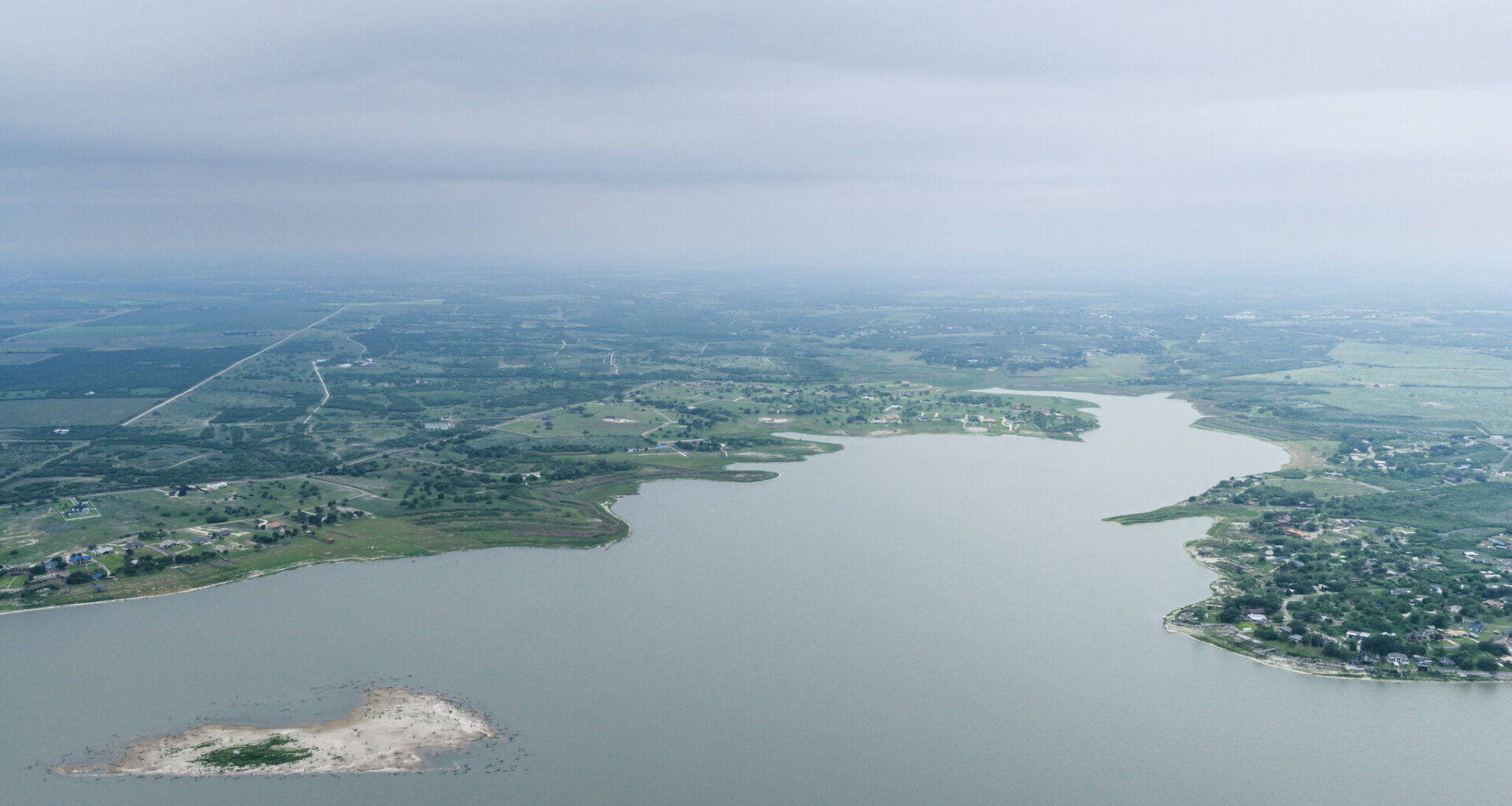
As of Wednesday, July 29, Lake Corpus Christi was 32.5% full, according to Water Data for Texas, a statewide surface water-tracking tool created by the Texas Water Development Board (TWDB). The reservoir, which is managed by Corpus Christi Water, has risen more than 8 feet since the drought-fueled low of 8.7% seen at the end of April.
But Lake Corpus Christi’s current water levels aren’t due to the deadly rains that recently deluged much of South Central Texas from the border to San Antonio. Instead, the sharp rise is attributable to a series of rain systems that pushed through the Coastal Bend in May and June, as well as precipitation from Tropical Storm Bertha, according to Liz Sommerville, a senior meteorologist at the National Weather Service in Corpus Christi.
“We had several of those move across the area, and they dumped a lot of rain,” Somerville said of the trains of rainstorms that popped up near the Texas–Mexico border and moved eastward into the Coastal Bend throughout late May and June. Those early summer storms brought Lake Corpus Christi to a peak of 35% full — a level not seen since October 3, 2024, according to Corpus Christi Lake Watch, which tracks current and historical storage level trends using TWDB data.
Lake Corpus Christi’s water levels began to dip again in late June until the trailing edges of Tropical Storm Bertha — which made landfall near the Texas–Louisiana border more than 200 miles away — provided a brief upward blip. However, the floodwaters from this month’s rains have yet to reach the manmade reservoir. The bulk of the floodwaters are still about 40 miles away near Three Rivers. There, the Nueces River had climbed to 20.09 feet as of 1:15 p.m. Wednesday, July 29, according to NOAA data. The Nueces is expected to continue rising into major flood stage before cresting at 40.4 feet on Friday evening. From there, it’ll take several days more before the floodwaters make their way downstream to Lake Corpus Christi. But once they arrive, the reservoir could reach 100% capacity in August.
“We do expect it will fill up more than 90% for sure. I mean, 90% seems like a reasonable amount to assume, but it could go higher. It could be 100%,” Somerville said.