
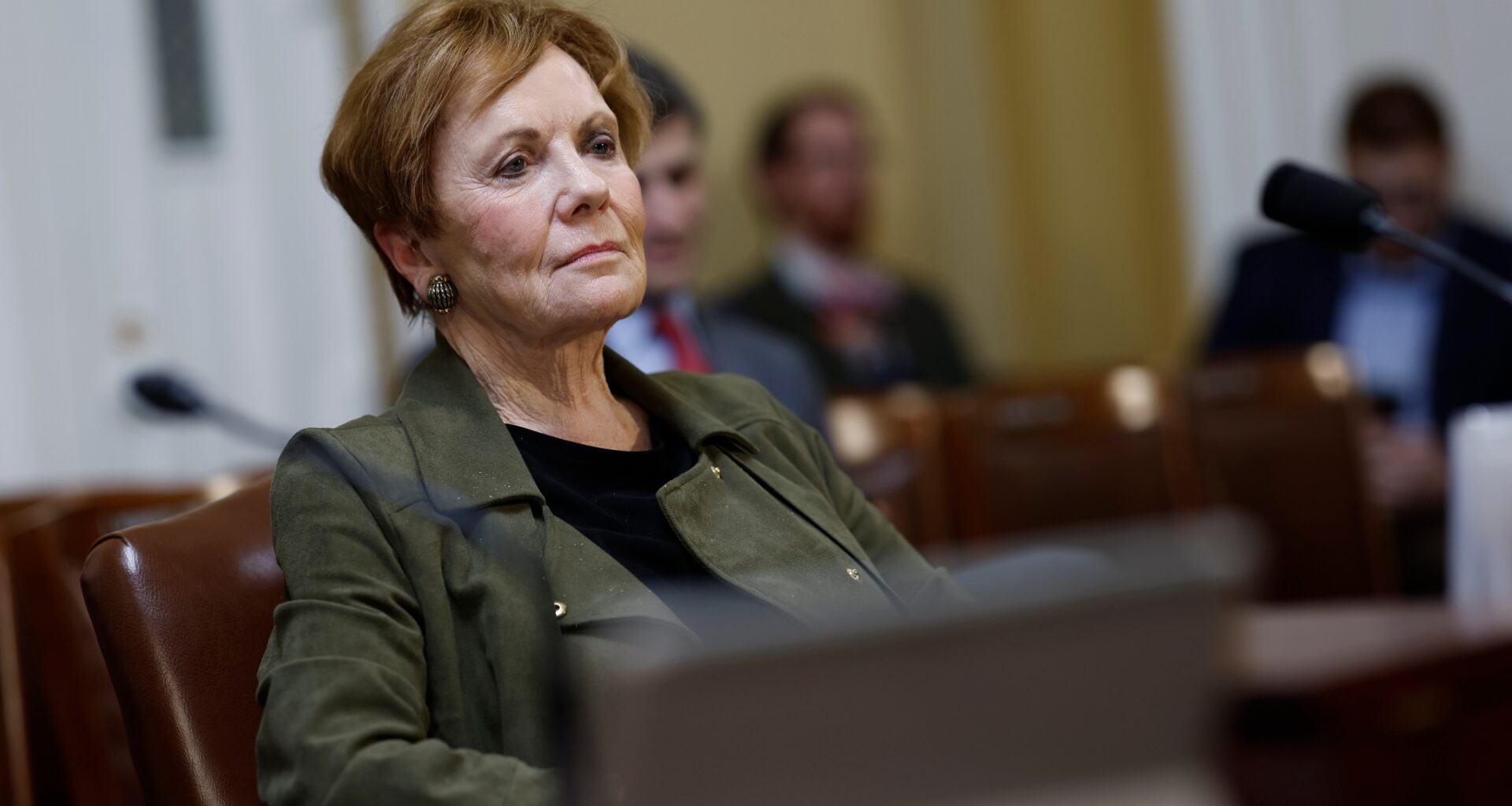
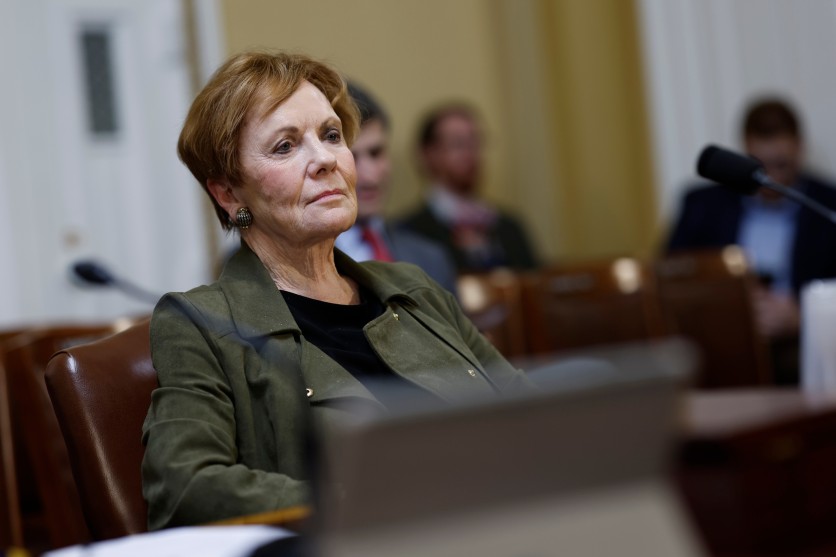
House Appropriations Committee Ranking member Rep. Kay Granger (R-TX) listens during a House Rules Committee hearing on the Senate Amendment to the Consolidated Appropriations Act of 2023 at the U.S. Capitol Building on December 22, 2022 in Washington, DC.
Anna Moneymaker/Getty Images
Kay Granger, the Fort Worth Republican who climbed from a neighborhood zoning fight to the chairmanship of the House Appropriations Committee — the most powerful spending position in Congress — has died at age 83. House Speaker Mike Johnson confirmed her passing in a statement Sunday evening, calling her a woman who “broke barriers for women in public service” across every stage of an extraordinary public career.
In nearly four decades of elected office, Granger accumulated three historic firsts no Republican woman had achieved before her: she was the first woman elected mayor of Fort Worth, the first Republican woman from Texas elected to the U.S. House of Representatives, and the first Republican woman to chair the full House Appropriations Committee. That last achievement placed her at the center of decisions over a federal budget that now exceeds $6 trillion annually — one of the three or four most consequential positions in the entire House, in the words of her colleagues and the political scientists who study it.
Career Built on Historic Firsts
Granger was born Norvell Kay Granger on January 18, 1943, in Greenville, Texas. She graduated from Eastern Hills High School in Fort Worth in 1961 and earned a bachelor’s degree from Texas Wesleyan University in 1965. Before entering politics, she worked as a schoolteacher and later ran an insurance business — a practical, constituent-facing background that would define her governing style for the rest of her life.
Her path into public life began with a neighborhood dispute. When a company proposed building a liquid-waste processing plant near her East Fort Worth home, Granger organized her neighbors against it. That experience sent her to the Fort Worth Zoning Commission, where she served from 1981 to 1989, and then to the Fort Worth City Council, from 1989 to 1991.
In 1991, Fort Worth voters elected Granger mayor, making her the first woman to hold that office — a historic first confirmed by House records. She served until 1995, then won the open congressional seat for Texas’s 12th District. She took office on January 3, 1997, as the first Republican woman from Texas ever elected to the U.S. House.
“She’s obviously one of the dynamos of Fort Worth history,” said Jim Riddlesperger, a professor of political science at Texas Christian University. “The chair of the Appropriations Committee is one of the three or four most important positions in the House of Representatives. And she did all of that with grace. Her legacy is as someone who was a tireless promoter of Fort Worth, someone who represented Fort Worth with dignity in the House of Representatives.”
Power Broker for the Federal Purse
Granger spent 25 years on the House Appropriations Committee, the body whose constitutional mandate — rooted in Article I, Section 9 of the U.S. Constitution — is to control every dollar the federal government spends. Its subcommittee chairs are called “Cardinals” in Washington shorthand, a title reflecting the near-absolute authority they hold over specific slices of the federal budget. Granger became ranking Republican on the committee in 2019, then ascended to the chairmanship in January 2023 — the first Republican woman to hold that gavel.
She stepped down as chair in April 2024 — relinquishing the gavel early — after guiding the fiscal year 2024 funding process through an especially contentious Congress, and remained chairwoman emeritus through the end of her term. House Appropriations Chairman Tom Cole of Oklahoma, who served alongside Granger for years, praised her “towering legacy of grit and grace” in his official committee tribute remarks.
Granger became only the fourth Texan in history to chair the Appropriations Committee, following Joseph Sayers, James P. “Buck” Buchanan (whose former congressional seat was later won by Lyndon B. Johnson), and George H. Mahon, who chaired the committee 15 consecutive years from 1964 to 1979.
Panther Island: A Legacy Project With Complications
No single project better illustrates the scope — and the complexity — of Granger’s legacy than Panther Island, the decades-long flood control and development initiative on the Trinity River just north of downtown Fort Worth. Through a combination of committee influence, bipartisan coalition-building, and years of persistent advocacy, Granger helped deliver more than $400 million in federal funding for the project, including $403 million channeled through the Biden administration’s 2021 infrastructure law — confirmed by Fort Worth Report reporting.
Even as she walked out the door in January 2025, Granger had embedded $160 million into the pending 2025 appropriations bill to finish the Corps’ flood channel.
The project was not without controversy. Granger’s son, JD Granger, served for years as executive director of the Trinity River Vision Authority, the agency overseeing Panther Island. His mother’s position as the committee’s ranking Republican, and later chair, gave her direct influence over the federal funding that flowed to the project. Watchdog groups raised nepotism concerns about the arrangement; The Texan documented those concerns in detail. JD Granger departed the authority in 2022. And in a detail that underscores the complexity of her legislative record, Granger herself voted against the infrastructure law that ultimately provided the project’s largest federal infusion — a vote confirmed by WFAA reporting.
Tributes Pour In From Both Parties
House Majority Leader Steve Scalise praised Granger as a “tough-as-nails conservative leader” and credited her commitment to military readiness and fiscal responsibility.
House Appropriations Chairman Tom Cole, who served alongside Granger for years, said she was one of the best legislators he had worked with and that she left behind a “towering legacy of grit and grace” that would inspire the institution for decades to come.
Across the aisle, Rep. Marc Veasey of Texas’s 33rd District, a Democrat who represented much of the same North Texas geography as Granger, credited her with the bipartisan coalition work that secured the Panther Island funding — even when the politics around it were complicated. Fort Worth Mayor Mattie Parker said Granger’s influence on the city “will last in perpetuity.”
Former Democratic Appropriations Chair Nita Lowey of New York, who served on the opposite side of the aisle from Granger during the years of their shared committee service, attended Granger’s portrait unveiling ceremony in Washington in November 2024. The portrait, painted by Jeffrey Bass and honoring her historic chairmanship, now hangs permanently in the Appropriations Committee’s main hearing room on Capitol Hill.
Fort Worth Inc. named Granger its 2025 Person of the Year, recognizing nearly four decades of public service to the city.
What Her Absence From Congress Exposed
Granger announced in October 2023 that she would not seek reelection. Her final months in office, however, became a national story that extended well beyond her own career.
She cast her last House vote on July 24, 2024, then disappeared from the Capitol. By December 2024, confirmed reports placed her at a senior living facility in Fort Worth for several months. Her son, Brandon Granger, told the Dallas Morning News that her health had declined rapidly and that she had been experiencing dementia — NewsNation confirmed his statement that she was “having some dementia issues late in the year.” Her office denied she was in memory care specifically, saying only that she had “been navigating some unforeseen health challenges.”
The revelation that a sitting member of Congress — who had cast no vote for five months and had missed over 54% of votes in 2024 — had been living in a senior care facility without public disclosure prompted swift and bipartisan criticism. University of Virginia Center for Politics director Larry Sabato called it an outrageous transparency failure, writing that the situation was “astounding.” Rep. Ro Khanna of California described it as evidence of a Congress rewarding seniority over capacity — writing that “we have a sclerotic gerontocracy.”
Her case joined that of the late Sen. Dianne Feinstein — who also continued serving while experiencing cognitive decline before her death in 2023 at age 90 — as the most discussed examples driving a national conversation about whether Congress has adequate mechanisms to ensure that members who become incapacitated can no longer prevent their constituents from being represented. That conversation remains unresolved. Nearly 20% of House and Senate members are over the age of 70, outnumbering members under 40 by more than three to one.
Granger retired from office on January 3, 2025, and was succeeded by Republican Craig Goldman, who won the Texas 12th seat in the November 2024 election. The question her final chapter raised — who represents constituents when a lawmaker cannot vote? — has no formal answer in House rules.
A Final Word
At the ceremony unveiling her portrait in November 2024 — the last major public appearance of her career — Granger offered her own summation. “As I reflect on my time in Congress, I am deeply humbled by the faith placed in me by the people of Texas 12 to represent them in Washington and by my colleagues in the House to lead the committee as chairwoman,” she said. “Above all, I am proud of what we accomplished together.”
She is survived by her family and by a city she served, in one role or another, for nearly 40 years.
Frequently Asked QuestionsWhat were Kay Granger’s most significant historic firsts?
Granger set three firsts that no Republican woman had achieved before her: she was the first woman elected mayor of Fort Worth (1991), the first Republican woman from Texas elected to the U.S. House of Representatives (1996), and the first Republican woman to chair the House Appropriations Committee (2023). The Appropriations chairmanship is particularly significant because the committee controls all federal spending — members of Congress who chair it are among the most institutionally powerful figures in the House. The House archives her full congressional biography in the official record.
What is the House Appropriations Committee, and why does chairing it matter?
The House Appropriations Committee is one of the most powerful bodies in the U.S. Congress, responsible for determining how the federal government spends money across every department and agency. Its authority comes directly from Article I of the Constitution. Its subcommittee chairs are known in Washington as “Cardinals” because of the near-total authority they hold over their respective portions of the federal budget. Chairing the full committee places a lawmaker at the center of negotiations over a federal budget that exceeds $6 trillion annually — making it, as Granger’s colleague Jim Riddlesperger put it, one of the three or four most consequential positions in the entire House. The committee’s history and constitutional authority date to 1865.
Did Kay Granger suffer from dementia in her final year in office?
Yes. In December 2024, Granger’s son Brandon confirmed her dementia to reporters, telling the Dallas Morning News she had been “having some dementia issues late in the year” and that her decline had been rapid. By that point, Granger had already been living at a senior care facility in Fort Worth for several months and had not cast a House vote since July 24, 2024. Her office said only that she had been “navigating some unforeseen health challenges” and denied she was specifically in memory care. The disclosure, made months after her absence began, reignited a national debate about whether Congress has any formal mechanism to address situations where a member becomes too ill to serve but does not resign.
Does Congress have rules requiring lawmakers to disclose health conditions or step down if they can no longer vote?
No. There are no House rules requiring members to disclose health conditions, and no formal process for removing a member who becomes incapacitated but does not resign or die in office. Granger’s case — in which a sitting chair of the most powerful spending committee was absent for more than five months without public explanation — highlighted this gap directly. Her situation, and that of Sen. Dianne Feinstein before her, has generated calls for congressional age limits, mandatory cognitive testing, or transparency requirements, but none have passed. The debate over congressional fitness to serve remains unresolved, and the question of who represents constituents when a member cannot vote has no formal answer in House rules.