
Digital subscribers can listen to this article.
Subscribe today for unlimited access to Texas Monthly. Already a subscriber? Log in.
Working Life is a monthly column in which Texans talk about their jobs.
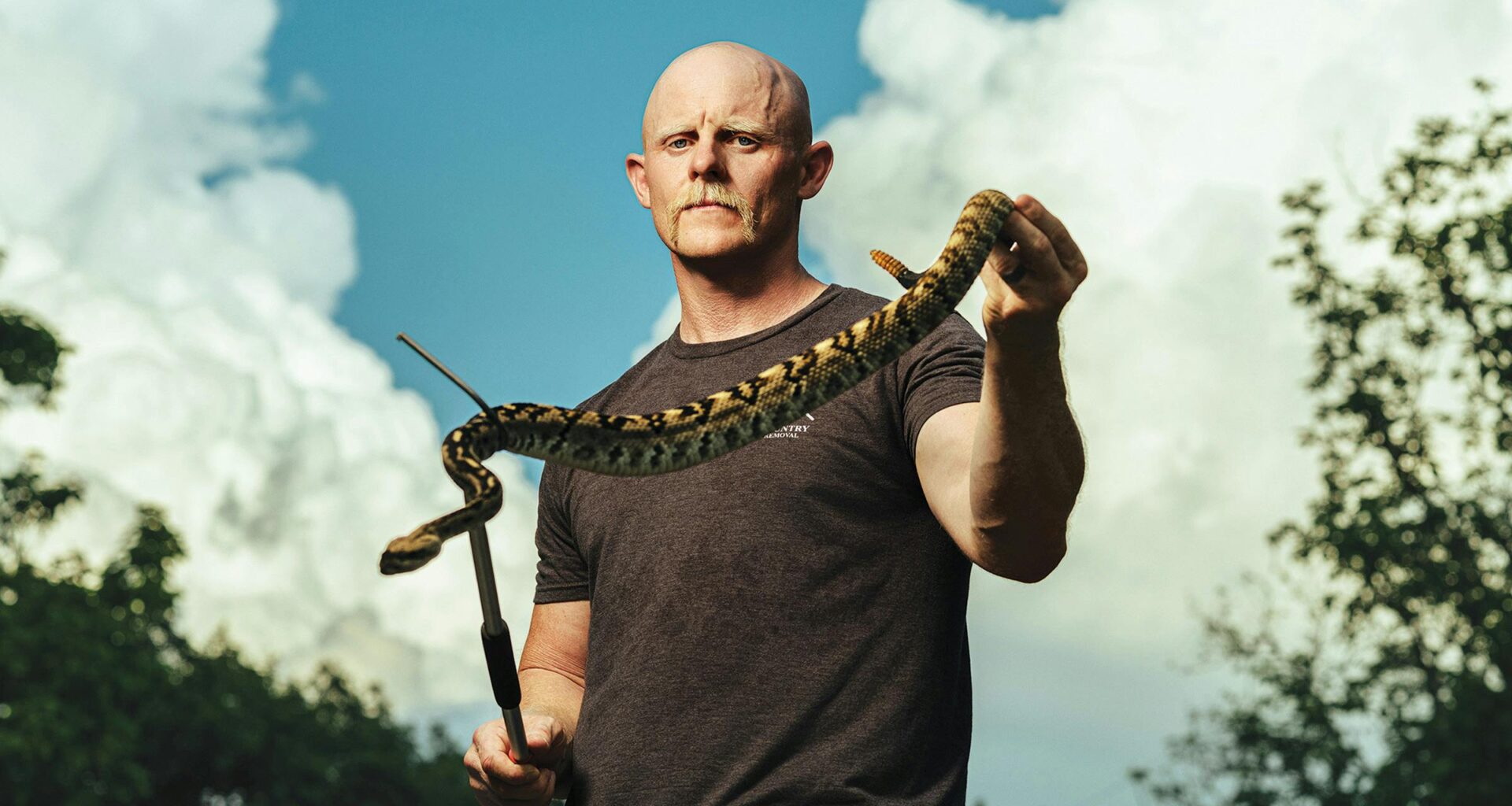
Getting cornered by a copperhead in the wild is frightening enough, but what to do when a snake slithers onto your property? Try calling Brett Parker, the 41-year-old owner and sole employee of Hill Country Snake Removal. To his customers, he’s a savior. To the snakes, he’s a one-way trip to a patch of ground blessedly free of humans.
I blame my interest in snakes on my grandma. I grew up in Spring and Cedar Park, but she had a little farm in Splendora, and one time I watched her take a hoe and chop up a garter snake. “The only good snake is a dead snake,” she said. Even as a five-year-old I knew that wasn’t right. After that I started catching all the snakes I could, venomous or not. I’ve never been afraid of them.
I went to college in Belton then moved to Canyon Lake, outside San Antonio. Word got out that I knew about snakes. Once, a fire chief received a distress call from a lady who’d moved from Michigan and had snakes in her house. I went over and found some baby water snakes and spent about an hour talking to her about common breeds in the area, which ones were venomous and which weren’t. Before I left, she asked me what I charged, and I kind of looked at her funny. I’ve been in the snake-removal business for about ten years since. The spring and fall are the busiest. I get two types of calls, most often about western diamondback rattlesnakes: Either somebody saw one last week and wants me to come look around their property, or they’re looking at one right now and want me to come immediately.
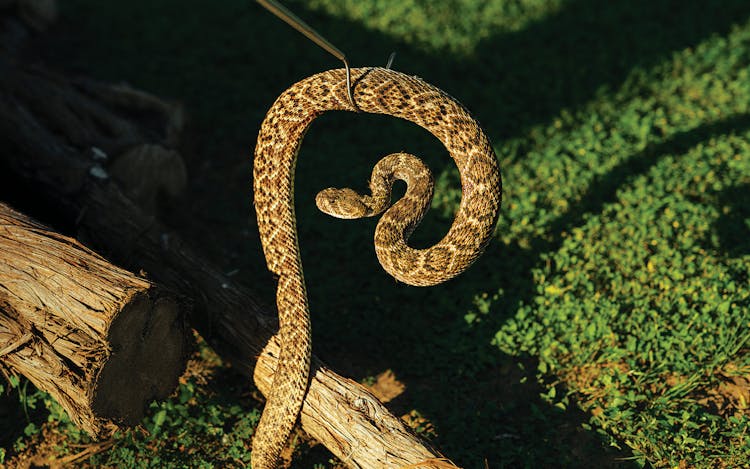 Parker’s snake hook in action. Photograph by Josh Huskin
 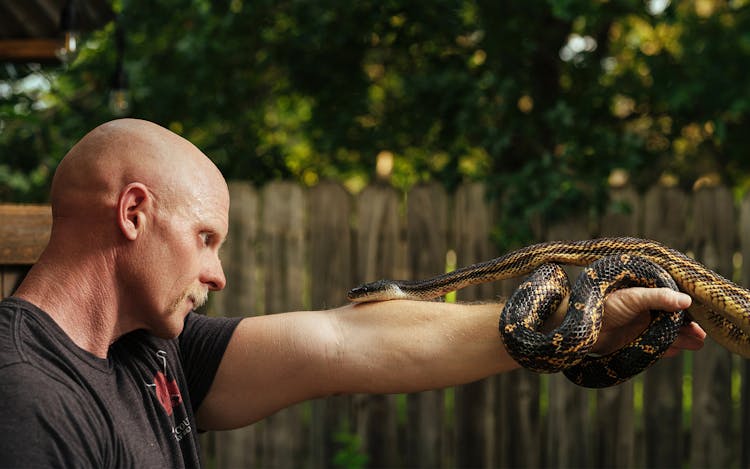 He wasn’t afraid of snakes as a child, and he doesn’t appear to be so now. Photograph by Josh Huskin
I show up, catch the snake, secure it. Usually I use a snake hook—I’ll pull the snake’s tail toward me, grab it with my hand, and use the hook to keep its head away. Then I just put it in a bucket. I try to relocate them away from populated areas, where they won’t run into anybody.
I’ve only been bit once. About two years ago there was a rattlesnake on the floor in my garage, and I was going to put it in one of my cages. But there was already a snake in that cage—I didn’t look before I opened it up—and when I slid the door open, I scared him. He popped my hand real quick. That wasn’t any fun, but three days and 26 vials of antivenom later, my hand was fine.
A lot of what people think they know about snakes is wrong, and that drives their irrational fear. They’ll categorize snakes as “good” nonvenomous ones or “bad” venomous ones. Either way, nobody wants one on their front porch, which I get. But there’s no point in killing a snake when you can just take it away from your house and let it keep doing its thing. My goal is to empower my clients: to not be so terrified of snakes and to respect them.
This interview was edited for clarity and length.
An abbreviated version of this article originally appeared in the August 2026 issue of Texas Monthly with the headline “Brett Parker, Snake-Removal Expert.” Subscribe today.
Read Next