
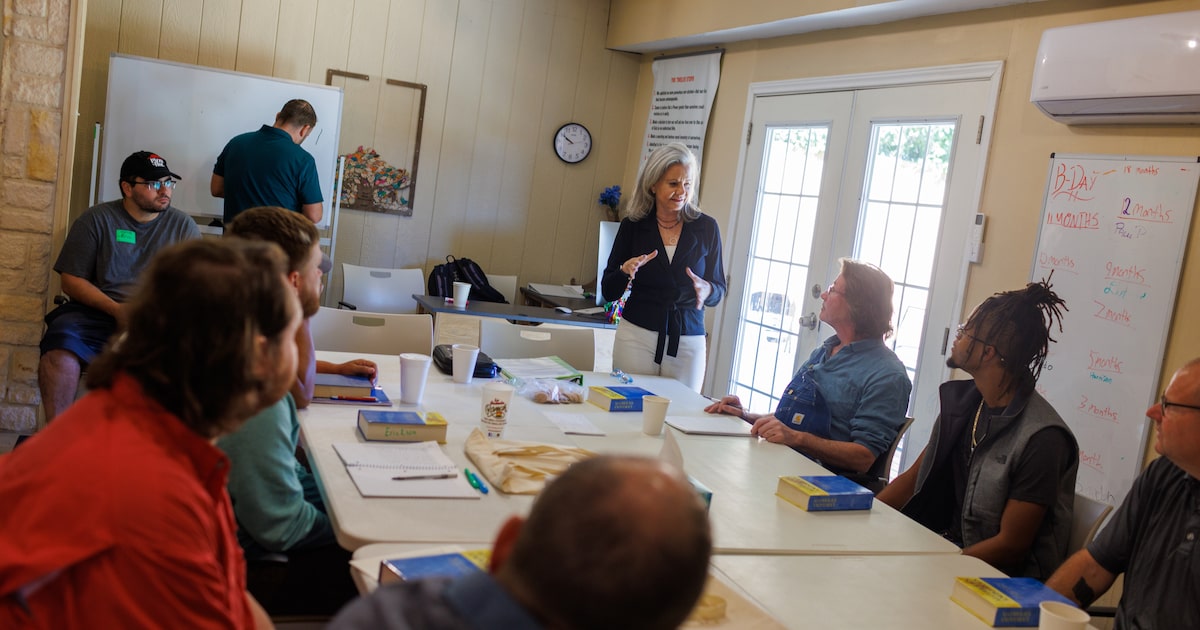
For over three decades, the Magdalen House has helped people in Dallas with alcoholism achieve sobriety, sustain recovery, build a community and find a purpose in life.
The nonprofit, founded in 1987, served only women until last year, when it expanded its services to include men. The first year, 231 men participated in the two-week residential program. Now, it’s looking to double its services.
Related

Harrison Buford, 28, had been an alcoholic since his teenage years and went to a couple of treatments, but he relapsed every time. He was drinking nonstop until this May, when Buford realized he was destroying his life. He knew about “Maggie’s House” as the organization is known in the community, and asked his mother to take him there.
Breaking News
“It gave me a place where I could make a decision not to drink again, but also to turn this over to do something else with my life,” Buford said. “That’s what Maggie’s does.”
He received, at no cost, housing and support to help him achieve and maintain a clean and sober lifestyle.
Buford has been clean since he participated in all the programs provided by Magdalen House and now serves as a volunteer, actively engaging with the community to spread the word.
A deeper problem
In 2024, the Magdalen House served 1,864 individuals. Its mission is to address alcoholism as a disease, not a mere behavioral issue, recognizing that many individuals lack appropriate, accessible and dignified places for recovery, said Lisa Kroencke, who serves as the CEO.
Kroencke is a recovered alcoholic who participated in the program 18 years ago. Since then, she has remained with the organization, serving in various roles.
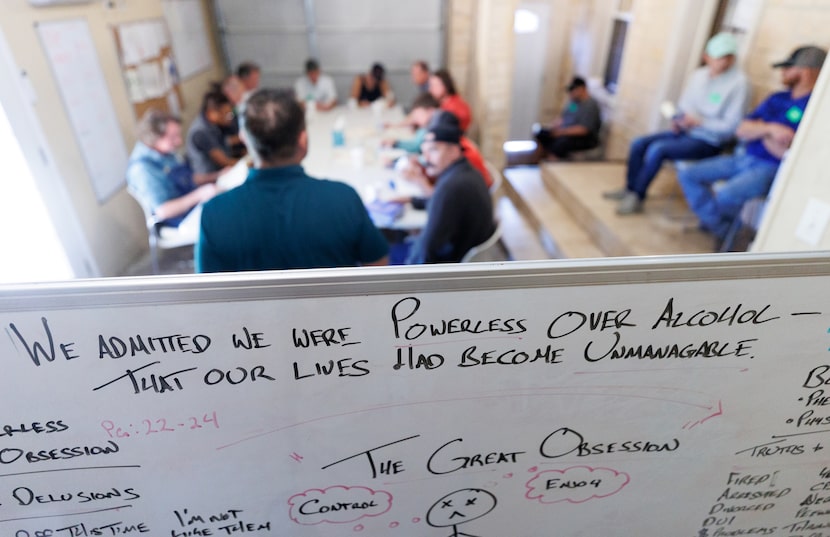
A first step meeting in the garage of The Magdalen House in Dallas, TX on November 5, 2025. The Magdalen House is Dallas’s only free alcoholism recovery centre. This non-profit organization has been helping women for over 30 years and has recently expanded its services to include men as well.
Nathan Hunsinger / Special Contributor
She found traditional rehabs lacked a sense of community and belonging, which led to repeated relapses. At one point, she nearly died from her addiction.
Discovering Magdalen House was transformative; she found a welcoming, nonjudgmental community where she didn’t have to hide her struggles.
For Kroencke, sobriety alone is not enough; finding purpose through helping others and being part of a community is essential.
“It’s not just about staying sober. You get to have a purpose, like the pain is the purpose, and that shame lifts when you help another person,” Kroencke said. “And so you’re living with the shame. I live with it, but when I share my shame with another person, it starts to evaporate.”
She sees life as “more beautiful on the other side,” being a recovered alcoholic, and wants to reduce the stigma, encouraging others not to be ashamed of being in recovery.
Buford found purpose and, like Kroencke, now helps others escape that darkness and reach “the other side.”
“I was living in the dark, deep demoralization pit that everybody talks about. When you just have no use, you have no purpose, you cannot keep relationships, to make a living and none of that is about drinking. That’s what drinking solved for me,” Buford said. “Drinking was the solution to all of these problems for me, until I found my purpose.”
Currently, Magdale House serves 12 men. Due to an increase in men seeking help, they purchased a new house to double their capacity.
The new house, at 2002 Moser Ave., will feature 20 beds for men in recovery.
A capital campaign is underway to raise funds for renovations that will ensure the new home meets all program and safety requirements. The organization plans to open the new house by the end of next summer.
The organization’s annual budget is approximately $3 million, and it is privately funded. Maggie’s House does not receive any government funding.
How the programs work
By helping individuals rebuild their lives, the organization’s mission aims to reduce the broader social impacts of alcoholism, including effects on families, the legal and healthcare systems, homelessness and domestic violence, said Kroencke.
The organization offers three programs designed to help individuals transform their lives. All of them are free; no insurance is required. Participants need to want to be there voluntarily. No one is admitted against their will.
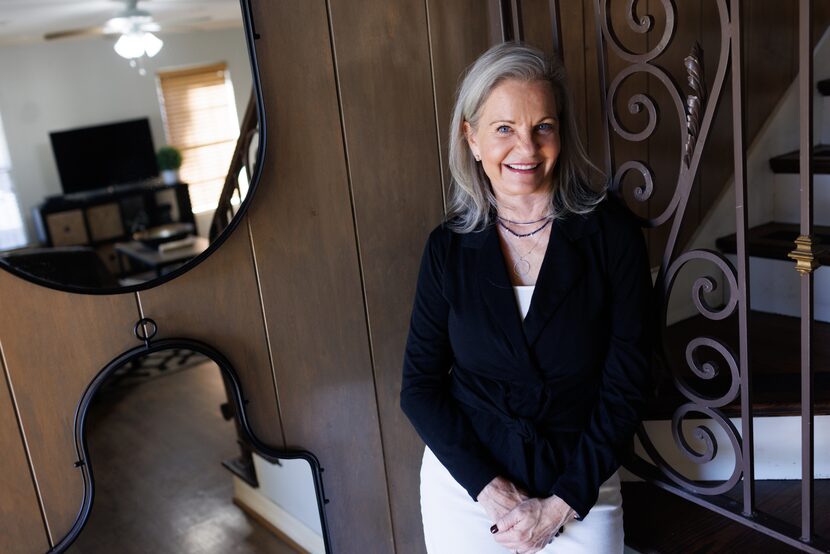
Lisa Kroencke, the CEO and a graduate of the program, poses for a portrait in the The Magdalen House in Dallas, TX on November 5, 2025. The Magdalen House is Dallas’s only free alcoholism recovery centre. This non-profit organization has been helping women for over 30 years and has recently expanded its services to include men as well.
Nathan Hunsinger / Special Contributor
Kroencke said the organization’s emphasis on education, removing stigma and providing services free of financial and insurance barriers helps ensure more people can access life-saving treatment, benefiting both participants and the wider community.
First Step
It starts with a phone intake. Individuals begin with a phone screen and an in-person intake to ensure they are appropriate and ready for this level of care. Those needing medical detox are referred elsewhere before joining.
Once admitted, individuals receive all essentials for two weeks, including food, clothing, and toiletries. Some arrive with only the clothes on their backs. Each day is highly structured, with set wake-up times, group meetings, chores, meal prep and quiet meditation.
The environment is communal, with people supporting one another, according to Susan Overman, the nonprofit’s chief development officer.
The program relies heavily on volunteers for its operation, fostering a supportive network and essential to success. After the two weeks, staff ensure everyone has a transition plan, either to family, supportive housing or the non-residential Next Step program.
Next Step
Next Step provides structure and education on foundational tools to any individual with alcoholism seeking to sustain and grow in their recovery. Next Step is a three-phase, nonresidential recovery program for alcoholics that lasts 12 weeks and consists of recovery education, group meetings and mentorship with meeting chairs.
It is open to any alcoholic, at any stage of their recovery, who is seeking education and tools to grow and sustain their recovery in a structured program.
Community step
Solution-focused classes and workshops are provided for an alcoholic at every stage of recovery 365 days a year. Dedicated volunteers also offer family support to families and loved ones of alcoholics.
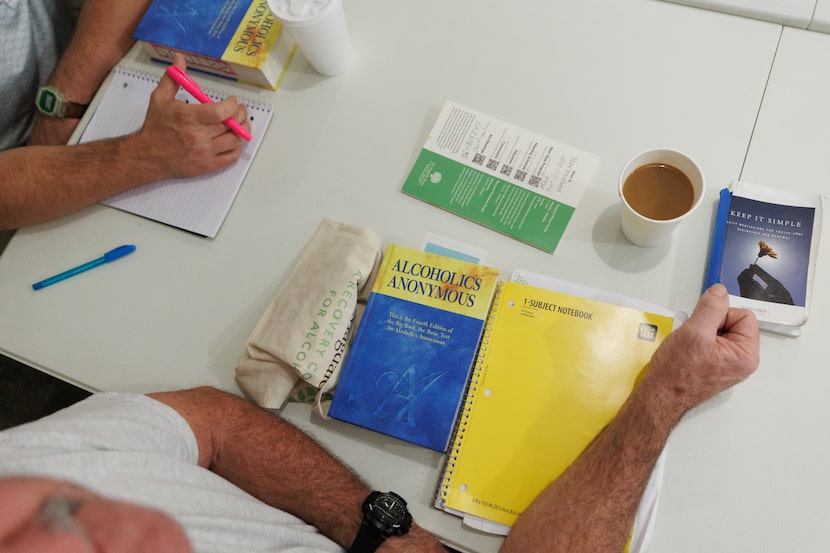
Study materials during a first step meeting in the garage of The Magdalen House in Dallas, TX on November 5, 2025. The Magdalen House is Dallas’s only free alcoholism recovery centre. This non-profit organization has been helping women for over 30 years and has recently expanded its services to include men as well.
Nathan Hunsinger / Special Contributor
Alcoholism doesn’t just affect the person drinking, it can touch and disrupt entire families and communities, said Overman. It is a widespread disease cutting across all socioeconomic, racial and age groups.
How to get help
Call 911 if you or someone you know is experiencing an alcohol poisoning or substance abuse emergency.
The men’s house is located at 2100 Caddo Street and the women’s at 4513 Gaston Avenue. Phone number 214 324-9261.
The Dallas County Health and Human Services
Overdose prevention hotline: 214-590-4000.
988 Suicide and Crisis Lifeline
Call or text 9-8-8.
For more information about Magdalen House, visit its website at https://magdalenhouse.org/.