
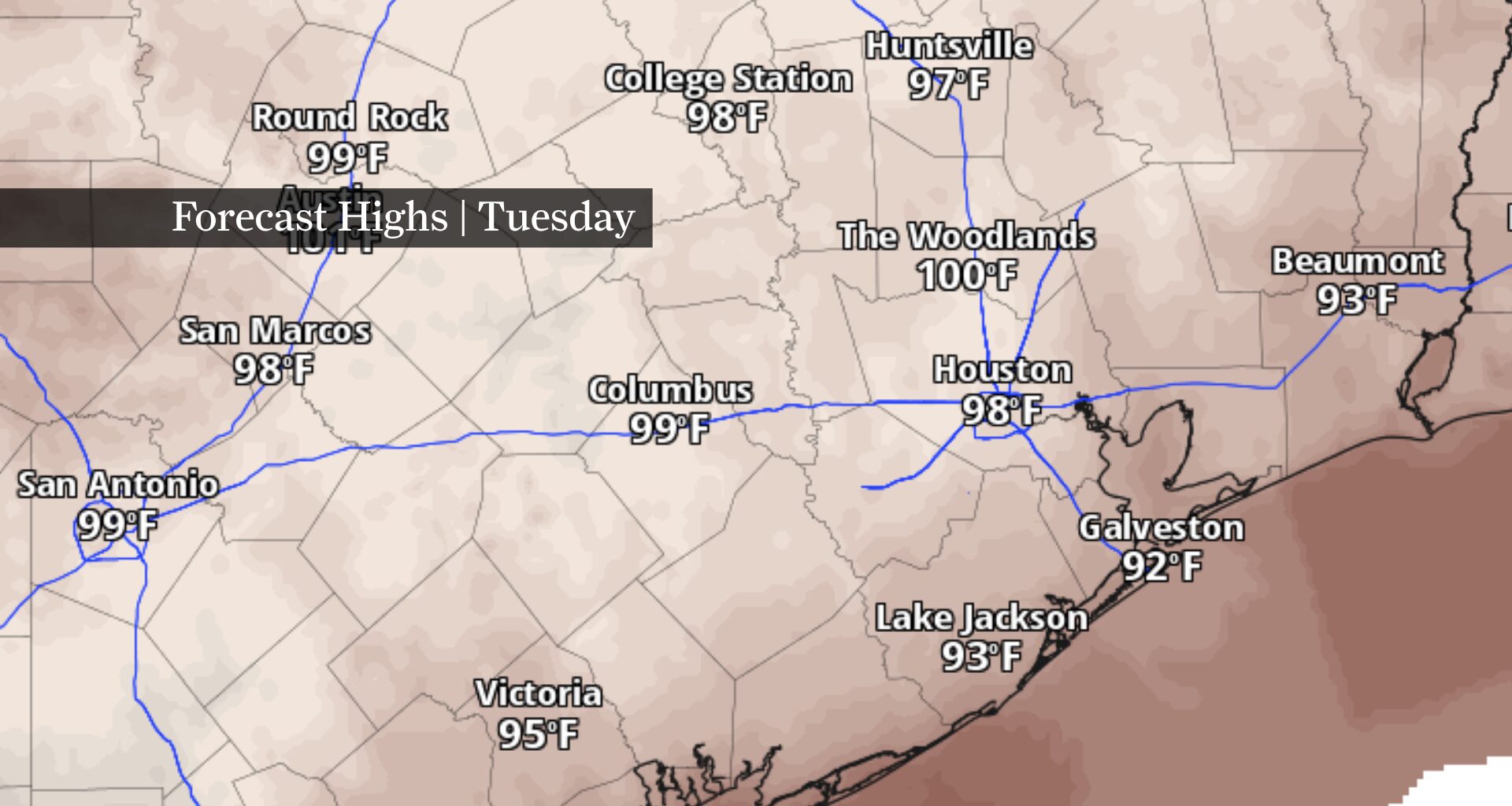
High temperatures across much of Southeast Texas are expected to reach into the upper 90s to near 100 degrees Tuesday.
Pivotal Weather
The forecast isn’t offering much variety this week, but Houston’s summer heat is doing far more than making people sweat.
A sprawling ridge of high air pressure will keep Southeast Texas locked into a familiar August weather pattern through the middle of the week, with upper 90s, warm nights and only isolated rain chances. By Thursday, moisture will gradually increase, bringing hit-or-miss afternoon showers and thunderstorms back into the forecast. Summer’s grip, though, isn’t going anywhere just yet.
The weather may look the same every day, but the heat continues reshaping the world around us in surprising ways.
Article continues below this ad
Houston is hot and (mostly) dry through Wednesday
Don’t expect many changes during the first half of the week.
Afternoon highs will climb into the upper 90s across much of Southeast Texas, with a few inland communities briefly reaching 100 degrees. Overnight temperatures will remain in the upper 70s to around 80, providing little relief after sunset.
This map of Southeast Texas shows where widely scattered storms may develop Tuesday afternoon. Rain chances through Wednesday remain less than 20% in most neighborhoods.
Pivotal Weather
The ridge of high atmospheric pressure overhead will also keep rain chances in check. While an isolated sea breeze shower or thunderstorm remain possible, most neighborhoods will stay dry through Wednesday.
Article continues below this ad
Weekend rain chances are inching upward
The first signs of change arrive Thursday as deeper volumes of atmospheric moisture return and a few weak disturbances drift westward along the northern Gulf Coast.
TOO HOT TO FLY: Can it ever be too hot for planes to take off? Here’s how summer weather affects flying.
Neither change is especially dramatic, but together they should be enough to spark more scattered afternoon showers and thunderstorms through the weekend. Rain chances will increase into the 30% to 40% range each afternoon, meaning more neighborhoods should pick up rainfall than earlier this week.
Article continues below this ad
Even so, many neighborhoods will stay dry on any given day, and any storms that do develop should fade around sunset.
Clouds and showers may trim afternoon highs back into the middle 90s by the weekend, but the added humidity will ensure it still feels unmistakably like August. The same heat helping fuel those afternoon storms is also reshaping everyday life in ways many people never notice.
Five surprising ways Houston’s heat affects everyday life
Roads can buckle. Concrete and asphalt expand as temperatures climb. If that expansion has nowhere to go, the pavement can suddenly heave upward, creating dangerous driving conditions. A dramatic video shared by ABC13 shows a truck launched into the air after striking a heat-buckled roadway in North Texas.
Article continues below this ad
While uncommon, it illustrates how much stress prolonged heat can place on roads and other infrastructure.
Airplanes need more runway. Hot air is less dense than cool air, reducing lift and engine performance. On the hottest days, aircraft need more runway before safely becoming airborne, though most passengers won’t notice anything beyond a slightly longer takeoff roll.
Bridges and power lines expand. Steel expands as temperatures rise, which is why bridges include expansion joints and why overhead power lines often sag more during the summer.
BUSIEST STRETCH: Texas is entering the busiest stretch of hurricane season. Here’s what you should know.
Article continues below this ad
Warm nights can be more dangerous than hot afternoons. The body relies on cooler overnight temperatures to recover from daytime heat. When lows remain near 80 degrees for several nights, that recovery becomes more difficult, increasing the risk of heat-related illness.
Heat can make downpours heavier. Warmer air can hold more water vapor, helping fuel Houston’s humid summers and intense downpours when thunderstorms develop.
It’s easy to dismiss another hot August forecast as “more of the same.” But every stretch of summer heat leaves its mark, whether we notice it or not.