
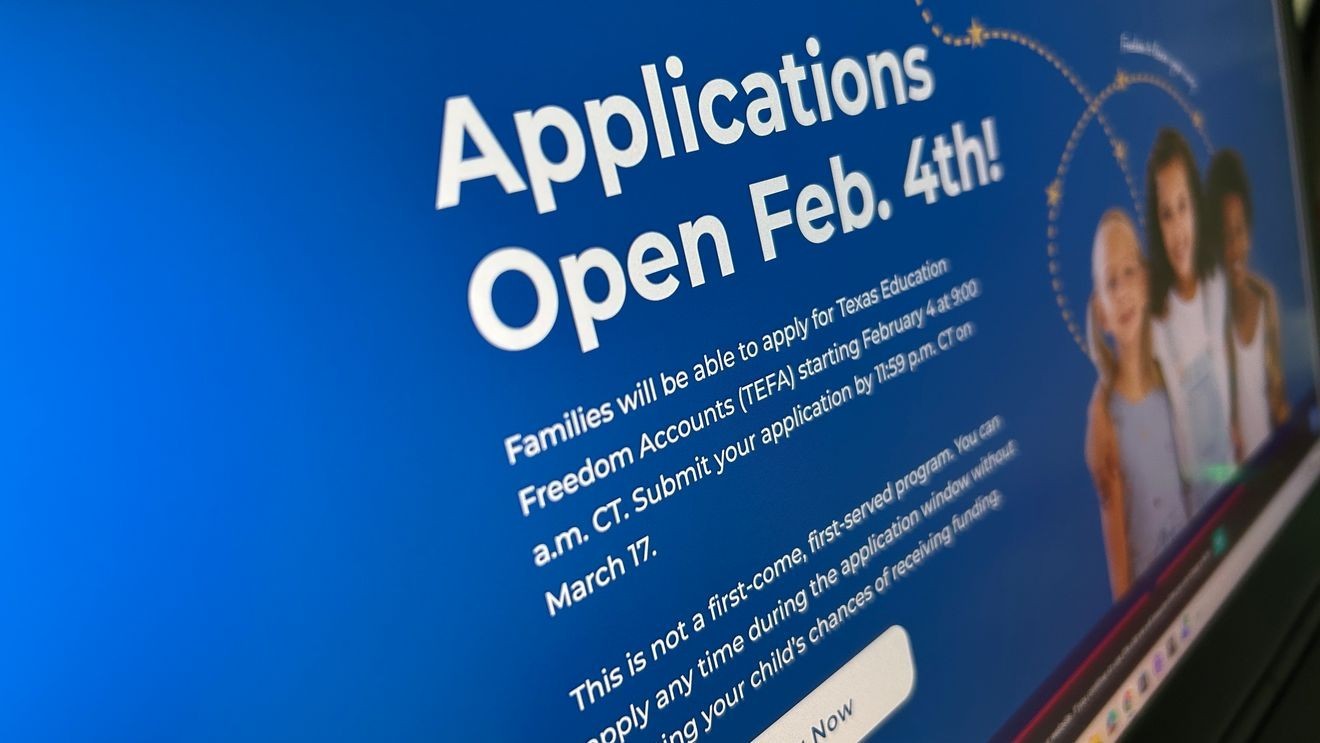
AUSTIN, Texas — The billion-dollar Texas Education Freedom Account (TEFA) program has now funded more than 85,000 school choice accounts, according to a demographic report released by the state comptroller’s office.
Supporters say the early data shows high demand and that the program is reaching students with disabilities and lower-income families, while critics say the publicly released report omits information the law says the report must include, such as participants’ ZIP codes.
In a statement Monday, acting Comptroller Don Huffines praised the report and the program’s rollout.
“Giving all parents the power to choose the right education for their child encourages schools to compete and deliver better results for all students,” Huffines wrote. “The initial success of this program speaks for itself.”
But Huffines’ Democratic opponent in November’s race, State Sen. Sarah Eckhardt, argues the report is incomplete.
“Unfortunately, it doesn’t even cover all of the statutorily required data points. And that is a concerning pattern under my opponent,” Eckhardt said.
Eckhardt pointed to missing information required by Senate Bill 2, including the ZIP codes of voucher recipients.
The report also does not include the share of students who previously attended private schools or were otherwise outside the public school system, a statistic shared in previous reports under the leadership of former acting Comptroller Kelly Hancock.
ALSO| Data infrastructure experts agree with Abbott decision to audit data centers
Statewide, the report shows the vast majority of funded accounts have gone to students with disabilities or those from lower-income families.
According to the comptroller’s office, nearly 25% of students who have received funds from the program have a qualifying disability. About 80% of students come from families with a household income below 200% of the federal poverty level.
A comparison between the newly released data and previously released data show in Central Texas, thousands of accounts have been funded so far, with about 15% to more than 30% of applicants in each major Austin-area school district receiving funds.
The comptroller’s office says it has made more than 122,000 awards, but only 85,344 accounts had been funded as of July 29. The report says some parents who received awards had not yet confirmed participation. More than 121,000 eligible students remained on the waiting list.
Texas nonprofit Our Schools Our Democracy, which operates the Texas Center for Voucher Transparency, said its concerns are less about what the report includes and more about what it does not.
“One example is that the report doesn’t include the number of families who have opted out of the program, and more importantly, their reason for opting out,” said Carrie Griffith, executive director of Our Schools Our Democracy.
Supporters of the voucher program said the rollout has been transparent and are already pushing to expand it.
“We should let the kids choose, the parents choose what’s best for their individual families. And I think that that’s worth investing in,” said Nathan Cunneen, Texas state director of the American Federation for Children based in Dallas.
CBS Austin requested an interview with the Comptroller’s office on Monday and Tuesday but did not respond by the deadline.