
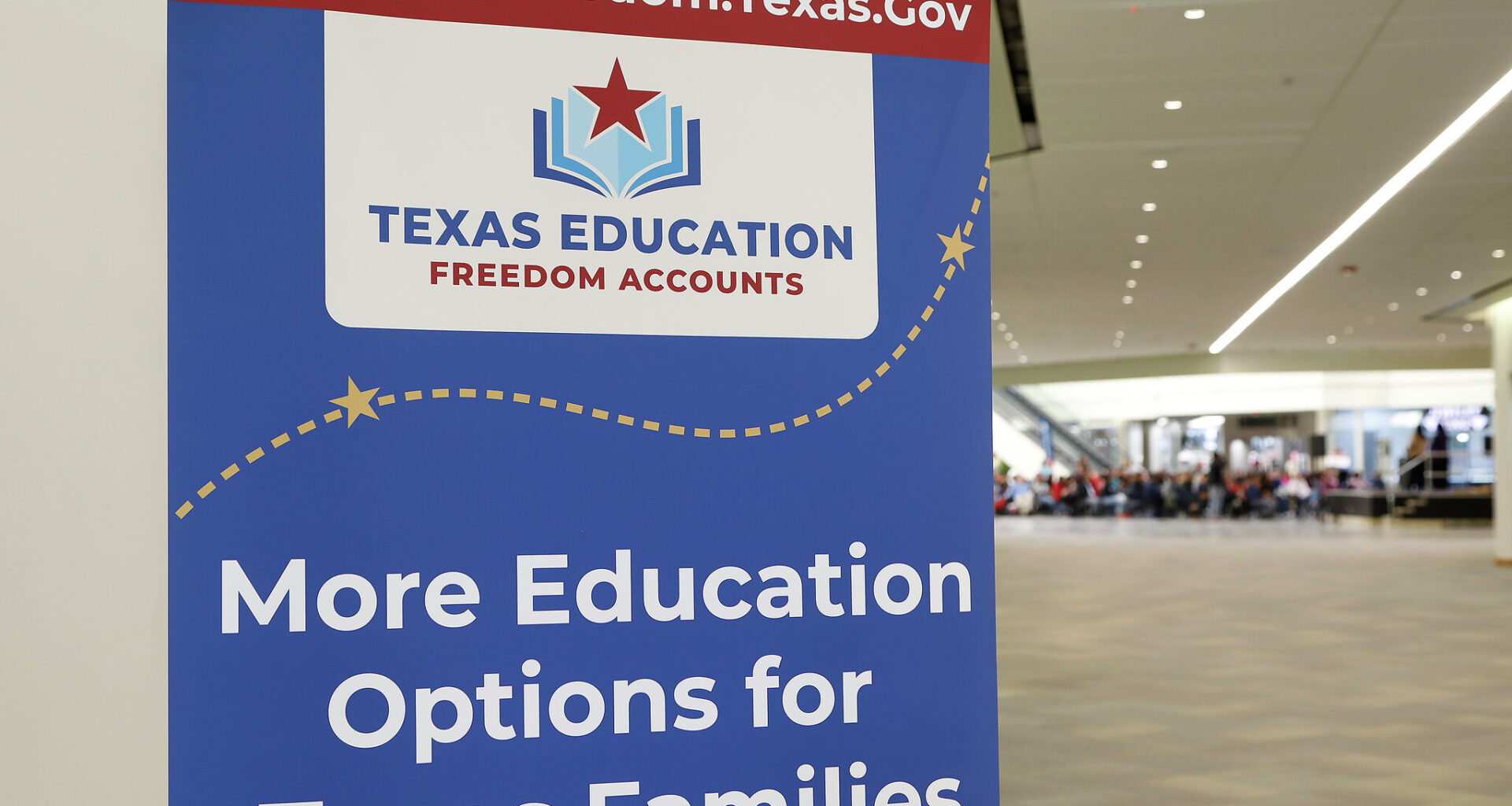
Under the Texas Education Freedom Accounts program, families could receive $10,474 in public funds to pay for private schooling. Children with disabilities were eligible for up to $30,000.
Stewart F. House/Dallas Morning News
Less than a third of North Texas students who applied for a school voucher received one, according to a Dallas Morning News analysis of newly released state data.

The new data was part of a report released Monday by the Texas Comptroller’s office that details the program’s demographics. More than 25,800 students in the Dallas Fort-Worth area will participate in the inaugural year of the Texas Education Freedom Accounts, according to the report.
Related: Looking for a private school? Here’s how North Texas families can find the right fit
Article continues below this ad
Out of the 274,000 applicants across the state, more than 88,000 hailed from North Texas. Dallas ISD and Fort Worth ISD had some of the highest numbers, with over 8,000 and 4,000 applicants respectively.
But the report shows that only 2,645 of applicants living within Dallas ISD boundaries ended up participating. That was the second-highest number of participants in a district after Houston ISD, which has 3,327 participants. Fort Worth ISD ranked fifth with 1,764 participants.
Under the program, families could receive $10,474 in public funds to pay for private schooling. Children with disabilities were eligible for up to $30,000, though the vast majority received far less than that. Homeschooled students could get $2,000.
While 122,000 students were ultimately awarded, only 85,344 have confirmed their participation to receive their taxpayer-funded voucher. A TEFA spokesperson said about 20,000 students have opted out of the program so far, and an additional 121,000 students remain on the wait list.
Article continues below this ad
Related: Fewer than 25 students got Texas’ full $30,000 school voucher
Critics worry that the program will divert funding away from public schools, which serve 5.5 million Texas students. About 98,000 students will leave public schools for private schools by 2030, which is 1.8% of Texas’ current public school student population, according to a 2025 analysis by the Texas Legislature.
TEFA students come from 6,883 public schools, but the report only identifies 434 campuses. The office removes fields with fewer than 30 students, citing privacy concerns.
Participants across the state are 41% white, 28% Hispanic and 14% Black, 12% multiracial and 5% Asian, according to the report. Less than 1% identified as American Indian or Alaskan Native.
Article continues below this ad
The bulk of applicants were in kindergarten through middle school. Pre-K had the highest number of funded students, coming in at roughly 9,400. Third grade followed, with 7,200 students.
About 20,000 in the top two priority groups — students with disabilities and low-income students — opted out of the program, leaving their funds on the table for waitlisted families. Early on, critics worried that students would struggle to find private schools, which can deny admission, charge tuition far higher than the awarded amount, and be located far away.
Related: What to know about Odyssey, the company administering TEFA funds
The program put students with special needs at the front of the line. About 29,400 students with disabilities were deemed eligible, but only 20,700 received funding accounts. As part of the prioritization, their siblings also received funds, constituting another 12,800 participants.
Article continues below this ad
The second category was for families whose incomes are at or below 200% of the federal poverty line — or $66,000 for a family of four. About 79,700 applicants in this tier were awarded, but only 51,800 have confirmed their participation so far.
The third tier was for families whose household income is between 200% and 500% of the poverty line. Earlier this year, officials anticipated running out of funds before reaching this tier. Because other families declined their award or chose the lower homeschooling amount, the program could award less than 30 families in the third tier funds.
Some parents have not confirmed their child’s participation, and TEFA is still determining awards, the report notes. The comptroller’s office will update the demographic data before lawmakers meet in January.
The DMN Education Lab deepens the coverage and conversation about urgent education issues critical to the future of North Texas.
Article continues below this ad
The DMN Education Lab is a community-funded journalism initiative, with support from Bobby and Lottye Lyle, Communities Foundation of Texas, The Dallas Foundation, Dallas Regional Chamber, Deedie Rose, Garrett and Cecilia Boone, Judy and Jim Gibbs, The Meadows Foundation, The Murrell Foundation, Ron Steinhart, Solutions Journalism Network, Southern Methodist University, Sydney Smith Hicks, and the University of Texas at Dallas. The Dallas Morning News retains full editorial control of the Education Lab’s journalism.