A new city study found the proposed Inner Harbor desalination plant would have minimal effects on Corpus Christi Bay beyond the discharge area.
CORPUS CHRISTI, Texas — The City of Corpus Christi has completed a new Far Field Model study examining how the proposed Inner Harbor Seawater Desalination Facility could affect the broader Corpus Christi Bay System if constructed.
The study, commissioned by City Manager Peter Zanoni, was designed to evaluate potential environmental impacts before construction begins. According to the city, the findings indicate the desalination facility would have minimal effects on the bay beyond the immediate vicinity of the discharge location.

This story continues below.
To oversee the project, the city created a Far Field Committee that met eight times throughout the study, reviewing progress and providing input alongside city staff.
RELATED: Far-field study finds Inner Harbor desal plant would not harm bays
The study was conducted by Spheros Environmental, working with subconsultants Hazen and Sawyer and DSI, LLC. Spheros was selected by city staff and the Far Field Committee as the most qualified firm for the project. Plummer and Associates also completed an independent technical review of the report.
Using an advanced computer model of the Corpus Christi Bay System, researchers simulated water movement, tidal action, salinity and mixing throughout the bay. The updated model builds upon a bay-wide model developed in 2023 and includes improvements that better represent conditions in the Inner Harbor and the effects of tides that naturally flush and mix the bay.
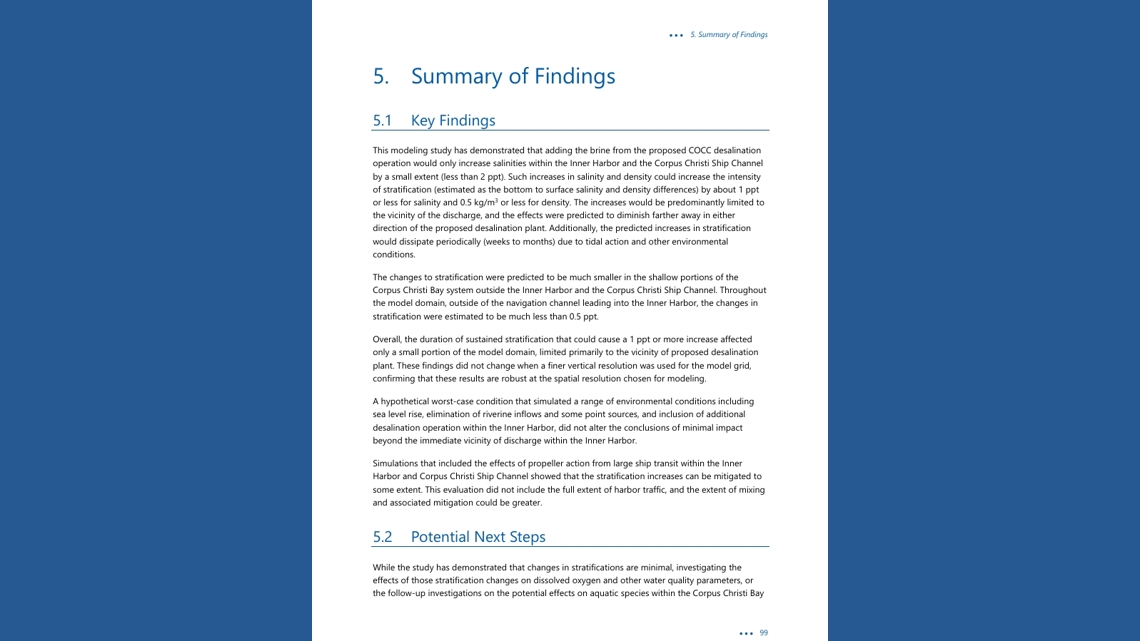
According to the report’s summary, the proposed desalination facility would increase salinity within the Inner Harbor and Corpus Christi Ship Channel by only a small amount—less than two parts per thousand. Researchers found the greatest changes would remain localized near the discharge point and would gradually diminish because of tidal movement and other environmental conditions.
The study also found increases in water stratification, or the formation of water layers with different salinity and density, would be minimal. Outside of the Inner Harbor and navigation channel, changes in stratification were estimated to be less than 0.5 parts per thousand.
Researchers also evaluated a worst-case scenario that included sea level rise, reduced freshwater inflows and additional desalination operations within the Inner Harbor. Even under those conditions, the report concluded the effects would remain concentrated near the discharge area and would not significantly alter conditions across the larger bay system.
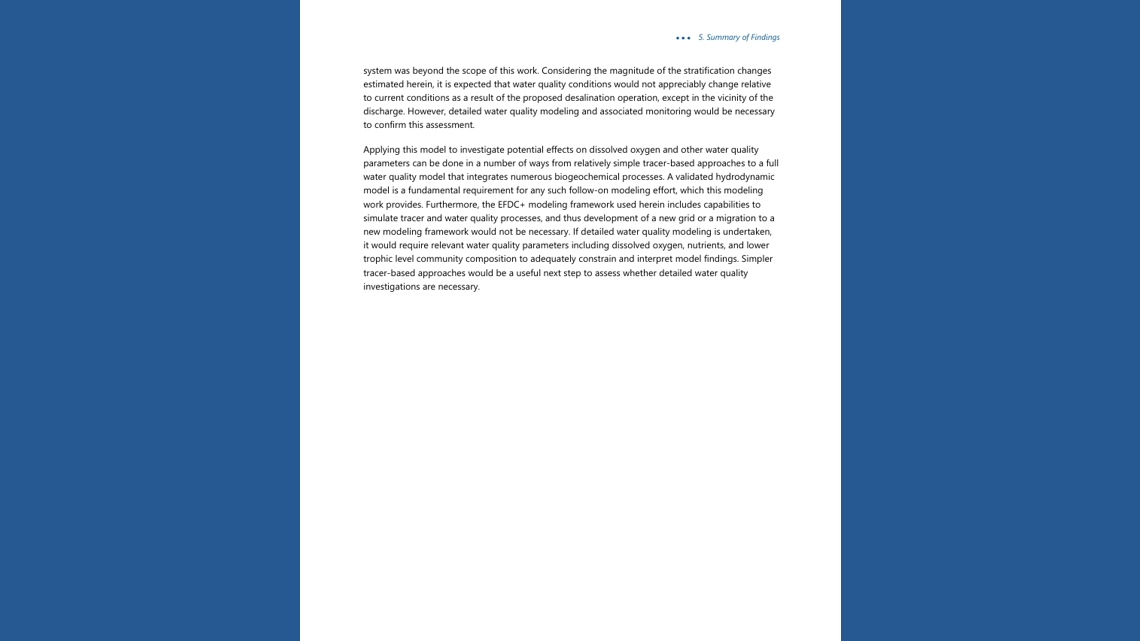
The report notes that while predicted changes are minimal, future studies could further evaluate potential impacts on dissolved oxygen, water quality and aquatic species if necessary. Researchers said the existing modeling framework can support additional water quality analyses without requiring a completely new model.
The city said the report is part of its ongoing effort to provide scientific information as it moves forward with plans for the proposed Inner Harbor desalination facility.
The complete Far Field Model report, along with previous studies related to the proposed project—including the Receiving Water Salinity Critical Dilutions study, the Essential Fish Habitat Assessment and the Inner Harbor Concentrate Modeling report—is available on the city’s Securing Water website.