
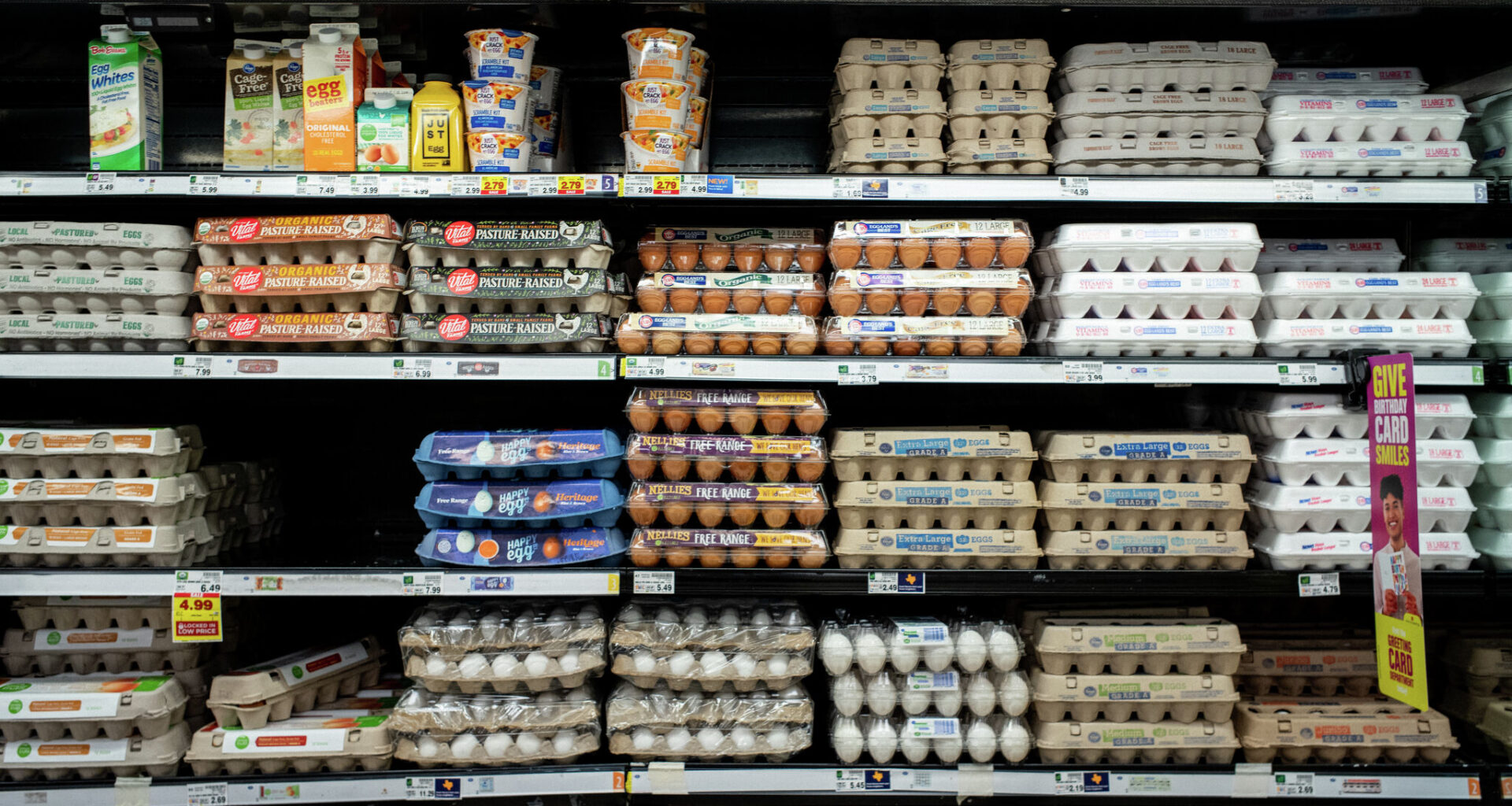
A multi-state salmonella outbreak linked to store-bought eggs has hospitalized 26 people as of Thursday, August 6, according to the Centers for Disease Control and Prevention (CDC). The outbreak has been traced to a Texas producer, officials say.
Americans are being urged to check their fridges to see whether they need to throw out this popular breakfast item. Midwest Poultry Services (MPS), L.P., first issued a recall of more than 1.5 million of its egg cartons, packed by the dozen, in late July. There are two MPS egg farms in Texas. One operates in Bryan, while the other is in Center, near Nacogdoches.
Brown or white cage-free shell eggs with the code “P-1950 or 0840962” and a Julian Date between 157 and 184 printed on the side of the container should be tossed in the trash. These eggs would have a sell-by or best-by date between July 20, 2026, and August 17, 2026, meaning folks may still have them on their shelves.
Businesses should not sell or serve recalled eggs. Families should wash and sanitize items and surfaces that may have come into contact with recalled eggs.
The CDC says the eggs were “sold under multiple brand names such as Kroger, Simple Truth, Brookshire’s, Cal-Maine, and Country Morning.” Shoppers may have purchased them at Kroger, Brookshire Grocery, or other small retail and food service outlets, officials say. Producers distributed them to consumers in Oklahoma, Louisiana, Arkansas, Mississippi, and New Mexico, per a food safety alert.
The Federal Drug Administration (FDA) is investigating the outbreak alongside the CDC. Approximately 98 reports of people becoming sick have been confirmed so far. The illnesses occurred across 17 states, public health officials said in a post.
Salmonella is a bacterium that can cause salmonellosis. People can become infected by eating contaminated food, drinking contaminated water or coming into contact with contaminated animals, animal feces, or places where animals live and roam, according to the CDC.
Some groups, such as “children younger than age five, adults 65 and older, and people with weakened immune systems,” face an increased risk of hospitalization or need for medical treatment, according to the public safety alert.
Symptoms of a salmonella infection include watery diarrhea that may contain blood or mucus, stomach cramps, headaches, nausea, loss of appetite, and vomiting. These events typically begin six hours to six days after infection and last four to seven days, according to the CDC’s website. Learn about when your symptoms indicate you should contact a doctor by clicking here.