
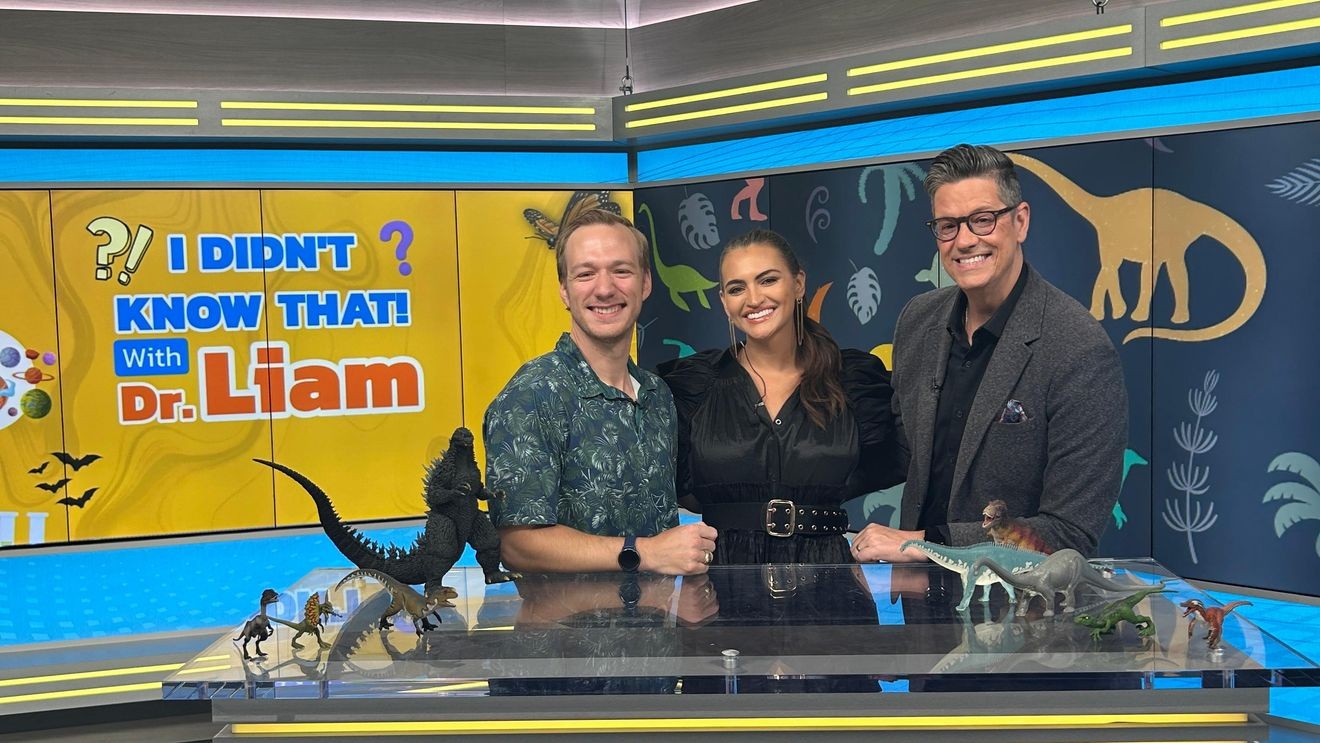
Dinosaurs have ruled the big screen for more than a century, but just how accurate are Hollywood’s prehistoric superstars?
Dr. Liam Norris of the Texas Science & Natural History Museum joined We Are Austin for another edition of “I Didn’t Know That!”, breaking down some of the biggest dinosaur myths in film and explaining what paleontologists know today.
I Didn’t Know That!? with Dr. Liam: Dino movie myths vs. reality with Texas Science Museum
Hollywood’s Biggest Dinosaur Stars
When it comes to movie fame, one dinosaur stands above the rest.
“To me, two big things: T. rex, always a superstar,” Norris said. “Even before movies, movies just propelled T. rex into the public eye.”
And while Godzilla may not be scientifically accurate, Norris acknowledged the iconic movie monster has played an important role in keeping dinosaurs popular with audiences for generations.
Dinosaurs Have Been Movie Stars for More Than 100 Years
The first dinosaur ever to appear on screen wasn’t in Jurassic Park; it was Gertie the Dinosaur, an animated character that debuted in 1914.
“She was mischievous, but ultimately meant well,” Norris joked.
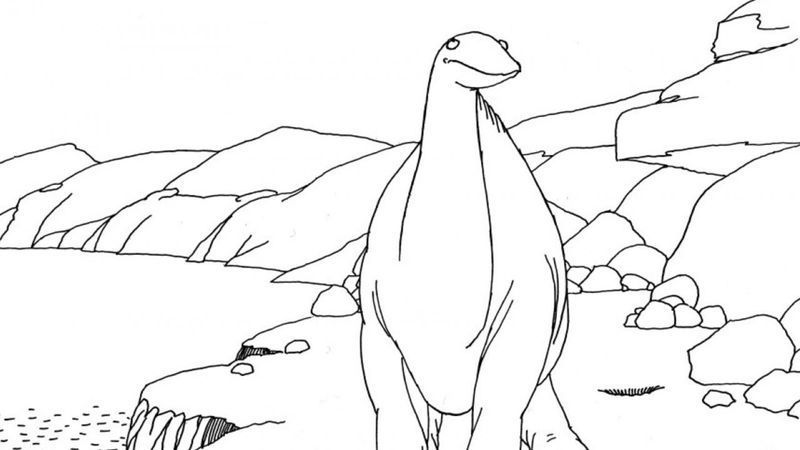
Gertie the Dinosaur 1914.
Early dinosaur films relied on hand-drawn animation before evolving into stop-motion classics like The Lost World and King Kong.
By the time Jurassic Park debuted in 1993, computer-generated imagery had transformed how dinosaurs could be brought to life on screen.
“They were going to use stop motion in Jurassic Park,” Norris said. “Then CGI got to the level where it could really bring these animals to life.”
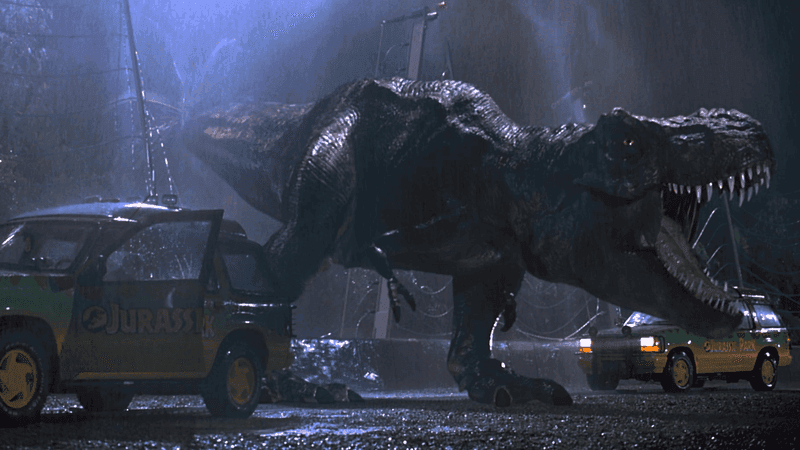
Jurassic Park T rex 1993.
Hollywood Got a Few Things Wrong
While movies have become more scientifically accurate over the years, some famous dinosaurs still don’t quite match the fossil record.
One of the biggest offenders? The Dilophosaurus from Jurassic Park.
The film portrays the predator as a small dinosaur with a dramatic neck frill that spits venom.
“The real animal… no frill, no problem, no spitting venom,” Norris explained.
Instead, Dilophosaurus was roughly the size of a polar bear and relied on its size—not venom—to hunt.
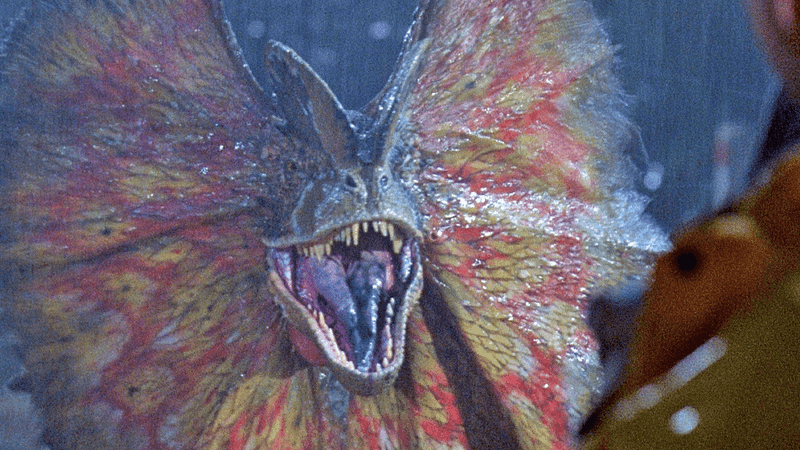
Jurassic Park Dilophosaurus 1993.
Velociraptors Weren’t Movie Monsters
Perhaps the biggest surprise for movie fans involves the famous Velociraptor.
Rather than the scaly reptiles seen in films, today’s research suggests they were feathered.
“Imagine an eagle with the teeth of a lizard and the claws of razors,” Norris said.
He joked that while people may not find that image frightening at first, anyone who’s ever tangled with a goose knows otherwise.
“Imagine your goose has sharp teeth and claws,” he said. “You won’t stand up.”
Tails Tell the Story
Hollywood has also changed the way dinosaurs move.
Early films often showed dinosaurs dragging their tails behind them like giant lizards.
Modern fossil evidence tells a different story.
“We found trackways,” Norris said. “None of them have tail drag marks.”
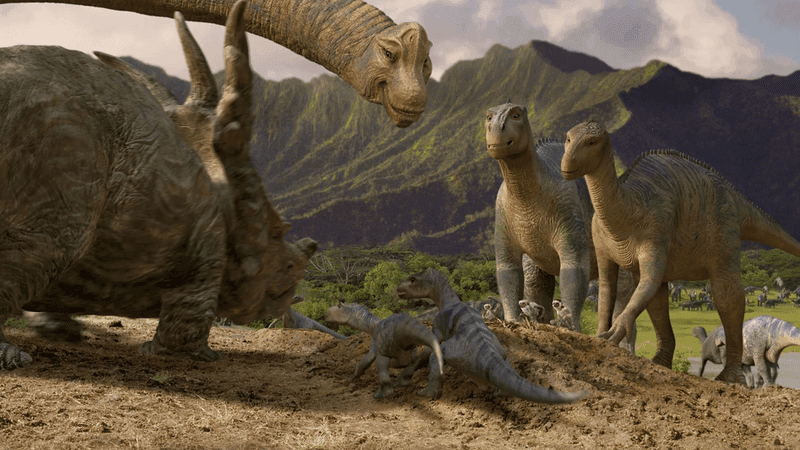
Instead, paleontologists now know dinosaurs carried their tails off the ground for balance while walking.
 Learn More at the Museum
Visitors can explore dinosaurs, fossils and prehistoric life at the Texas Science & Natural History Museum, where exhibits continue to bring the latest scientific discoveries to life.
For more information, visit ScienceMuseumTexas.org.
I Didn’t Know That!? with Dr. Liam: Dino movie myths vs. reality with Texas Science Museum