
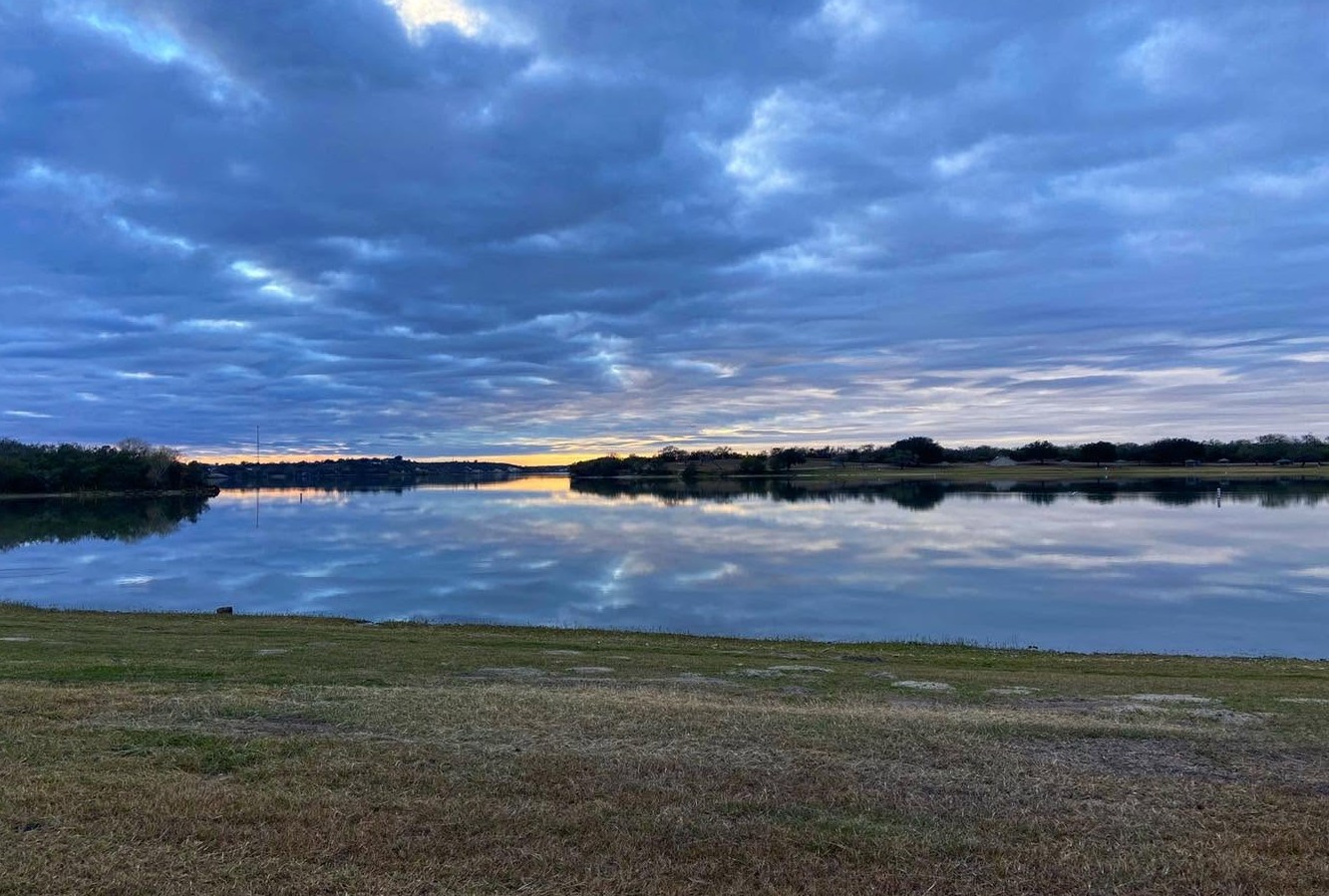
Lake Corpus Christi, seen here in this 2022 file photo, had fallen to a record low of 8.3% full in April, but it has surged back to more than 85% full as of Friday morning.
Texas Parks & Wildlife
Lake Corpus Christi is making a comeback.
Three weeks after major flooding hit the Texas Hill Country and Edwards Plateau, floodwaters have continued to slowly move downstream along the Nueces River. The flooding was fueled by massive rainfall totals from July 12-17, when up to 28 inches of rain fell across parts of Uvalde County.
This caused a slow-moving flood wave to form along the Nueces River, which affected Texas towns such as Uvalde, La Pryor, Crystal City, Cotulla, Three Rivers, and George West.
Article continues below this ad
In Three Rivers, the Nueces River crested at 39.3 feet on Aug. 1, its highest level since 2007. The river remained at major flood stage into Tuesday before finally beginning to recede by the middle of this week. The river on Friday was falling below minor flood stage.
But all of that water has to go somewhere — and a significant amount has surged into the once-depleted Lake Corpus Christi.
JULY FLOODS EXPLAINED: Here’s why the Texas Hill Country is flooding again as the Guadalupe River surges past 2025 levels
Just over one week ago, the surface elevation of the lake sat at 83.04 feet above sea level, and it was considered to be just 32.7% full. As of 10 a.m. Friday, the lake has risen about 9 feet, reaching a new surface elevation of about 92 feet, its highest point since May 2023.
Article continues below this ad
Lake Corpus Christi is now considered 85.5% full. Over the past eight days, an average of 5 billion gallons of water has entered the lake per day, which is equal to about 3.5 million gallons per minute.
Earlier this year, Lake Corpus Christi had fallen to dangerously low levels, hitting a low point on April 7 when falling to just 8.3% full. That was its lowest level since the Wesley E. Seale Dam that created the lake was completed in 1958.
Shown are cumulative rainfall totals from July 12-17, after torrential rainfall fell over the Texas Hill Country and Edwards Plateau last month.
National Weather Service
Choke Canyon Reservoir: Also located in the Nueces River Basin, the Choke Canyon Reservoir has also seen large increases in water levels in recent weeks. Between July 21 and Aug. 1, the lake rose by more than 13 feet, reaching a surface elevation of 192.9 feet. Over the past few days, levels have started to slowly fall again, down to 192.76 feet as of Friday.
Choke Canyon still has a long way to go, however. The reservoir is just 24.7% full and remains more than 27 feet below its storage capacity.
Article continues below this ad
Water restrictions lifted
Thanks to the recent surge, the city of Corpus Christi – which sources much of its water from Lake Corpus Christi and the Choke Canyon Reservoir – has lifted its Stage 3 water restrictions, which had been in place since December 2024.
Level 2 water restrictions remain in place. Under those restrictions, city residents can water their lawns with an irrigation or sprinkler system once every other week, something that was prohibited under Stage 3 restrictions. Residents may also wash their vehicles with a handheld hose or five-gallon bucket, as well as fill their pools.
Article continues below this ad
Other restrictions may soon be lifted if rises to Lake Corpus Christi continue. Improving lake levels also could trigger a move to looser Level 1 water restrictions, at least temporarily.