
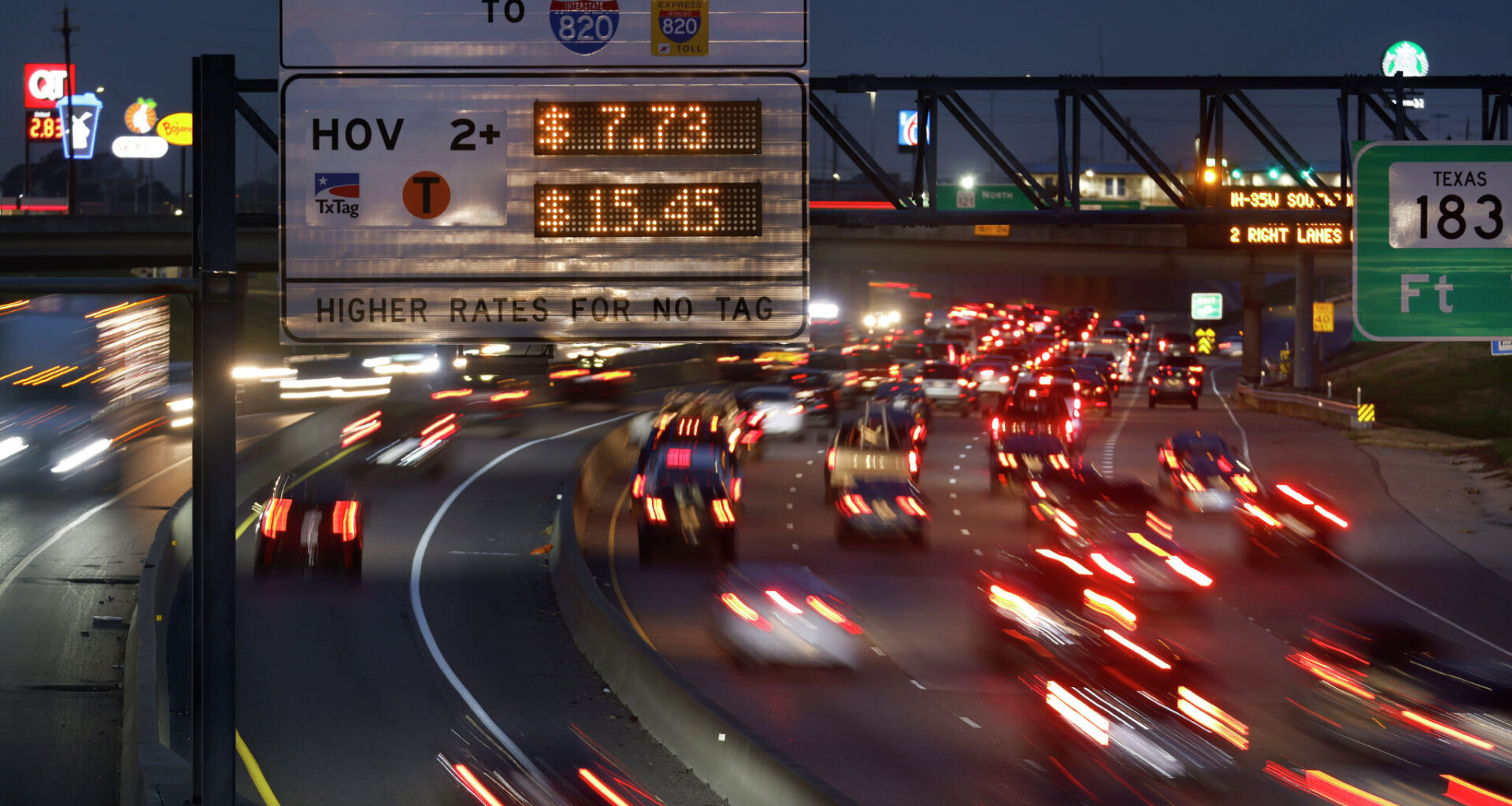
At dusk, traffic flows on the TEXpress Lanes along westbound State Highway 183 at American Boulevard in Euless. David Laney writes that the region has benefitted tremendously from public-private partnerships and should continue employing them.
Tom Fox/Dallas Morning News
After decades helping shape transportation policy in Texas, I’ve learned there are no easy answers to congestion. I’ve also learned that waiting rarely solves it.
Over a decade ago, North Texas faced a choice. We could continue waiting for traditional transportation funding to catch up with one of the fastest-growing metropolitan areas in the country, or we could pursue a different path. We chose the latter.
Texas partnered with the private sector to accelerate construction of the first TEXpress managed lanes. And I remember the skepticism when we first discussed this approach. Public-private partnerships were unfamiliar to many Texans, and questions about toll roads and private investment dominated the conversation.
Article continues below this ad
More than $25 billion in economic output generated across North Texas.
More than 121,000 jobs supported.
More than $314 million returned to the Texas Department of Transportation through revenue sharing, refinancing gains and other financial benefits that can be reinvested in future transportation improvements.
As another TEXpress project prepares to open along Northeast Loop 820 and Airport Freeway later this year, it’s worth reflecting on what this model has accomplished and why it still matters for North Texas.
The success of TEXpress isn’t measured only in miles of roadway or traffic volumes. It’s in proving that Texas can deliver major infrastructure projects while preserving public ownership, protecting taxpayers and giving drivers more choices.
Every corridor includes free general-purpose lanes. No one is required to pay a toll. Drivers simply have the option to choose a more reliable trip when getting to work, making an appointment or catching a flight.
Article continues below this ad
That flexibility has become increasingly important. North Texas is expected to approach 12 million residents by 2050, yet the primary funding sources for highways have changed very little over the past several decades.
Having spent much of my career evaluating transportation investments, I’ve learned that the greatest risk is often failing to act until congestion has already outpaced our ability to respond. Waiting for public funding alone to solve these challenges is no longer a realistic strategy.
Public-private partnerships are not the answer to every transportation project, nor should they be. But they have proven to be an effective tool for accelerating construction, transferring financial risk away from taxpayers and delivering infrastructure years sooner than might otherwise be possible.
North Texas has always prospered because it has been willing to think ahead. DFW Airport, AllianceTexas and many of the investments that transformed this region into a global economic center were built through partnerships, long-term planning and a willingness to embrace new ideas. Transportation should be no different.
The next generation of leaders will face the same challenge mine did: how to keep one of America’s fastest-growing regions moving while ensuring taxpayer dollars are spent wisely. They will need every responsible tool available to meet that challenge.
Article continues below this ad
It’s not simply that managed lanes have moved millions of drivers more efficiently. It’s that when government and the private sector work together with a shared commitment to the public interest, they can deliver projects that strengthen our economy, improve mobility and prepare North Texas for the future.
The transportation challenges facing our region won’t get smaller. Neither should our willingness to embrace solutions that have already proven themselves. The next decade of transportation begins by learning from what has already worked.
David Laney is the former chairman of the Texas Transportation Commission and outgoing chairman of the board of TEXpress Lanes, which operates the LBJ Express, North Tarrant Express and NTE 35W corridors in partnership with the Texas Department of Transportation.
Have thoughts about this? Send a letter to the editor using our letters form or email letters@dallasnews.com. Letters should be no more than 200 words and include the first and last name of the writer and city of residence.